Purpose Fuels Resilience With Erin And Chris

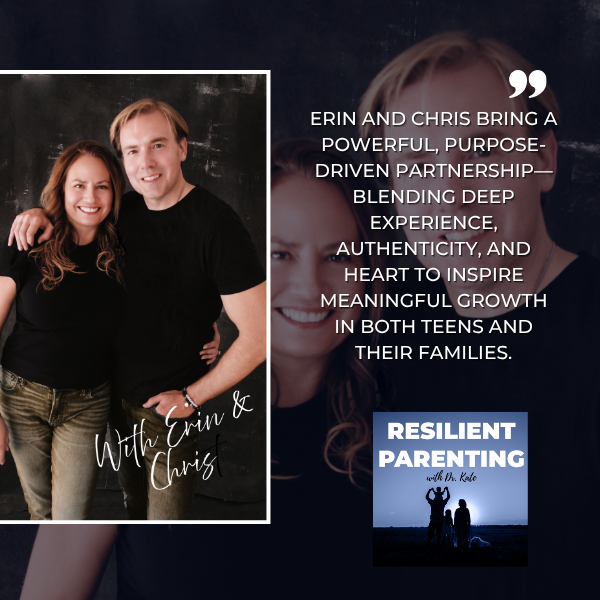
In this inspiring episode of Resilient Parenting, Dr. Kate Lund welcomes life coaching duo Erin and Chris Verdis, founders of Extraordinary Purpose. Together, they explore how helping teens discover their unique purpose builds intrinsic motivation, confidence, and lasting resilience.
Erin and Chris share insights from coaching over 1,000 teens and young adults — and working closely with their parents — emphasizing the power of modeling personal growth, creating meaningful family rituals, and fostering heartfelt conversations at home. They also discuss navigating social media, reducing distractions, and building focus in today’s digital world.
This conversation is a powerful reminder that resilience isn’t a single moment — it’s a lifestyle rooted in purpose, connection, and intentional parenting.
---
Listen to the podcast here
Purpose Fuels Resilience With Erin And Chris
I greatly appreciate you being here, Erin and Chris. Thank you so much.
Thanks for having us, excited to be here.
We are excited.
This is amazing. I love it, like it’s so much fun to interview a duo, a team that works and works together.
Erin and I are a part of a package. You get one of us, you get the other one.
I absolutely love that. Maybe give us a little bit of an overview of the work that you do and all the cool things and then we'll launch into our conversation on resilient parenting.
Overview Of Coaching Philosophy & Purpose
Dr. Kate, we’re so excited to be here. It’s great to talk to you. Erin and I are life coaches for teens, young adults and parents. That's what we do. Our brand is called Extraordinary Purpose. Our philosophy and why we're here talking to you is everything, all the work that we do, all the parents we work with, all the kids we work with, the teens and young adults we work with, it’s really about helping them find their purpose and what that could mean to their lives.
Erin and I have been doing this together for multiple years and individually before that for a lot of years. When we got together about five years ago, we just realized that we complemented each other in so many powerful and incredible ways as coaches, as partners, as business partners. Since then, we’ve come together and we have now coached over 1,000 teens and young adults.
Every single one of those young adults that we've worked with over the years, we've worked with their parents. We've mentored and talked with and they've texted us back and forth and we’ve jumped on calls with them to make sure that their young adults were getting the most out of their personal development, that the parents were seeing these results at home, and that the parents felt like they were part of this amazing team that we’re all focused on their kid’s success.
That is powerful stuff and I love what you say about helping kids to find their purpose, because that’s really what it’s all about because helping kids to find their purpose and thrive within their own unique context, and that’s going to look different across for all kids.
Erin, you can elaborate on this, but we believe that every kid and parent is unique and different. A lot of people don’t look at themselves that way. They want to be like this group over here or that group over there and something that we talk about all the time, early on in coaching, is no, there’s only one you. If you see that for that, for that truth, and then you start to connect that with something that’s out there made just for you, it gives you a little bit of motivation, that intrinsic motivation to wake up the next day and get excited about who you are and what you’re doing.
I could not agree more. It’s connecting those dots that makes all the difference and helps our kids to believe in themselves from the inside out. That’s so hard in today's world. With all of the comparison and the social media and as you say, Chris, wanting to be like my friend or my classmate who’s doing XYZ. Maybe that’s not the right fit for you and perhaps there’s something more and helping them hone in on that feels like it’s so important. What's the role of parents in that? How do you help parents to help their kids? We’re really helping our kids in this way to be optimizing their own sense of well-being, really. What’s the parent's role there?
The Role Of Parents: Modeling Personal Growth & Self-Reflection
I think what differentiates us as coaches for parents from a lot of other parenting people out there and parenting teachers is we help parents recognize that first and foremost, how they show up every day for their kids and in their family is what makes all the difference. It isn't so much about lecturing or telling them what you think they should do or helping them find their way or helping them up when they fall down.
That’s part of the process, but what’s more powerful and more influential is helping parents look in the mirror and rediscover their purpose outside of just being a parent and who they are and what their passions are and really learning to model their own journey of personal growth and personal development. That’s part of it.
In our parenting program that we’re relaunching, it’s all about that. It’s helping a parent discover their own unique rituals, their own journey of personal growth and how they can show up every day modeling that for their kids. We get a lot of parents that are hovering parents and always well-meaning. We’ve really have yet to talk to a parent that we feel is malicious or out to get their kids.
They love their kids, there’s a lot of different parenting styles out there, but Chris and I really wholeheartedly believe that kids have the answers. They have the answers within them. Our job as the adults in their lives, whether it's parents or coaches or caregivers, is to help them recognize their capabilities. They're capable of discovering who they are, discovering their own passions, identifying their values and their strengths and the things they want to bring into their future. I think we can step back and be a little more patient, and now, us saying that as coaches and saying it as parents are two different things.
That’s true. It’s really hard to do. Everything you’re saying is spot on and I believe that wholeheartedly myself and it’s actually really at the crux of my book that launched this October, called Step Away: The Keys to Resilient Parenting. It’s all about how can we as parents optimize our own sense of well-being and in doing that, model for our kids, help our kids to discover their own strengths and their own passions at the same time.
I’m curious what you guys think about this, I think a lot of it really comes down to that authentic human connection that we as parents can foster with our kids by being there to listen, to hear their experiences as opposed to, as you mentioned, not jumping in to fix or telling them how to do something, but rather just being there in that space, hearing their experiences. Also, at times, when it’s appropriate and in a developmentally appropriate way, not being afraid to share our own challenges or struggles at various points.
We couldn't agree more. There's a couple of things that come to mind. Something that we talk a lot about with parents and families is just this idea of creating a lifestyle and a culture within your household that embraces a lot of what you just discussed and shared with us, Dr. Kate. The more that you’re able to do that and letting go of some of that control and choosing as a parent where to put your focus and your attention, which is on some of those things where you can have more influence, which is your relationships and your conversations and the activities.
Erin and I believe one of the very first rituals that we coach parents and young adults on is this idea of having heartfelt conversations where sometimes more intentional where you’re coming together to listen and learn and share and be vulnerable about you as a parent. What are you struggling with and what are your goals and what’s your purpose?
You start to talk about some of these things more openly. What are you struggling with now? As parents, we’re not perfect, there’s a lot of things that we’re dealing with day-to-day that we completely shield our children from. Yet it’s so helpful for them to learn, “Mom and dad aren't perfect. They're going through it, they're working on themselves, they’re doing these things behind the scenes to work on themselves and get to the gym and to take good care of themselves.”
When Erin wakes up in the morning, she’s meditating and journaling and all of these things, it’s like little seeds that are just not going to say it in the moment, but it’s leaving an impression. It’s leaving an impression over and over again and we’re seeing it. Not in the moment, we’re not seeing it, but a few weeks later or a few months later, the kids will start saying things back to us like, “I’d like to get to the gym or I’d like to do this, or I was thinking about this because of something that I saw you doing.” That’s happened countless times.
It’s the way I really look at resilience is it’s more of a lifestyle. It’s not that moment when you overcome a challenge and then put resilience off to the side, it’s a lifestyle that we’re trying to integrate into our day-to-day, way of living, way of being, way of interacting, communicating. Yes, I couldn't agree more. Our kids are noticing these steps that we’re taking, these small moves and it’s true because we all face challenges. Day in, day out as parents, as kids, as students across domains and so being open and transparent about that I think is very powerful and very important.
It’s important because you’re normalizing resistance. That’s what Erin and I refer to. Some of the stuff that holds us back or distracts us or gets in the way. Whether it's our phone or whether it’s self-talk, it’s something that in the moment is causing us some challenge. It’s causing us some problem. For all of us to talk openly about what are my distractions, what are the things that are holding me back?
What am I dealing with now that’s really preventing me from moving forward and making progress and feeling the way that I want to feel. All of a sudden you start to get more curious and more open-minded about how am I going to deal with that myself and you’re learning all the time and I think that’s the real powerful outcome of being in environment like this where you’re having these types of conversations is you’re learning.
I think another piece of that is something that parents struggle with a lot, especially if your kids have gone through a hard time, they’ve watched you go through a hard time, whether it’s a divorce or overcoming addictive behaviors or whatever that is, is guilt. Feeling a lot of guilt and a lot of shame and wishing we’d done things differently.
I think when we can embrace as parents that you actually things happen for us in life, not always to us. When you can really embrace and be vulnerable and share with your kids openly, “That was a hard thing for me to put you through or a hard thing for me to watch you go through.” You can sit with them on this parallel playing field and talk openly with them and be vulnerable, that guilt starts to dissipate because you’re not just harboring it. You're not dealing with it on your own.
You’re giving them a platform to share how they feel, you get to share how you feel and you're in this together instead of this hierarchy of like, “I’m the parent, I should have done this. You're just a child, you didn't need to go through that.” We all go through stuff. I say that to my kids all the time. I’m like, “You're going to go through their own set of challenges as a parent too. You’re going to know how that feels one day.” Essentially, we're setting them up to be resilient parents and learn how to be the best parents they can be by what we're modeling them.
Managing Phones, Social Media, & Building Focus Through Internal Motivation
It’s normalizing this idea of challenge. I think that’s incredibly powerful. That just adds to that authenticity within the context of your relationship with your kids which is so important. Really curious. It popped into my mind as we were talking about all of this. What about phones? What about social media for parents and kids? I will say openly on my phone too much and I wish I wasn't trying to get rid of some of those apps like for example, Instagram, all of these things.
How do you work with folks around that issue because I think that there’s a lot of modeling that can happen early on by us as parents for our kids in this way. Kids are out there. They’re with their friends, everybody’s on it, everybody’s Snapchat, Instagram, all the rest of it. I probably don't even know all about it but what, what is your thought on that and how to manage that in a healthy constructive way?
I think you’re right, Dr. Kate. I chose Waldorf education for my kids when they were younger, when my son was in third grade because mainly it was for screens. I just wanted to raise my kids in more of a media-free environment and I had this big glorious vision of how I wanted them to turn out, not be on phones and not watching too much TV.
The truth is they did go through that education for a number of years, both of them, but we live in this culture where it doesn't matter where you go to school. It doesn't always matter what we modeled when they were younger. When it comes, it’s just there. You’re right. We have to help them figure out how to navigate that now. So much of what we coach on and teach in this particular arena is based on our own struggles as parents as well and that's why we always say we’re in it with you.
It’s really just modeling it now, doing your best to model it and show them openly that you're putting your phone in a drawer, that you’re reading. Our kids come up and see us reading in bed every night instead of scrolling on our phones. It's just a lot of boundary setting. It's boundary setting and helping them learn how to navigate that. Also, how to navigate just being in it because we also can't turn a blind eye.
They're going to be on phones. They're going to be in social media. How do we help them navigate if there's any bullying, what’s going on there. Checking in with them, constantly checking in how is it going. I check my daughter's phone often to see what’s going on there. What about you, Chris? I coach the young women and Chris coaches the young men in our program. How do you work with that?
I think that the word that always comes to mind is just what we’re trying to help people get to, Dr. Kate, is focus. The more you’re able to focus, the better results you’re going to get, probably the better you’re going to feel. Not probably. You will feel better. That’s really the outcomes that we’re striving for with parents and young adults.
The more you’re able to focus, the better your results will be and the better you’ll likely feel.
Distractions, especially phones, video games are the two big ones. What does that create is kids that are drained, they’re they just don't feel good, they're lazy. Those are some of the words. I’m not saying they are that, those are some of the words parents use to, to describe the kids when we’re first talking to parents. How do we help with that? It’s about learning how to get control back over your choices is how I would say initially.
How do we help people get control over your choices. How do you do that? You help young adults and parents slow down and become more mindful, put a little bit more structure in their day. We’re not anti-phone, we’re not anti-video games or anything like that. However, we want for everybody to have a good day. We want for people to follow through on things that are important to them and to do that, you have to get better at managing your distractions. Just one little thing that we introduce for parents and young adults is this whole idea of a focus block. It’s just a block of time where you’re putting phones away and you are focusing on something or someone that’s important to you.
I think embedded in everything you both are saying is this idea that yeah, phones are there, social media’s there, all of it’s there. We have to help kids to modulate their use, their engagement in this from the inside out. I have to say that when my boys were seven, I had this idea, this vision, that they would be able to do that. I’ve been a psychologist for over twenty years. I knew that that wasn't true. Something magical was going to happen.
Anyway, we took it step by step from there because I never wanted to put all sorts of external boundaries around phones and video games in place because I felt like there was an important element to what they were getting from both, in terms of social engagement, the rest of it, but boundaries, very important, as you mentioned, I think, Erin.
How to modulate from the inside out. Ongoing process but ultimately, our kids are going to go off to college. My boys are eighteen. One of them is in boarding school on the East Coast. He has to know how to manage this from the inside out. Is it perfect? Probably not, but it’s working. He’s doing great across all aspects of his life. He’s not being brought down by the social media use. I think that’s the big idea. That takes time and intentionality across the developmental spectrum is my thought.
Intrinsic Motivation & Ownership Of Change In Kids
I think too the other piece of it is like our process really is how meant to infuse a lot of that intrinsic motivation. When kids, teens and young adults start to really get a clearer picture of their passions and start creating a future, a vision for their future, and they start really getting clear on who they are and what they really want and they start setting some meaningful goals for themselves, they start bumping up against those distractions on their own.
They start recognizing my phone is a problem and they want to start making some changes on their own. We always tell parents our process is not an overnight success in every area of their lives. Some of these things take time for them themselves to start recognizing this has to change if I want to reach this goal in my life.
That is so important, that point that you just made. For change to happen, kids, parents, we all have to recognize the power in that change. We have to want that change. If somebody’s telling us externally, “You’ve got to change,” probably not going to happen. That’s such a powerful point that you’re making.
I think even the kids that we coach, it’s always the parent’s idea. We always talk to the parents first. It's the parents that see the potential in their young adults in their teens and we appreciate that. We love that. We love that excitement like, “I know what my kid’s capable of.” However, we always say that the kid needs to see that for themselves.
They have to want to do this work for themselves for their own reasons and that's something that Erin and I believe in very passionately. We work very early on in this process to help shift that perspective from, “This was mom and dad's idea,” to, “This is something that I want for myself,” because it’s something that’s going to help me in so many different ways.
This is such powerful stuff. This is so wonderful. I can't tell you how much I appreciate you both being here. Shifting gears a teeny bit, really curious and Chris, you mentioned this that Erin does some journaling and meditation and such in the morning, but I'm curious if you could both give a little bit of an overview of your own ways in which you’re optimizing your own sense of well-being and how that showed up for you guys over time.
Parents’ Personal Growth, Self-Care, & Modeling Resilience
I will say without going into my whole history, I really started on my own personal growth journey when I was in my early twenties. I was a model for many years and then I went to college in my mid-twenties and went through a lot of ups and downs early on in my life. That led me to my own journey of personal growth. A lot of the coaching I do, yes, I have degrees and certifications, but so much of my coaching stems from my own personal journey.
All the things I’ve done over all these years now to become this better, best version of myself. I guess the things that I can say I model for my kids daily are yeah, having a really strong morning routine, setting the intention for my day through meditation and just having that quiet time with myself every morning. I always encourage other moms get up a half hour to an hour before everyone else in the house so that you can get right before everyone needs a million things from you throughout the day.
Chris and I both share our love for fitness and going to the gym and a lot of self-care. Cold plunge and steam room and all that good stuff. We do that daily together. For me, I think it's having a really strong spiritual foundation in my life. I’m half Native American so I try to stay close to some of those teachings and traditions. I’m very into Buddhism and things like that. Continuing to read and educate myself and stay grounded.
What about you Chris?
I was trying to think as Erin was just sharing there. I think number one it's leaning into your passions. That's something that I’ve just always believed is a philosophy. I think it's really working hard on yourself to learn as much as possible about who you really are. That's something that I recognized in myself when I was very young. I did not start off a coach, for example. I started off in the corporate world. I was in leadership and branding and marketing.
However, right with that I mentored hundreds of young adults that were either in college or right out of college and I recognized very early on just these breadcrumbs, these little signals of what I was really meant to do. I think for a lot of young adults and I see this every day, like we don’t always see those breadcrumbs, those signals, those signs of yes, that’s something that's really important for me to pay attention to.
Whether it’s eating healthy, having a great morning routine, or planning your day, once you get that activity done, you’re going to feel better.
My point is paying attention to those signals and signs is such a game changer for anyone. Something that Erin and I talk about all the time is this idea of your rituals. This is where Erin and I think we bond and it's where our coaching really comes to light. It's like your morning routine, your evening routine. That's something that Erin and I hold very sacred.
Erin and I take walks every day. Getting out into nature and just being in environments where you're grounded, you're able to connect, you're able to see things that you can't see when you're in the bustle of your day-to-day and you're hanging out with kids and there's just so much going on. Erin mentioned fitness. Yes, I love going to the gym but most importantly, I love how it makes me feel.
No matter how I feel when I walk into an environment like that, I always feel 1,000% better by the time that I leave. That's any ritual that we do, whether it's eating healthy or having a great morning routine or planning your day. You get that activity done, you're going to feel better. You're going to feel more confident. I think our whole philosophy and the way that we live our life is based around that premise, that foundation.
I love that. Powerful stuff and I can't thank you guys enough for coming to join me here and thank you.
Thank you so much for having us.
It's been so much fun. It's been a pleasure.
It's been a wonderful conversation and I think such powerful nuggets that are really going to help my readers just across the spectrum of their lives. Thank you.
Important Links
About Erin And Chris Verdis
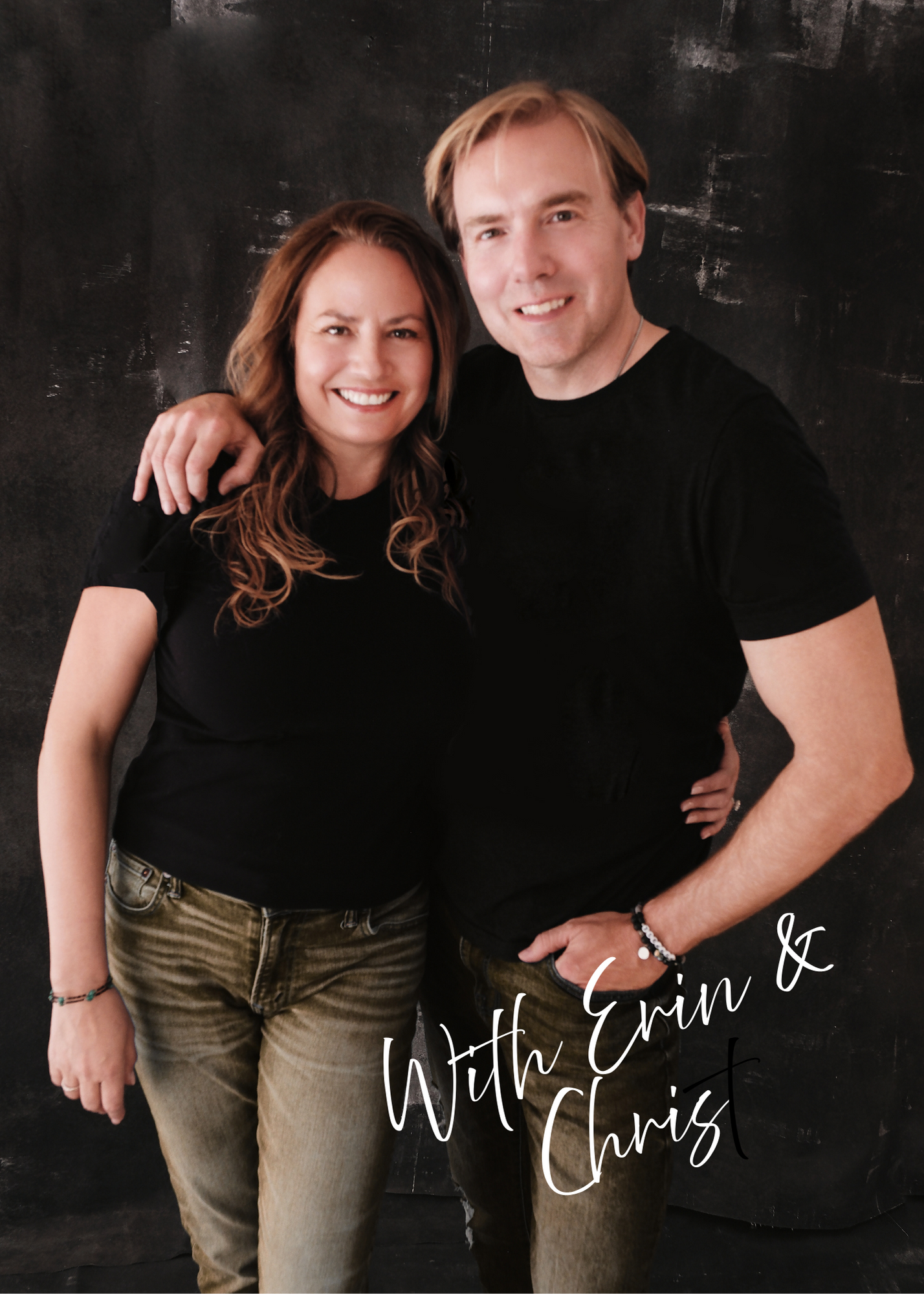
Extraordinary Purpose, founded by Erin and Chris, supports teens, young adults, and parents through some of the most challenging seasons of family life. With 20+ years of combined experience, they help young people build confidence, resilience, and direction—while coaching parents with the tools to better support, communicate with, and guide their kids. Their work centers on helping families move from confusion and conflict into clarity, confidence, and connection.