Pause And Regroup With Michelle Puster

Parents often deal with overwhelm when balancing duties with their children and the pressure of building a successful career. Over time, it will lead to parent burnout, self-shame, and even depression. Dr. Kate Lund sits down with Michelle Puster, Founder of Compassionate Heart Mindful Life and a Certified Emotionally Focused Family Therapist Supervisor who blends lived experience with research-informed strategies to help parents deal with their most difficult moments. She explains how she teaches them to slow down, revisit their patterns, and regain their self-confidence through her Pause and Regroup approach. Michelle also explains how parents can properly manage stress, emotions, and vulnerabilities to maintain a resilient mindset while keeping a deeply human connection with their children.
---
Listen to the podcast here
Pause And Regroup With Michelle Puster
Welcome back, everyone, to another episode of the show. We are lucky to have Michelle Puster with us. Thank you so much for joining us, Michelle.
Thank you for having me. I am really excited to be here. It is a much-needed topic. Resilient parenting.
Navigating And Dealing With Parent Burnout
Thank you for coming. This is going to be a great conversation. Why do you not start us off with a little bit of an overview of who you are, what your work is all about, and all that good stuff?
I started as a special education teacher years ago. I was a special education teacher for about seven years. I became a therapist, and I have been in private practice for fifteen years. Now I help families through an online platform where I offer tools for how to stay calm when things get really hairy. A lot of parents are trying to parent respectfully, calmly, and gently, and all these great things. They have really good intentions and, like me, find it to be nearly impossible at times. I want to help bridge the gap between what I want to do and how to do it, or why I am not able to respond calmly when it is the only thing I want to do.
That is such an important point because it is this idea of managing our stress response as parents, as people, so that we can show up fully in all moments, but particularly those moments that are high intensity, stressful, and hairy, as you mentioned. I would love to hear more about that as we continue in our conversation. First, I just wanted to point out that I was really excited when I was reading your bio that you are also a twin mom.
Yes, I am. I have twelve-year-old twins. They are a boy and a girl.
I love that. We are a little bit ahead of you in the game. We have two boys, eighteen-year-olds. It has certainly been a journey, a great one, but there are shifts through the developmental phases. There are different lenses on how we, as parents, as moms, need to focus on optimizing our own sense of well-being throughout those different phases.
Being a twin mom and then having another baby, a surprise baby, eighteen months later, has made a big contribution to my parent burnout. That was a big reason why I got into this work and wanted to share it with other parents. I felt really alone and really ashamed. I just want other parents to know that experience is actually quite normal and that they are not alone. I am 100% sure having twins added to that stress level.
We have double going on, the overnight awakenings, two babies to soothe and take care of, and making sure they are fed when they are very little. That is intense. A third baby eighteen months later. Your twins are eighteen months old, and a new baby is in the house. That really ratchets up the intensity and the need for you to optimize your own sense of well-being. How did you do that?
I did not for a long time, that is for sure. I did not understand how difficult it was and how much it was weighing on me. When my twins were born, I was so excited. I had waited forever, and I had done IVF. I was over the moon. I had everything I had ever wanted. It was crazy. I was not getting enough sleep, but I did not care because I was so happy.
I got pregnant. My mom was, “I’m happy for you, but gosh.” I was still in the mindset that “It was going to be great because now I had three kids.” Very quickly, I realized I was already way under-resourced, but I did not realize it. I was already stretched too thin. I had a third kid, and I really could not find any resilience.
That is the thing. When we are deep in it in those moments, we just go. It is after the fact that I recognized I was getting sick all the time and catching every germ that my boys were bringing home. It was important for me to take a step back, gain a little bit of perspective in that space, and figure out what shifts were necessary.
That took a long time. It is much easier said than done. I write about this in my book, which launched last fall. I am explicit in there about how it is much easier said than done, and it is a process that evolves over the course of all of the developmental phases and probably into our kids', our twins' adulthood. We are not quite there yet, but we are almost there on the cusp of it. It is a process.
I wish I had had your book back then because I just did not realize what was happening to me. Now looking back, it feels like something was happening to me. I have read Emily Nagoski's book, Burnout, and I did not realize that I was experiencing the symptoms of parent burnout specifically. I was going into the office and doing very emotionally involved work.
That was very tolling. I would come home, and I would have these kids that needed me. They needed so much from me, and then I did not have it to give. I felt terrible. I felt ashamed. I felt like something was wrong with me. Eventually, I started yelling. I was reading about all of the work, like Dr. Daniel Siegel and Dr. Laura Markham, on how to eventually learn about hand-in-hand parenting. I learned all these ways to stay calm and what my kids needed.
As a therapist, I was hyper-aware and sensitive to that, but then I could not do it. It was so painful not to be able to stay calm when they needed me. When they were having a hard time, and their nervous system was flooded, that is when I figured they needed me the most. I was not able to be calm and present with them, and it was so painful.
That is very hard, and there are those moments, particularly when sleep deprivation kicks in. That was the hardest for me. The thing that helped me most in those moments was getting out, getting some fresh air, and going for walks around the block when somebody was watching the boys. As they got a little older, our go-to was putting them in the double Bob stroller every morning, and we were off into town, walking the whole day.
Modulating And Managing Your Stress Response
I had put my work on pause for a little bit there because my husband was traveling six days a week, and it was a little berserk. In those moments, it worked for me. What was your go-to once you figured out, “Wait, I need to shift gears a little bit here and do something tiny a little bit differently?” What was your go-to to modulate your stress response and be able to look through a different lens?
Initially, it was that. That was my lifeline, getting out of the house and going to a park or anywhere. It was not enough because I have a history of anxiety and depression, so that was creeping in. The initial thing was when I sought help. I found a parenting coach, and I did not even know that was a thing. I am an attachment therapist, so it is an emotionally focused therapy, and it is all about connection and how we are wired for connection and how we are not meant to do life alone.
I had all this good information. I was like, “I had to force myself. I’m struggling. I’m drowning here. I cannot do this alone. I need to reach out and get some help.” Having a hand-in-hand parenting coach was a game-changer. She would say things like, "You are not failing, you are under-resourced." It was just like, “Really, I just thought I was supposed to just have kids, and you manage it. I do not know. I did not understand that this was going to be a problem.
I thought, “If we cannot handle it, I am the problem. I am failing.” It never occurred to me that I was trying to do a lot, or that it was a lot to have twins. Now that my twins are older, I recognize that one of them is highly sensitive and the other one has learning disabilities and has a lot of needs for hugs and cuddles. At the time, it was just a whirling ball of chaos. I did not know what was happening. I just felt like I was drowning, and it was my fault. That was the first thing.
Another thing was that I had to learn how to stop in those moments. I would recognize that I was yelling or about to yell, and I would catch myself, remove myself, and go to another room and take a break. The problem was that I was totally flooded with adrenaline and anger. I just removed myself, and I did not know what to do with all of this energy. I felt like my body was going to explode. I was thinking about all the things that I had read, like neurons that fire together, wire together.
Neurons that fire together, wire together.
I was thinking, “If I hit a pillow, is that going to be a problem because that is aggressive? What am I supposed to do?”I’m not really sure. I think it was a combination of different tools. Hand-in-hand talks about pushing against a wall, wringing a towel, and things like that to move through the anger because breathing was not enough. If I could have taken five deep breaths, that would have been amazing, and I could have fixed it myself.
I first had to move my body in a healthy way to let the anger move through me. I would push against a wall, do jumping jacks, or do push-ups. What I noticed was that I had these unhelpful thoughts that were spinning in my mind, like "What is wrong with me?" "Why do I get so angry?" "Are they spoiled?" "They do not listen to me."
These were really unhelpful, catastrophic, worst-case scenario thoughts. I recognized that those thoughts were fueling the anger, and that was not particularly helpful because I did not want to go back into the room just as angry as I was when I left. I had to learn how to start shifting my thoughts and even just question if I am in a spiral. I recognized my brain was hooked.
As Daniel Siegel says, "I have flipped my lid." I am not thinking clearly. This is not calm, Michelle. It was helpful when I had the realization that everything was not terrible yesterday. Yesterday was okay. We went to the park, and I think they shared or something good happened. When I started to notice that, I realized, “These thoughts are not true. These thoughts are in the moment, and they are overwhelming me, but they are not true.”
In the moment, recognizing that and shifting your lens on what is happening is really important and very powerful. I also loved what you said at the beginning about normalizing the fact that these experiences can happen. There is no manual for how to do this, and it does not look the same for any of us. There is no one way in parenting.
It is about finding the path that works best for you in terms of being a mom and optimizing your own sense of well-being, and then what your kids need. As you mentioned, your twins are very different. Our twins are also very different. That becomes very important, understanding and recognizing those differences in our kids and helping them each to flourish within their own unique context. What are your thoughts on that? How has that unfolded for you all?
The more parents bring compassion to themselves when they are struggling, the more they can be compassionate with their children.
What I noticed is that the more I was able to slow down and notice my own patterns. As I was telling that story, I remember that I started meditating. I’ve been meditating on and off, and so I was like, “I’m going to do this. I’m going to meditate for 30 minutes a day. I did it for five days a week for a month, and I noticed a huge drop in my being triggered. I was not triggered so easily or often. That is not where the benefit stopped.
I started to learn about my own patterns and when I would get hooked, and noticed things. That helped me notice my kids' patterns. I noticed my daughter gets hooked when she cannot go to a friend's house. She is super social, so I started to notice that when she has a lot of stored-up feelings, they come spilling out when she cannot go to a friend's house.
My son loves video games, and when he has a lot of stored-up feelings, he gets really rigid about video games, and he has a hard time turning them off. My youngest daughter, it is about clothes, the clothes she wears, and the clothes that do not work. I started noticing that being more clear about my own patterns helped me start to notice their patterns.
The more I could bring compassion to myself when I was struggling, the more I could be compassionate with them. I had been exposed to Tara Brach and Kristin Neff. As part of that, when I would pause, I would put my hand on my heart, and I would say, "This is a moment of struggle, can I be gentle with myself, and can I be gentle with my child?"
Doing that over and over again helped me to be more gentle with them in every moment. I would think, "She is struggling. She must be having a hard time with school or stress or something, because she does not normally get really upset like this. There must be a good reason that she is getting upset." I found that being more compassionate with myself helped me be way more compassionate with my kids.
A generalization effect. The power of meditating like that is very real. It is something that about a year ago I was doing very consistently, and I keep telling myself I need to get back to that because there are so many benefits in terms of what we notice about ourselves and those around us, particularly what our kids need and what is going to help them optimize. That is really the goal, to optimize ourselves, our own well-being, and then do that for and with our kids either through modeling or directly encouraging and shifting.
The other thing that is so important in all this is that authentic human connection with our kids and also not being afraid to share the points where we might be struggling or what might have been hard for us when we were that age, not in a way that we are trying to jump in there and fix it, but just letting them know that we are not perfect over here as parents and moms.
Not at all. That is so true. The human connection was part of the healing process. It is okay for me to mess up, because if they see me mess up, they see a real human parent who is not perfect. I feel like my kids, for the most part, do well at apologizing because, unfortunately, I have had to model apologizing a lot to them. It is not all bad.
Michelle’s Pause And Regroup Approach
It is very powerful, this idea of being able to apologize and say, "I messed up, I made a mistake, I wish I could rewind and do that again. Actually, let me rewind and do that again." That is really at the core of that ability to connect humanly and authentically. Your practice, I know that you have developed some tools and some strategies within the context of your practice to modulate stress response, and that thing. Tell us a little bit about that.
One of the main tools that I like to share with parents is called the Pause and Regroup. It is exactly what I needed. When I recognized that I was hooked, I could not just take deep breaths. Kristin Neff has some recordings on her website that are to help you through a difficult moment. I loved this idea, and I would listen to it, but I was too angry.
I decided to make one that was more specifically for parents, and specifically for when you are really angry and you do not want all this anger to come rushing out towards your kid. That’s not going to help. As soon as you catch yourself, whether you are mid-yell or you are about to yell, you put your earbuds in, remove yourself, and I walk you through. First, let us move your body. You could push against a wall, wring a towel, do jumping jacks, or dance.
I say, “Just keep going until you feel that sense of adrenaline starting to slow down.” The second part is noticing your thoughts, what are the thoughts that are fueling the anger right now, and then shifting them to "Is that totally true that your child is a spoiled brat?" or "Is it totally true that you are a terrible parent and you never do anything right?" It is noticing the extreme thoughts and how they are catastrophic, and also shifting them to "This is a difficult moment, I am having a really hard time right now, my kiddo is having a really hard time right now."
It is something that is true but not catastrophic. The next part is bringing self-compassion. It could just be a need, like "Do you need to take a walk?" I used to text my partner angry emojis, and it would start to make me laugh because I would find the ones that were just crazy, and I would not even say what happened.
It is okay for parents to mess up. They must show their kids that they are real and imperfect humans.
It would help me start to shift, or I would text a friend about what happened, or maybe I needed to take a walk. There were times when my brain would be so hijacked that I could not remember to do the basic thing like “Go take a walk. I know I’m going to feel better.” That or that moment of putting your hands on your heart and repeating something like "This is a moment of struggle, may I be kind to myself, can I be gentle with myself and my child in this moment of struggle?"
It is acknowledging that it is difficult, and it is giving yourself something that you need in that moment, like some compassion. That is the Pause and Regroup, and then parents can hopefully be in a different place to return to their kiddos and start to be able to respond to the situation at hand, rather than just being in react mode.
That makes so much sense because that is really the goal, to be able to respond in those moments of high intensity, those moments of chaos and high stress. That sounds like a very practical and robust approach to helping folks do that. Is this a recording that folks can access through their work with you?
Yes, you can just go to the website CompassionateHeartMindfulLife.com, and you will see Pause and Regroup. You click, and then I share with you the audio, the instructions, and the why, so you have that as well.
Go Outside And Bring Your Dog For A Walk
I always ask my guests what defines them outside of their parenting, their children, and even their work. What defines Michelle?
It is so easy to get caught up in those big parts of your life. I love being outside, so gardening. I heard you on one of your shows talking about the work that you do with animals, and I was excited because I do not have a service dog, but I love my dog and taking him for walks. I would say the other thing is just being very social, so I like just getting together with my friends and spending time and connecting. Those are all really important to me.
Parenting is not meant to be done alone. Make it a priority to find the right support system.
The whole social connection piece and the passion for your dog, I love that. Wally is a very special part of our family. I had always wanted to train a therapy dog. Wally seemed to have a great disposition when he was a little puppy, so I did that, and it is one of my favorite things that I do right now.
We go out to Seattle Children's, and we visit the kids. It is really refreshing because I am there, and my only job is Wally. I am not there clinically, I am not there getting all deeply involved. We are there, and we are supporting the kids who are really struggling and the parents and all of it. It is cool stuff.
I love that.
Parenting Must Never Be Done Alone
Michelle, if you could leave our listeners with one piece of advice on how they can optimize their own sense of well-being as a parent, what would that be?
I would say you do not have to do this alone. Whether it be that you have a friend, and maybe you are not sharing everything, maybe just share a little bit more. Maybe you have a group that you could be a part of, and you were a long time ago, go back to that group. Maybe it is something more formal, like therapy or parent coaching, but there are all kinds of ways that we can connect with other human beings. We are not meant to do this alone. Find yourself support, make that a priority, whether it be a friend or what have you, but just get that support
That is amazing advice. Thank you so much for joining us here. I greatly appreciate it.
Thank you for having me.
Important Links
About Michelle Puster
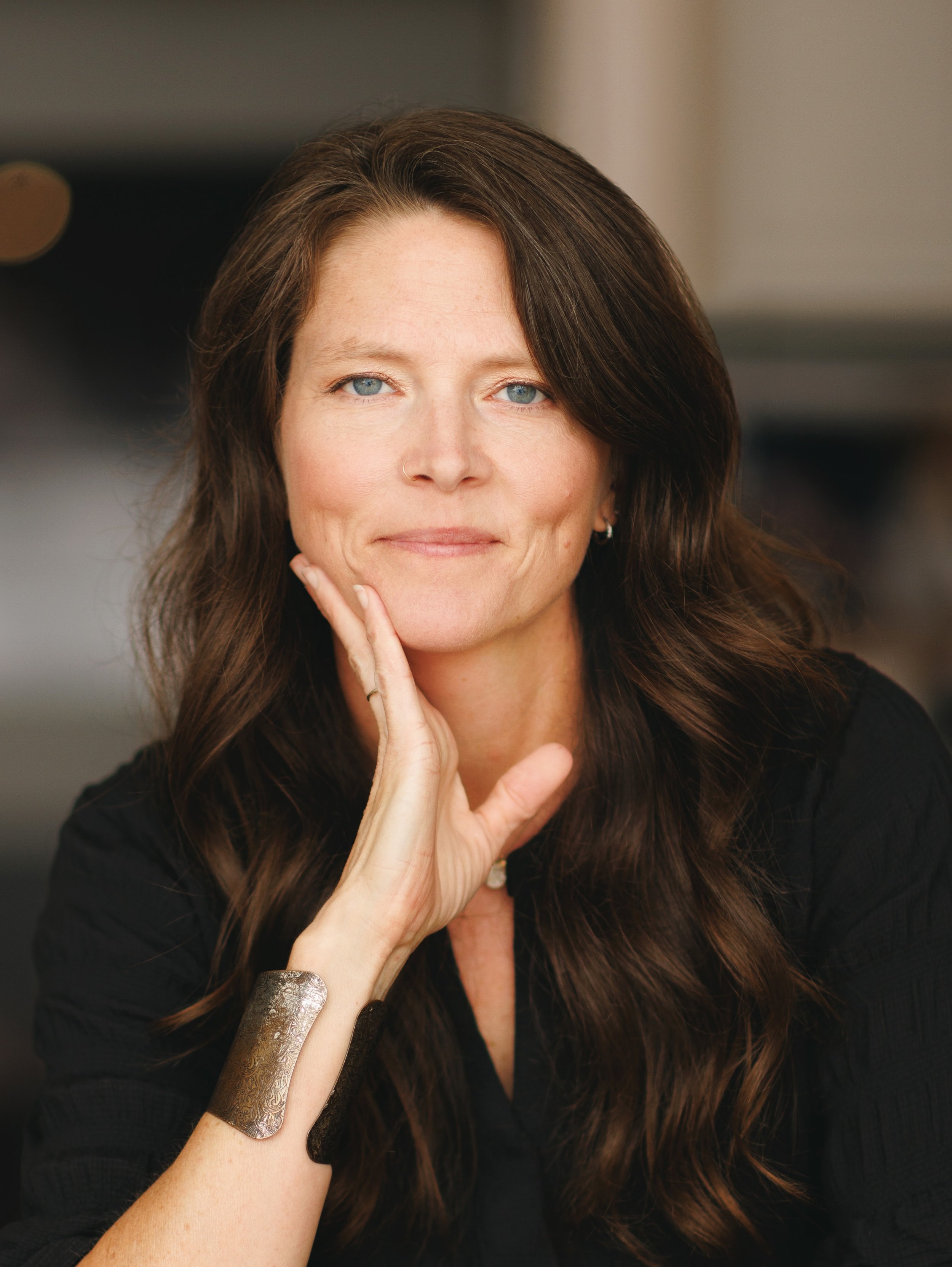
Michelle Puster, M.Ed., LPC is a Licensed Professional Counselor, Certified Emotionally Focused Family Therapist Supervisor, and Certified Clinical Trauma Professional based in Katy, Texas. Drawing from over a decade of experience in mental health counseling and her work as a trauma-informed clinician, Michelle specializes in helping individuals and families break unhelpful patterns and build deeper, more connected relationships.
As a mom of three, including a neurodivergent kiddo, Michelle’s own parenting journey has deeply informed her work. She knows firsthand the challenges of responding to big emotions, setting limits compassionately, and managing overwhelm — and how easy it is for well-intentioned parents to fall into cycles of frustration and self-judgment. Through her personal growth and clinical lens, she emphasizes that regulation, connection, and self-compassion are essential skills in parenting, not just ideals.
As founder of Compassionate Heart Mindful Life, Michelle uses evidence-based methods grounded in attachment theory, Emotionally Focused Therapy, mindfulness-informed practice, and trauma awareness to support parents in navigating relational and emotional challenges. Her approach is rooted in helping caregivers understand the underlying neurobiology of stress and behavior, interrupt negative cycles, and cultivate calm and connection in everyday moments.
Michelle blends lived experience with research-informed strategies to empower parents to approach difficult moments with confidence, compassion, and resilience.