Letting Go As Your Kids Grow With Deb Blum

Watching your children grow is one of life’s greatest joys—but it also comes with one of parenting’s hardest lessons: learning how to let go. From their first steps toward independence to the moment they begin creating lives of their own, every stage can stir a mix of pride, fear, and deep emotional adjustment.
Today, we explore the delicate balance between guiding our children and giving them the freedom to become who they are meant to be with Deb Blum. Deb is the creator of The Whole Soul Way™, a proven, repeatable self-healing framework, and host of the ELATE podcast (Explore Life at the Edges).
Whether you’re navigating the teenage years, preparing for an empty nest, or simply learning to loosen your grip little by little, this heartfelt reflection offers encouragement, wisdom, and reassurance for every parent facing change. Because sometimes, loving your kids well means learning when to step back—and trusting that everything you’ve poured into them will carry them forward.
---
Listen to the podcast here
Letting Go As Your Kids Grow With Deb Blum
I’m so excited because we have a wonderful guest, Deb Blum, with us. Welcome to the show, Deb.
Thank you so much. I’m glad to be here.
I am so excited to have you. I would love it if you would introduce yourself a little bit. Tell us about who you are, your work, and all that good stuff, and then we’ll jump into it.
Healing Emotional Triggers Through Inner Child Reparenting
It is so fun to talk about parenting and all of the topics that I know we’re going to talk about. My work has been in the space of working mainly with women. I do tend to attract a lot of moms, probably because I am one. A lot of my stories talk about moms and situations that we are going through. My kids are in their twenties.
I got into the work that I do, which is around soul guidance and transformational life coaching, many years ago. It was because of my own crisis back when my kids were little. They were about 6 and 8 years old. All I can say is that I felt like I had lost myself. Not just through parenting, though. It felt like it was over my life. It was all the ways that I wanted to be acceptable, people to like me, and all the things that I did. What was happening inside of me was confusing at that time, so I started on my own journey to reclaim myself, heal myself from my past, understand my emotional triggers, regulate my nervous system, and do all those things.
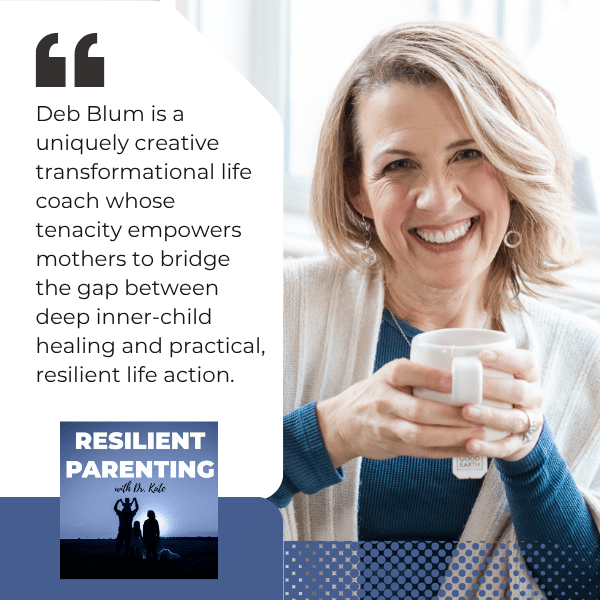
I didn’t know at the time that I would end up doing this work. What happened was, I thought I was going to become a parent coach. I went to parent coach training. I was deeply committed. I had a show on parenting, and I was so excited about becoming a parent coach. It turned out that what I liked doing was working with the moms on their own inner work. Jokingly, I say, instead of becoming a parent coach. I became an inner parent coach because I’m so focused on inner child work. I like to help the moms do their inner work through inner child re-parenting, so that they have the best chance of being the best parents they can possibly be.
I’ll leave it here with what I think so many things that we’re being told to do are to do better, stop yourself from doing this thing, or show up in a certain way. Internally, we don’t feel like we have the resources to. We don’t know how to. We’re like, “I don’t want to yell at my kids. It’s not like I want to, but it happens to me.” I love to teach how we can get to the root cause of what’s going on inside of us and also change the outside behaviors, instead of doing it this way or healing. You need both of them if you want to make a difference in your lives. That’s what I do, and I do it through my program.
You are helping folks to understand themselves fully, such that they can thrive within their own unique context. You’re making the point that there’s no one way to parent. There’s no one way to be. It’s a question of optimizing within our own unique context so we can show up fully in a way that we’re proud of, such that we can respond to challenges as opposed to react to them. What are some of the primary challenges moms come to you with?
As I have gotten older and as my kids get older, I do feel there are more moms that come who have older kids. It does vary. I also have moms with younger ones. The moms of younger ones tend to come to me probably more about their own impatience, reactivity, frustrations, and the ways that it’s hard for them to be patient with their kids.
Another one is comparison. A lot of moms come thinking they need to be doing something a certain way, and they don’t feel like they’re being a good enough mom. There’s a level of helping to see that you’re the perfect parent for your children. There’s not one way. It’s finding what is most important to you. What are your values? How do you want to be a parent? It is then helping them to find that. They almost peel back all the layers of everything that they’ve been told they should do or should be and find themselves.
With the moms that come in with older kids, a lot of it is, “Who am I? How do I even handle this whole process of not being a mom anymore and letting go of my kids a little bit?” We’re always a mom, but that is not our primary role. I have a lot of examples, but probably the emotionally triggered, angry, lashing out, and impatient is a big one.
You mentioned this idea of re-parenting their own experiences early. Also, a piece of that is regulating the nervous system in the now. Also, having a way to modulate that stress response when something happens that becomes emotionally intensifying. It is so that we’re able to bring ourselves down to a level space. It has to happen in the now. That deeper exploration takes time. It takes time to shift gears and show up differently.
Building Capacity, Awareness, And Tools For Emotional Regulation
There are three major components to the healing journey of our emotional triggers. The first one that I would like to talk about is building capacity. That one happens in many ways before you would ever get emotionally triggered. That’s the one where you’re making sure that you’re getting enough sleep, or that you’ve eaten that day, or that you’ve given enough time and space.
One of the things that was a big issue for me was that I used to get impatient with my kids before school because they were goofing off and not getting things done. It seems like such a simple thing to do, but it was hard for me to figure out that I needed to do it. We got up a little bit earlier. I said, “We’re going to start getting up a little bit earlier so that there’s a little time for play and goofing off. I don’t have to be irritated that you didn’t get your shoes on or whatever it is.”
Sometimes, the building capacity piece is something that people don’t look at. That’s the first work I would suggest people do. Are there things that are happening in your life? Are you over-scheduling yourself? Are you over-scheduling your kids? Can you dial back on some of these things so that there’s a little bit of time? Kids oftentimes act out because they’re not getting enough mommy time or daddy time. It is making sure that we’re building that in. Capacity is a big piece of it.
Children often act out when they’re not getting enough time with Mom or Dad.
The next one also happens before you get triggered, which is the emotional healing piece. You do go back and excavate your past. You say, “Why do I even react this way? Why is it that I think whenever my kid rolls their eyes that they’re being disrespectful instead of being a kid who doesn’t want to do what you’re asking them to do, but they’re still doing it? What is it about that? Why is it when my kid doesn’t listen to me? It doesn’t make me feel a little frustrated. It sends me off a cliff.” That work is also before.
What you’re talking about is the action in the moment. What are you going to do? I joke around about this because this was true for me. I would imagine putting duct tape over my mouth because I didn’t want to say anything. I was like, “I’m not going to say anything at this moment.” Another one that I’ve used that I feel is very useful is an affirmation or a mantra that’s based on my values. My value is relationships first. If I were in a situation where I was about ready to lose it, if I had the capacity to conjure this thought up, I would remind myself, “This is not in service to the relationship. I’m going to cause harm by doing this.”
Building the capacity, having that sense of awareness, and then having tools and strategies in place. That makes all the sense in the world. I’m fascinated by this idea of reinvention for moms who, maybe, their kids are older, maybe they’re going off to college, or they’re empty nesters. Talk about that process. Help moms to rediscover themselves at the core so that they can build version 2.0 or reinvention, so to speak, after the empty nest happens.
Most of the women who come to me already know they’re probably in for some deeper work. We’re not necessarily going to be making a list of hobbies you can do or building new friendships or something, although that is a part of it. There’s no question that if you’re not looking at the practical life things and you’re just doing the healing things. That’s a slog.
I always like to think that there are two paths you’re walking. One is the practical path of what you are doing every day. What types of tools do you have when you’re in the midst of being frazzled and frustrated with your kids? It’s the same thing here. When you want to reinvent yourself, look at some other interests that you have. Look at ways that you can do things outside of the family. Build relationships outside of the family, or maybe rebuild your relationship with your partner.
Often, there’s so much else that’s going on. There are so many places where we have lost ourselves through motherhood. A lot of moms are so dedicated. We want to be such good parents. We put all of our energy and effort into it and realize, “I don’t even know what I like anymore. I don’t even know what I think anymore. I’ve watched Star Wars and whatever other guy shows that my kids have wanted to watch for so many years. I’m not even sure what type of show I would watch if I even had the time.”
For me, a lot of it is understanding why someone loses themselves. What happened? Sometimes, it’s hard for women to come back and even feel that they matter enough. They’ve put themselves aside because we learned to put ourselves aside. We learned to make other people important. We made our kids important.
You would make your kids important, but then we have to go through the part, which is, can you make yourself important enough that you listen to what you’re interested in? You start to share your preferences and opinions. For many of the women who come in, it’s a little bit of an edge for them to even find those hobbies, preferences, and interests. There’s another piece of it, too, which is the hardest thing.
It is letting our kids go and letting them be free. When we are attached to our children, and they are our lives, that’s a massively hard thing to do. It feels like you’re going to be left with nothing or you’re going to be left alone. There’s the piece of that too of realizing you’re going to be okay. That’s why these things have to happen in concert. We’re practicing letting go of our kids so that they can be free.
It’s a shifting of the relationship with our kids. It doesn’t mean it’s an all-or-nothing. It’s a different relationship that evolves over time as our kids grow, develop, and become more and more of their own person as they go up to college and beyond. That’s the way that I would tend to look at it. It’s an evolution, a change.
Letting Go And Evolving The Parent-Child Relationship
The best way to have a great relationship with our kids when they get older is by building our own relationship with ourselves so that we aren’t relying on them for our validation. It’s so hard not to do this, but to be so proud of them, but that’s what fills our cup. We have to fill our own cup. I do believe, though, that the art of parenting from birth is letting go.
To me, that’s the best advice I’d give everybody. The second the baby comes out, you have to start to let them go because their mode is moving toward becoming their own individual self. I don’t mean push them out of the nest too early. It means energetically recognize that when they start walking, that’s not personal. That’s okay. Let them run away from you. That’s their job.
Having 22 and 23-year-old kids who are launching, my job is to build this relationship with them from more of an adult place. It is knowing and watching when it is my time to be Mom, when it is my time to pull back and say, “I’m watching you with pride. I’m excited. I don’t know what you’re going to do, but this is an exciting time for you.” Be willing to let them make mistakes.
That piece is so important but so hard. We don’t like to watch our kids struggle as moms and as parents. It is so important for them to have that opportunity to struggle a little bit, problem solve, and recognize that they have it within them to get back up and move forward. Whatever that’s going to look like for them. It's a hard thing to do, but so important.
I watched my son interview for jobs and then had to choose a job. He had one of the best worst problems you can have, because it is the best problem he could have, which is that he had to choose between four jobs. That’s an unusual thing.
The best way to build a strong relationship with our children as they grow older is to build a healthy relationship with ourselves, so we don’t rely on them for validation.
It’s an awesome problem.
I felt that it was hard to stand on the sidelines. I’m not going to lie. I wanted to tell him my opinion and give him my thoughts. I had to keep on reminding myself, “Trust him.” My mom said, “By fifteen years old, you’ve done your work. Not to say that you don’t keep parenting them, but where they are, it is already built in at that point.” I feel that way by the time they’re 22. I have to believe that he knows himself well enough to make this decision. I have to believe that he understands life and the gravity of his decision. He can do this. He was reaching out to other mentors.
He was talking to other people and other adults in his life, not just us. I am so glad that I didn’t say anything because I know he’s happy that I didn’t. He felt proud of himself for making the decision. He ended up getting to the place where he made a great decision. It was the one that I thought was best for him, but I didn’t tell him. It made me happy to know that he does know himself. We have to build that trust and let them go.
As much as I always want them to come back to us and always want them to know they can come back to us. They do need to build that resilience inside of themselves to know that they can handle any situation. I believe the way they do that is by having to do what you said, which is to grapple with it, problem solve, and have that space.
They can come to us if they want feedback, but even then, it’s sometimes a trick. When our kids come back and say, “Tell me what you would do,” it’s a great time to say, “Let’s take a moment first. What have you already considered? What are some other possibilities?” We want to help so much that when someone asks, we’re like, “I’ll tell you what you should do.”
Be willing to let them make mistakes—growth often begins there.
You make such a good point. You flip that a little bit. You’re willing to share a perspective, but it’s like, “Let’s explore your perspective first, your thoughts, and what you've considered. Where does that fit in?” It is so gratifying when you’ve seen your son make a decision on his own, which has landed him in a spot where he’s happy. He feels fulfilled, connected, and all of that. That’s a very gratifying thing to see on the other side of that whole process, which is amazing. Laying the foundation for that over time is so important.
It’s self-fulfilling, too. It’s self-fulfilling for me. He built some trust in me that I can let him make these decisions. I don’t have to be involved like I thought I needed to be. There’s a sense that maybe sometimes we’re afraid. We want to be involved because we’re like, “This is their first big decision. It makes sense for me to be involved in this.” That’s true. At the same time, it’s also an opportunity to watch them and then build that trust. I want to say something, too. I also feel that it’s important for all of us to know that if you didn’t do resilience work before or you weren’t doing inner work before, and your kids are adults. It’s never too late.
Some people think, “I would have had to have started this work when I was younger or I don’t need parenting help. My kids are adults.” We can always shift and improve our relationship with our adult children, too. They’re going to have children, and we’re going to be grandparents. Once we become a parent, it’s a trickle-down. Not to mention that I feel like we’re all parents to all the world’s children. We model that for everyone.
It is never too late to do this kind of work and understand ourselves more deeply, such that we can foster stronger relationships with our kids, with their kids, with our partners’ kids or families, and that whole piece. It’s a trickle-down effect. I could not agree more. That is powerful stuff. Shifting gears a little bit. I always ask my guests what defines them outside of the amazing work that they do. What defines you?
I’m having a hard time deciding because I think there are multiple things that define me. In any other conversation, if it wasn’t about parenting, I would have said my mothering or being a mother, but because we’re talking about it and they’re blending together here. I feel like the thing that I would say that defines me outside of it is my creativity and my tenacity. It is the creative ways that I look at the world and then how I turn that into either videos, lessons, courses, and meditations on Insight Timer, or something like that. That’s probably what a lot of people know me for. It’s what gives me a feeling of joy. I love to sit down and create things.
That is awesome. I love that. It’s exactly at the core of what you’ve done in building your business and the connections with those you work with. That’s beautiful. That’s amazing.
Healing While Taking Action: Creating Change Before You're Fully Healed
It probably does speak to the way that I also coach and work with people. I’m very creative. I was that way when I used to be a project manager and work in technology. I always said, “Don’t box me in. I am not the kind of person who is going to follow a rule book of what we’re going to do. I’m going to figure out creatively what’s most needed in this situation to be the most successful.” That’s how I look at my clients. I look at them and say, “What is it that’s underlying? What’s the root cause? What is it that you want to create? How are we going to get from here to there?”
That’s my magic. I’m not just in the healing space and the life coaching action space. I’m bridging the gap, saying, “How is it that we can look at all of the ways that you do need to regulate your nervous system? You need to heal from your past. You probably need to re-parent your inner child. Let's not wait until you’re fully healed. Let’s show up in our lives differently. Let’s make a difference. Let’s do something different, deep in the tiniest different thing, to shift your life toward what it is that you’re trying to create more of.”
I love that. It is helping folks to optimize from the inside out. It’s such powerful stuff. Thank you so much for joining us here. I’m curious how folks can get in touch, learn more, and all that good stuff.
I am on Insight Timer, YouTube, Spotify, and pretty much everywhere you could find me. probably going to my website, Inspire4Life.com, is the best place. There, you could sign up for my email list. I do have a freebie in the context of this concept of triggers and being emotionally triggered. It’s at Inspire4life.com/Triggers. It’s called Unshakable You.
It’s about mastering these three keys. It speaks to building capacity, healing yourself, and then taking action. I call it the cha-cha because it’s a dance. It’s not something that happens one time. This is stuff that you’re dancing with as you’re learning how to regulate your nervous system and become resilient in your life.
I’m sure that will help many of my readers, so thank you for sharing that. Thank you so much again for joining us. This has been great.
Thank you. I appreciate it so much.
Important Links
About Deb Blum

Deb Blum is the creator of The Whole Soul Way™, a proven, repeatable self-healing framework, and host of the ELATE podcast (Explore Life at the Edges).
In The Whole Soul Way Course and her Evolution Monthly Membership program, she guides strong, self-reliant women who feel empty and unfulfilled despite their "good" lives—to reunite with themselves, heal childhood wounds, and reclaim what's been lost while living according to external expectations. Her methodology uniquely blends action-oriented inner child reparenting, gentle shadow integration, and real-time nervous system regulation.
Before launching The Whole Soul Way, Deb co-hosted the Parenting 3.0 Podcast: Raising Emotionally Healthy Kids. That work revealed what drives everything she does: it’s always for the kids—both our actual children and our inner children. When we reparent our inner child and grow ourselves up, we break generational patterns, and experience deeper fulfillment and more emotionally-connected relationships.
Deb has been doing this work, for herself and with her clients, for 15 years from inside real life—raising two sons (now adults), married 24 years, navigating transformation from the messy middle. She's compassionate but doesn't coddle. She sees the strength and expansive potential in the women she works with and calls them forward into their full selves.
The complete Whole Soul Way Foundations Course—40 lessons—is available at no cost on YouTube, Spotify, and Apple Podcasts.