From Overwhelmed To Resilient With Charlotte Haggie

Many highly capable professional women find themselves trapped on a frantic hamster wheel, balancing successful careers with deep parental devotion yet feeling entirely overwhelmed and disconnected from the present moment. In this episode, resilience coach and host of The Resilient Working Mum podcast, Charlotte Haggie, joins the show to share a transformative framework for reclaiming motherhood and career longevity from the inside out. Moving beyond the exhausting myth of "work-life balance," Charlotte introduces her Identity Stress Map framework to help listeners achieve true internal equilibrium. By learning how to objectify stress triggers, practice microscopic micro-habits of self-trust, and view daily life as an organic adventure rather than a rigid performance, working mothers can trade exhausting survival strategies for a rooted, flexible presence that allows the entire household to thrive.
---
Listen to the podcast here
From Overwhelmed To Resilient With Charlotte Haggie
Welcome back, everyone, to another episode of the show. I am so glad you are here. We are so fortunate to have Charlotte Haggie with us and are very excited about this conversation. Welcome Charlotte.
Introduction: Personal Training For The Mind
Thank you, thank you so much for having me. It is just wonderful to be having a conversation with someone else who talks about resilience, and I am absolutely passionate about helping working moms specifically build their resilience because most of the women that I work with are incredibly capable. They are successful professionals.
They are deeply committed mothers, but many of them feel like they are in this hamster wheel, rushing through their days, holding all this pressure that we all hold, wondering why life feels just overwhelming and unable to really be present. My passion is to see women be present in the wonder and the joy of this moment, whether it is at work, whether it is with their children, whether it is with themselves in their own health, in their own well-being, and just to know that that is possible for every single woman out there.
This whole idea of our well-being as moms being something that is not only vital but possible and sometimes we lose sight of the possible piece I think in the midst of everything that is happening for us as moms particularly if we are working and talk a little bit about that how you help moms specifically hold on to that sense of well-being the possibility that “It is not only important for me to focus on my well-being but it is possible within the context of everything else that I am trying to do.”
The Resilience Triangle: Time, Capacity, And Identity
I often draw a triangle for my clients and look at what resilience is in relation to our well-being. I used to be a personal trainer for bodies, and I actually now call myself a personal trainer for our minds or for her mind. The woman I am working with, I am a personal trainer because I have these mental muscles of resilience, and the trick is to strengthen them.
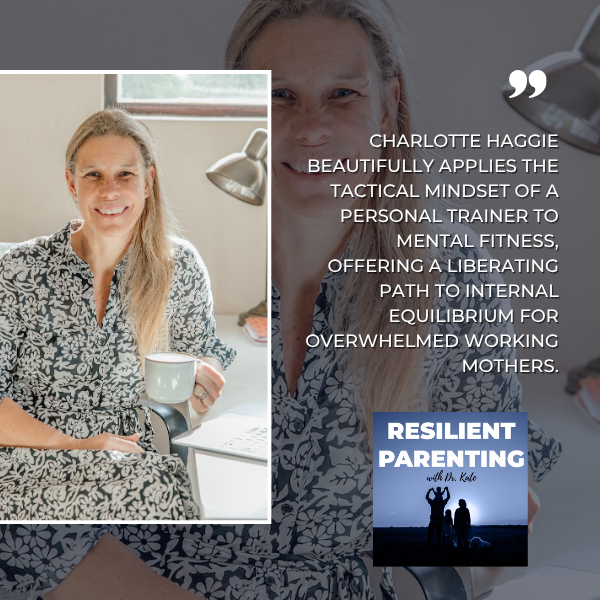
It is not that some people are born resilient and others are not. It is actually that we have these muscles that we can build in response to life. I draw this triangle, and I look at each side at the core pressures that women are experiencing, specifically, obviously, in the working relationship. These two domains that we have and these pressures are around on one side of the triangle, time, the other side emotional capacity, my ability to show up emotionally responsively rather than reactively.
Fundamentally, for me, it is about identity. Who am I, and who am I trying to be or wanting to be seen? When we build resilience in these three areas, then women's well-being is so much more looked after physically, emotionally, and socially, and their leadership at work is better. They feel like they are achieving, but from a place of certainty and steadiness. This means that the emotional climate of their home is steadier, their children are growing up in a place that is more. I love the idea of emotional equilibrium.
One of the things that I love to bust is this idea of balance. What I want to say to women is that when we can find internal equilibrium, internal balance, then the external does not matter, what is going on outside of ourselves. We are certain, we are steadfast, we are kind of like I love the analogy of a tree, we are rooted and flexible enough that a storm can come at us, and we still stand firm and confident enough that the storm can be howling around us, the wind can be blowing at us, and we are steadfast. When that happens, then your well-being in every area of your life is so much easier to manage and also easy to thrive in, and then those around you thrive as well.
Grounded from the inside out, optimized from the inside out in whatever way works best for them, and I love what you say. Obviously able to then show up for their kids, for their families more robustly. What this looks like, this groundedness from the inside out, looks different for all of us, right? What it might mean for one might look very different for another woman, or another mom, or what have you. How do you help folks build awareness of what is going to work best for them? How do you help them get in touch with what they need to be rooted, grounded from the inside out?
The very first step, as you say, is awareness, and we are all different. I often have clients who say to me, “Why is it that this woman can respond to things in such a calm, peaceful manner, and I just lose my cool and I am reactive and I am shouting.” I take my clients through an investigative phase. We look at what are the patterns of behavior, what are the survival strategies. I mentioned earlier, around identity. What false identities, or I call them false or conditional identities, have I taken on in order to survive in the world?
When we can find internal equilibrium, internal balance, then the external does not matter.
Maybe I show up as the good girl because when I was little, being good got me praise, got me affirmation. Maybe it is the people, pleaser, because when I did that, when I made sure that everybody was happy, when I kept the peace, I felt at ease, and everybody else seemed to feel at ease. Maybe it is the achiever. I got praised for achieving, and we are all living with these false identities that served us beautifully when we were younger, because we had other needs to be met.
We needed our need for food, drink, and shelter to be met, so we needed to please the people who were providing that for us. Here we are as adults, and that survival strategy is still in place, and yet now it is sabotaging us, now it is causing us stress in response to maybe it is a raised eyebrow, or maybe it is another request from someone, and you just do not have the capacity. Maybe it is a child shouting and screaming at you, whatever it is, triggering this panic that I am not meeting the rules and the expectations of this identity that I have taken on, which kept me safe.
What if I do not meet those rules? Will I still be safe? When we investigate, we do a lot of work looking into the identities that I am living out, the wanted ones and the unwanted ones. What identities am I moving away from? Maybe I am living out the responsible one, and I am moving away from the rebel or from the irresponsible one, I suppose, but always looking at.
Sometimes there is a tension because there are two different identities, or there is our true identity that is saying, “Actually, this is what I value, but you are running around meeting the values of everybody else out there, and there is a tension between that. Now I am feeling like there is something wrong here.”
We are so busy running around in our lives that we do not take the time to really dig under the what I call the iceberg of ourselves. Above the iceberg is our behavior, our actions, and the results that we get. Below the iceberg is actually what I believe about myself in relation to the world. What do I believe about the world that then creates this stress response in me when something happens outside of me?
We are so busy running around in our lives that we do not take the time to really dig under the iceberg of ourselves.
Absolutely makes a lot of sense, and then you speak to this idea of the evolving sense of self, and what worked for us in the past might not be working for us in the present, but often times so hard to let go of those ways in which we view ourselves. Our tendencies that come along with how we are viewing ourselves. Letting go of some of those things so vital as we are evolving through these different phases and stages of our lives as moms, as people. All of that.
Those are really really good points and this idea of comparison, really hard. Helping folks really get in touch with their own unique context and what is going to allow them to thrive within that context, I believe is so important at the core of all of this and so hard because we have got so many inputs, social media, the thing that our office mate is doing or our neighbor or our child's best friend's mom or what have you. It’s so hard to let go of the comparison. What are your thoughts on that, and how can we really help folks to do that?
Rewriting The Rules: Unhooking From External Expectations
Comparison again is that identity that wanted identity or that false identity. I will give an example from my experience. My whole life, I thought that the right thing to do was to get into corporate employment. I got into employment, I was expected at work from 9:00 to 5:00 or whatever it was, and I felt unbelievably trapped and very uncomfortable.
The true identity was saying, “This is not for me,” but the false identity was saying, “What is acceptable and what will mean that you belong is that you get into a job, you earn a salary, and you go to work every day.” I berated myself for not being able to do that. I had learned through my upbringing, school, and university that that was the thing that you do.
What was wrong with me that I did not want to do that? I then looked at professional women, women who dress professionally, their hair was beautifully done, they always had their nails done, those kinds of things, as the right kind of woman. I would see those women, and I would say, “I am not the right kind of woman because I do not look like that. I do not take the time to do my hair in the morning, I do not have my nails done, and I do not spend money on whatever. I just do not look that way.”
The comparison would flare up. “I am not right because I do not look that way.” Through my own investigation, I had to learn the false identities that I was carrying around that created this story in my head about what was acceptable, what was loved, what belonged, that I was carrying around with me that then made me look at the person that I thought was acceptable and loving, lovable, and belonging.
If we are affirming ourselves on top of a belief that is so deeply rooted that I am not valuable, then you are almost just chucking good soil on top of bad.
Get to know what it was about me that was valuable because my idea was that value came from your job, your title, the amount you earned, and your success in that role. I had to unlearn those rules of that identity and learn what was valuable about me and how I could contribute. We live very much in a separated world view. I am here, and I have got to do it all, and I have got to make it all happen.
When you actually live in a connected worldview, I have something to bring that nobody else has to bring, and my neighbor has something to bring that nobody else has to bring. When we actually work together, we can make things happen. When we are separated and feel inadequate because we are not meeting the rules that we have set for ourselves, at the end of the day.
Who really believes that? Whose rules are these? They were the ones that I had created based on the stories that I had heard, the things that I had seen, and the little snippets that had gone by in passing that someone had said that they had never thought about ever again. I see this with my clients all the time. When my mother said this, or my granny said this, or my teacher said that, we hang our identity on that peg, if you will.
We live that out, but that is the false identity, and when we can recognize her and when we are comparing ourselves unhook from her. Mine was the achiever. “I am not achieving because I am not doing all these things, and I do not look like that.” I could unhook from her and say, “I can hear my achiever speaking.” I can actually almost objectify her and say, “I know I can see that you desperately want to feel good enough, and you are good enough because of X, Y, and Z.”
When we get to recognize the identities we live with, I use what I call my identity stress map, and I take my clients through recognizing the identity she lives with, the trigger that triggers that identity, and her reaction. What is the stress response? Is it fight, flight, freeze, or fawn? Which one is she doing? I would find myself in a fight, but now I am going to achieve. Now I am going to go home, and I am going to do everything I can in my power to look like that woman, even though I do not really want to look like her.
Noticing what my stress response is and who is the identity that is creating that response. When you separate yourself, it is so much easier not to compare anymore. You start getting to know, actually, I bring something, but also getting to know what that is. We can affirm ourselves until the cows come home. If we are affirming ourselves on top of a belief that is so deeply rooted that I am not valuable, then you are almost just chucking good soil on top of bad. We have really got to dig out that identity and say to her, “I see you, but can you just actually stand over there and be quiet?”
Women do not have the time to do the things that they enjoy, even if they did know what it was.
Such a wonderful example of really digging into and identifying the facets of our own unique context that make us who we are and what we are bringing to the table. You're right, that is first and foremost so important to recognize, and oftentimes we lose sight of it for exactly the reasons you were describing, the comparison thinking based on external messages that we have to be something else, something that we are not.
Trying to create that is often a very awkward process that does not land very well. Love the way you are describing the untanglement there and really reconstructing that sense of self from the inside out so that we can show up in our full strength and who we really are without that comparison. Easier said than done, and definitely a process.
What about some of the other variables that we can foster within ourselves, connections that we can foster with others, such as social connections, and engaging in hobbies? All of these types of things that really help build our sense of self and identity from the inside out and also build our sense of resilience, allowing us to show up more robustly, more happily, if you will, across domains. What are your thoughts there?
Recharging The Battery: Overcoming Mom Guilt
What I so often see is that women do not actually know what it is that they enjoy doing. You can say what energizes you? It’s so much of the problem that we have is this idea or this concept of capacity. “I just do not have the energy. I come home at the end of the day, and now I have to be patient and calm, and present with my children. I have been performing all day as this identity of the capable one or the reliable one or whatever one I have to perform all day at work, and now I have not had enough time to recharge.”
Think about a cell phone, you plug it in when the battery is empty, but we move from depleting our battery all day straight through the door, and now we are with our children. We now do not have enough capacity, so we shout at our children because they do not do what we want them to do, and then we feel guilty, and then we sit in this thing.
One of the fundamental skills of resilience is self-trust, and most people do not trust themselves.
The story is “I am selfish if I do anything for myself, so I cannot even ask to go to the loo on my own, and I need to be a good mom, I need to be a good wife, and I need to be a good daughter. Now I need to be a good class rep because they have phoned me to be the class rep, and how can I possibly say no?” Women do not have the time to do the things that they enjoy, even if they did know what it was.
The Skill Of Self-Trust And Value-Based Boundaries
When we can again shift into “I am valuable as I am. I can set boundaries, I can ask for what I need.” In fact, I can take some time to find out what it is that I need and what it is that I value. I love working with my clients around value-based decision-making. One of the fundamental skills of resilience is self-trust, and most people do not trust themselves.
When I trust myself, I can live out of my values, and then I can start to actually do the things that I love. What does it mean to trust myself? Do you think about someone that you trust? It is someone that you can rely on, it is someone who speaks kindly to you, and it is someone who keeps their word.
Do we do those to ourselves? Absolutely not, most of the time. When we build trust in ourselves, then we can say, “Because I trust myself in relation to the world, this is actually something that I value, and now I can go and do the thing that actually does energize me.” Whether it is at work, it is actually setting a boundary and saying, “Sorry, I cannot do that today, but I will get it to your desk by next Wednesday.”
It is really building the capacity to self-regulate emotionally, but also to self-lead in terms of setting boundaries, having courageous conversations, and listening to others. I always say listening to hear rather than listening to respond because I think we all listen to respond because we are scared of not getting our word in. When you build that capacity, then you can say, “One of the important balls for me to hold is my own hobby, and what is that thing that I love doing.
Now I can say on a Saturday morning between 9:00 and 10:00, I am going to go for a run because it is the thing that brings me joy, and this is actually my boundary, and it is good for me, which means it is good for you. I have more capacity once I have been for my run, or I have read my book, or whatever the case may be. There is more opportunity to bring into our lives the things that we enjoy when we are resilient to the expectations, to the raised eyebrow, to the ideas that we need to please everybody, or we need to be good for everybody.
Many important insights there and perspectives for how we can really show up for ourselves in a full way, so that we can show up for others. It is about taking that step back, gaining perspective on what we need to be optimized within our own unique context, and that is the very thing that is going to allow us then to show up fully across the domains of our lives. I love that. Shifting gears a little bit, I always ask my guests what defines them outside of the amazing work they do. For example, how are you filling up your own cup on a daily basis so that you can show up fully?
Life As An Adventure: Cultivating Daily Presence
It has taken me a long time to figure this out, and what defined me for many years was my work, how successful I was in my work, and my ego. It has taken me a long time to actually shift my attention to who I am as Charlotte, not who I am as the coach or the mom or the wife or the daughter. The thing that really defines me is that life is an adventure for me in whatever I am doing.
In my work, it has become less of striving and driving and more of an adventure. In my mothering, it has become an adventure in seeing the world. I have traveled to many countries, and I have had the incredible privilege of traveling and the adventure of meeting new people and seeing new cultures. In my day-to-day life, I look for how I can make today an adventure. Maybe it is that I drive a different way to school.
I say to my children at the end of the day, someone once said this, and I thought it was so brilliant. At the end of the day, we have a treasure hunt for all the treasures that happened in our day-to-day life. That in itself is an adventure, and looking at the garden and what flowers I am not really into, my garden so much, but “There is a flower that has just popped up.” Seeing the garden coming alive or cooking something, I am not really into cooking, either, but could I cook this thing?
There is more opportunity to bring into our lives the things that we enjoy when we are resilient to the expectations, to the raised eyebrow, to the ideas that we need to please everybody.
It may work, maybe it does not. “What would happen if I added this instead of that?” Cooking becomes less of a drag. It allows me to be more present. I have never spoken to anybody who did not tell me that they wish they were more present. When we look at life as an adventure, it is almost easier to be present in whatever situation we are in.
Yes, because you are taking away that rigidity. You are giving yourself more flexibility within the context of your day-to-day. Letting it unfold in a way that allows you to notice the things around you that spark that moment of joy or make you happy, like you mention, your garden or a flower that just popped up, or what have you. There is so much power in that. I just love it. What an inspiring conversation with so many wonderful insights and so much great perspective for all of us. I know that I have taken away a lot of nuggets from the conversation. I am sure that my listeners will, too. Any wrap-up piece of advice or nuggets that you want to leave folks with?
The Kilimanjaro Analogy: Trusting The Journey One Step At A Time
I would love to just reiterate that resilience is something that we can build. If we start with self-trust, and that might look like literally I often say, “Put a glass of water next to your bed and every single morning drink that glass of water for a month.” When you have done that every single morning for a month, take five minutes to practice a mindfulness practice and add that on.
We so often see a mountain, and we have to climb the whole mountain, and we want to be at the top of the mountain. I may just quickly tell a story about how I climbed Kilimanjaro, which is the highest mountain in Africa. It was amazing. At quarter past twelve in the middle of the night, we put on all our kit. We started trudging up the mountain, and it was very slow going.
I remember the first stop, I could not even take I had three layers of gloves on, seven pairs of trousers, two beanies, all these things, and someone had to help me drink some water. We were only just over an hour in, and I just thought, “This is awful. I just want to be at the top, and I could see all these little headlights at the top of the mountain.”
I was like, “I just want to be at the top of the mountain. I just want to get there. When am I going to get there? This is all taking too long, and it is so hard.” I just thought, “You have paid to climb this mountain. You have the privilege of climbing this mountain. You are in this beautiful place with these amazing people, and all you want is for it to be over.”
I started to really be in the climb. I started to think about the joy of the privilege of this trip and what we had seen already, and the people that I had met. Before I knew, it was 5:00 in the morning, and we had there was a switchback area, a switchback section until we got there at 5:00 in the morning, and we turned around. The sun was rising.
Resilience is something that we can build.
I had another couple of hours to get to the summit. Those four hours had gone by in a flash and a blur. I had really enjoyed them. It is just taking one little step at a time, not looking at this insurmountable thing, but actually looking around you and knowing I have got this and I can do this. I’m changing the belief from “I am never going to make it to the top of the mountain, and everyone else is there. I am so far behind. I have got this, and this is going to be great, and what a privilege to climb the mountain.”
That is powerful, and there is so much power in everything you just said, appreciating those small moments, and eliminating the desire to go from point A to point Z. In this case, from the bottom to the top all at once, without enjoying the process. Love that. Enjoying, engaging in the process is so so important for all of us, but Kilimanjaro, that is impressive, that is amazing. I love that. Charlotte, where can my listeners get in touch, learn more?
I also have a podcast called The Resilient Working Mum, which you can find on all podcast platforms or at my website, CharlotteHaggie.com. It’s very easy to find. I am also on Instagram and LinkedIn, the handle is @charlottecoaches. If anybody gets in touch, I love reaching back out and having conversations with people. If anybody does want to have a conversation, please drop me a line. I would love to be in touch.
Wonderful. Thank you so much for joining us here. I so appreciate it.
Thank you for having me.
Important Links
About Charlotte Haggie
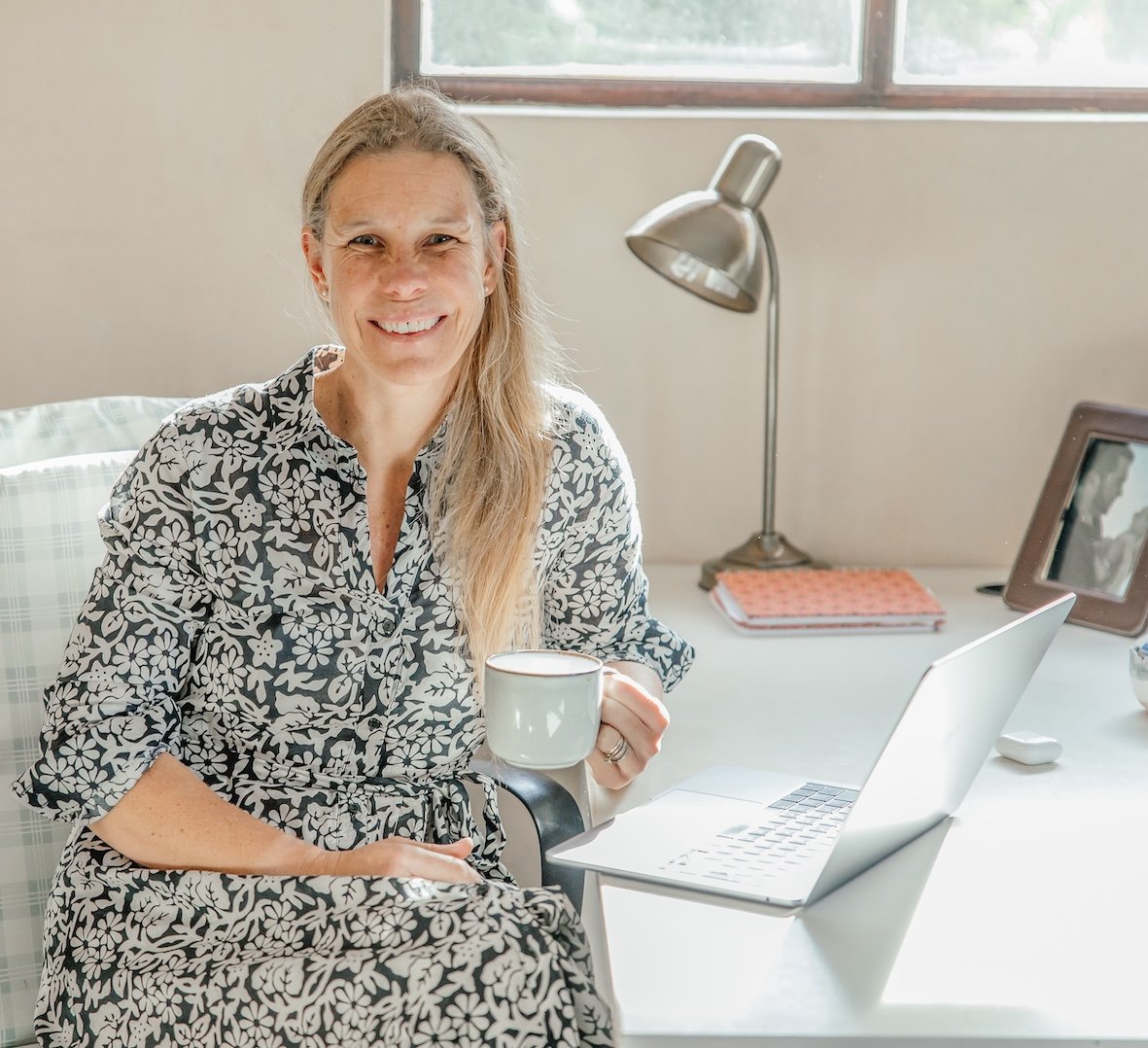
As a qualified coach and mum of two, Charlotte is disbanding the myth of ‘balance’ and highlighting the need for resilience for working mums who long to be focused, present and productive as they lead at work and at home.
Through her Ease Over Effort™ Framework, Charlotte helps women build the mental muscles of resilience so that they do not buckle under the stress of life but have the capacity to hold a heavier ‘load’ with more ease, peace and calm.
Charlotte is the Founder and Host of top 2% globally-ranked podcast The Resilient Working Mum (dedicated to all things stress management and resilient building for working mums) and a sought-after Coach for women working in the corporate world or in their own businesses.