From Anxiety To Resilience: Parenting Insights With Joanne Williams
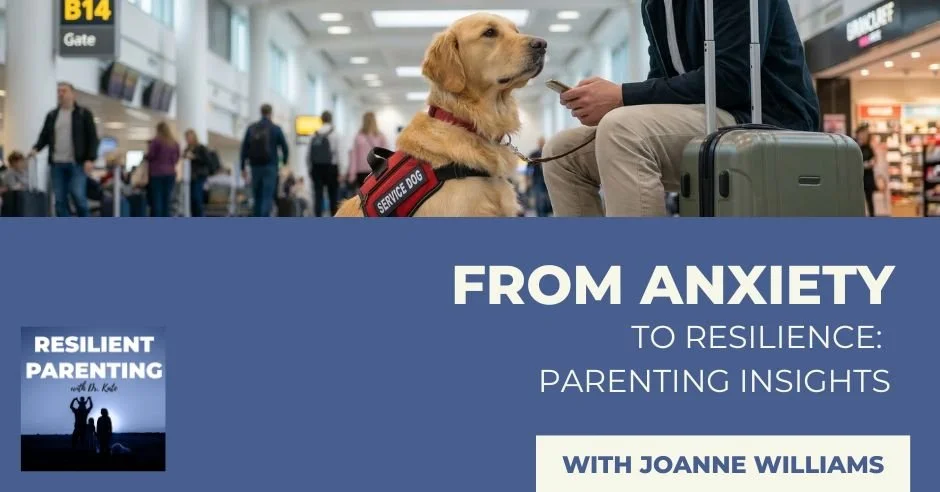
Bridging the gap from anxiety to resilience requires a shift from controlling behaviors to fostering authentic emotional safety through nervous system regulation. Joanne Williams, a therapist with 30 years of experience in PTSD recovery, joins the show to discuss how parents can navigate their own anxiety to better support their children's development. She explores the transformative role of psychiatric service dog training as a task-oriented tool for managing panic and provides a biological roadmap for resilience using the "4 and 8" breathing technique to stimulate the vagus nerve. By prioritizing the "regulate-relate-reason" framework, Joanne illustrates how parents can move past power struggles and build an emotional bridge that fosters long-term responsibility and deep connection within the family.
---
Listen to the podcast here
From Anxiety To Resilience: Parenting Insights With Joanne Williams
Joanne’s Journey Into Anxiety And PTSD Work
Welcome, Joanne. Thanks so much for joining us. I’m glad to have you.
Thanks. I'm really excited for your new show. I love talking about parenting, so thanks for having me.
Absolutely. I really loved being on your podcast as well, Anxiety Simplified. It was amazing. This is how we connected. I'm very grateful that you're here. Thank you. As we launch in, I'd just like to ask my guest to give a little bit of an overview of who you are, what your central focus is in your work, maybe even a little bit on how you got there.
I feel like growing up with inconsistent emotional safety really taught me firsthand about how anxiety, even trauma, or lack of support shapes a child's life even into adulthood. I live with post-traumatic stress disorder, and so that's how this led me into being a therapist, really, for 30 years. That has been my specialism, anxiety reduction and PTSD or post-traumatic stress disorder recovery. I offer one-to-one sessions, but I really work with strategies and tools that I feel like go beyond traditional therapy.
One of them is that I help people step-by-step through the ADA process to use their own dog as a psychiatric service dog if they lower their anxiety, and then they can fly without panic. I’ve also written a book, Super Dog Helps Boy's Fears, which is about ways to help parents give ways to communicate with their kids. Actual questions they can ask their kids because sometimes parents get stuck. It's an easy way to start hard conversations.
That is so fascinating and so powerful. I love what you said about the work you do, the ADA, and helping folks to quell their anxiety through their connection with their dog. I'd love to delve into that because this is an area of passion for me. I'm a dog lover. I have always been and have many dog-related stories that I could share. My current focus at this point with my dog, Wally, is we go out and we work at Seattle Children's Hospital as part of the animal-assisted therapy team as volunteers.
It's powerful stuff as you well know, the impact, the power that a dog has in situations where folks might be anxious, scared, all of it. I would love to hear a little bit more about your work in that area and that space and helping folks with anxiety manage their symptoms through their connection with their dog.
It's an interesting focus because the laws started over 50 years ago in 1968 with the Fair Housing Law. This is not new. However, most of my clients, when I look to certify them in sessions, a friend had to tell them about it because they've never heard about the possibility either to have your dog in housing or to fly with them or to go in all public places under the ADA. It's an interesting thing that this has been around so long and medically proven in so many different ways.
That's why there are laws to help people, but to simplify it, maybe I'm going to start with the differences because I think that's part of the confusion. You were talking about a therapy dog that can go into nursing homes or hospitals to help people, which are not a service dog or an emotional support dog. An emotional support animal could be any animal. That's where it started with the Fair Housing Act. In 2020, the flying law called the Air Access Law, they changed its definition from what an emotional support animal to fly to a psychiatric service dog.
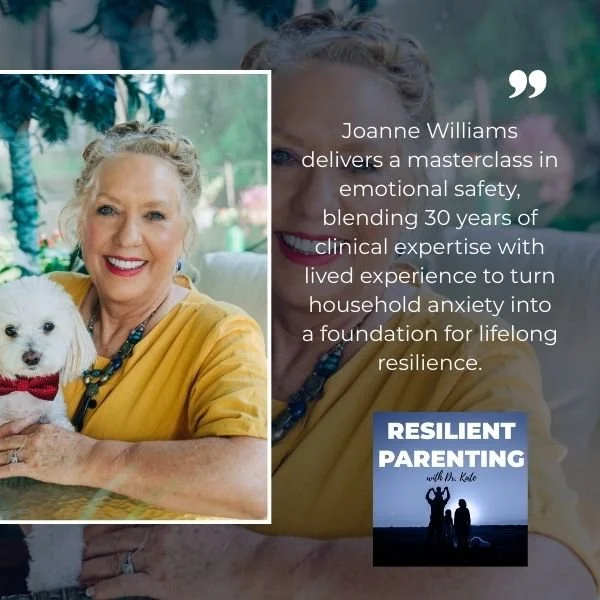
Growing up with inconsistent emotional safety teaches how anxiety, trauma, or a lack of support can shape a child’s life — even into adulthood.
They use that term now to differentiate them because that's what the ADA defines as a service dog. They have to be able to do a task. They're trained to help to reduce or help with psychological symptoms. That's where I think the confusion starts. If people want to just get to be able to have a therapy dog, great benefits. You see them in airports all the time now or just for housing, you get emotional support if you want, but if you want to take your dog in all public places, fly with them, it's now a psychiatric service dog, still a service dog under the ADA.
A very much different level of training for a service dog.
Can be, but most dogs, if they are intuitive with their handler, they may already notice that before they're having a panic attack and come up to them, part them, whine, look at them. If they do that consistently, they can actually be considered trained to do a task. It's how that animal is responding, not the person responding to the animal telling them to come over and help me with the panic. It's the dog already knowing. It depends. Yes, there can be more training or there needs to be more response from the dog than just going and laying in the corner when they get anxious. They have to do something.
I think that's part of the confusion because all three laws have never required that you have to have a professional trainer or training organization. You can train your own dog, even a seeing-eye dog. I think I might want to get a trainer to take them across a busy street, but it's a little different for psychological disabilities under the ADA. They just really have to respond to something to depression, anxiety, panic attacks, PTSD emotional irregulation to help them regulate it.
Service Dogs And The ADA: What Parents Should Know
Yeah, it does. I imagine, though, that there's got to be some formula in terms of the dog has to be evaluated and pass a certain level of testing to be deemed, because a lot of us have very close relationships. I know my dog can tell when things are shifting here in the house. That's actually another question, how this plays out within the context of a family and how you know the dog is responding to stressors within the home and how the dog might come in and help folks to manage through some of those stressors building resilience along the way for both parents and kids.
A lot of times, you will hear children with autism on a spectrum might relate better to an animal or calm them easily or even people that's been diagnosed with dementia. They have outbursts, and it's amazing to watch that this animal can go over and calm them. That is more the definition, that response. What the dog recognizes, responds, and reduce is the actual ADA law to be able to be a service dog. I think people understand it a lot better with autism or maybe they've seen it or with returning veterans, they understand that there's maybe some post-traumatic stress disorder.
What the dog recognizes, responds to, and reduces is actually what qualifies under ADA law for a service dog.
However, their dog still has to respond to whatever their emotional state is. If it's increasing anxiety, maybe they're dissociated, they can bring them back even by a paw touch. Maybe it is just coming over. One of the tasks that I talk about a lot is applying pressure therapy. They can come up and lean into them, jump on their lap, and that's one for emotional support. We used to call it comforts me or just emotionally supports. We have to take it a step further in that sense that they're not just giving that emotional support.
They're actually doing something to get to that state. That's how parents can use them. I think of this story, I think it was in Hawaii. This autistic child had had a chicken. That child would go into the yard and play with this chicken, and he'd play with it and friends would come over and play with him and the chicken.
He was having a hard time relating to other children but with Charlie the chicken, they could relate through the chicken. That's one example of how you can use and usually, it only is dogs for psychiatric service, but that could be an emotional support animal. Still, that relationship of that animal, it doesn’t need to be a dog, can help children interact with others easily. Maybe go into places calmer, go into the grocery store because they used to have meltdowns. Now with their dog, it's a behavioral tool a lot of times with children.
The Foundations Of Resilient Parenting
Yeah, I couldn't agree more and a lot of power there. Shifting in a more general direction, what do you see in your work or what are your thoughts on how parents can really optimize their own sense of well-being within the context of whatever it is that's going on at home, challenge-wise, challenges with their kids? That idea of optimizing our own sense of well-being as parents feels important so that we can show up fully to help with whatever other challenges are emerging in the home. What is your thought on that?
I feel like a lot more challenges now for parents than ever, and I really feel for them. My children are grown, I have grandchildren, who have now used some of the same techniques that I use with my children to be able to have emotionally healthy children and be able to use tools, I would call it, in the home that really work. That's why I'm developing and going to be now teaching at a local YMCA here, a parenting group that are foundational pillars I find for parenting.
The first one is about real connection because I think a lot of times, parents are so busy or so already stressed that very little makes them go over the top. It's like how do we regulate ourselves to have a real conversation, and that is part of what stops power struggles. We're trying to prevent things, and there's techniques pretty simple ones. Just around also helping the child regulate their emotions so before you have conversations, and to me, it's like an emotional bridge so that the children can feel safe enough to listen to the parent and then share more and calm their faster and same for the parent.
I think there's tools that I think parents do need to find, learn, if it is on podcasts or seek it out like in the community. This is going to be at a Y, at a public setting. There are resources in our community I think we have to reach out for if you're feeling so stressed and overwhelmed all the time that it's really hard to listen, really hard to be present for your children.
Regulating The Parental Stress Response
That's why I think this idea of having a way to modulate our stress response is so important in that ability to show up fully and have that authentic human connection with our kids, because I couldn't agree more. I think that that authentic real connection is super important. Sometimes, that just means being there to listen, you know. We don't always need to be fixing or changing something, and I think that's a really important piece to put out there. The modulating of the stress response, I'm really curious what your thoughts are in that.
I’ve got a technique that I teach derived from a physician in Boston named Herbert Benson. It's called the Relaxation Response and super simple technique. I teach it to folks and they practice and seems to be quite effective. It's very heavily researched. Curious what your go-tos are on helping folks to modulate their stress response.
One of them that I use and this is with all clients that will be included in the parenting course, it is one again that's medically researched that stimulates the vagus nerve which sends a calming chemical into your system, and it's so simple and can really calm within minutes because it's sending a calming chemical in. It's called the 4 and 8 breathing, and it's breathing in through your nose 4 and counting 4 in and then counting 8 as you let your breath out your mouth. Usually, it's about five rounds. It is about a minute to two minutes until you feel your shoulders go down.
They have really proven it's an alignment. It gets you out of that overthinking. It gets you out of that pressured usually from your thoughts of, “I need to, I have to, I have to get go.” It gets you reset. Out of your thinking because you can't think and feel the same time. If you can get out of your thinking, then you can get into your emotions.
The 4-and-8 breathing gets you out of that overthinking. It pulls you out of that pressure — usually driven by thoughts like, “I need to, I have to, I have to go.”
Feel the calm, then you're brought down that stress level in that moment long enough so then you can make more of a conscious way to listen, be present, but you got to get out of that stress response first to be able to. I love your title about resilience because I feel like that's what I call it. It's a resilience response because you cannot get to where you have resilience until you calm that overactive brain. That's one of my favorite ones that I use.
I 100% agree so much with what you just said because it's true. There are so many techniques that we can use to modulate our stress response. I love the one that you just described. I'm going to actually try that myself because the relaxation response, Dr. Benson, is also extremely simple, extremely powerful. I think it's wonderful to have options, to have various ways of making this happen and because modulating our stress response as parents, I think, is foundational.
It's so important because of work and that's another great point. It's easier said than done. It's brutal but yet so important to have as a focus at the forefront. Beyond that, what else can parents be doing to optimize their own sense of well-being such that they can connect more fully with their kids with everything else that they've got going on in their lives?
I'm going to say beyond a dog because I’ll tell you, I haven't done this yet, but I'm going to write an article. How my dog and two bathrooms saved my marriage. It is interesting how when a dog, and this is medically proven, is in your environment, it calms the environment. That dog just being there but we joke as a couple, we will talk to the dog. “Do you hear what he's saying right now? Can you hear how he's getting so anxious about something? What do you think, Riley? Can do you think we can help?” We just make it a joke.
We just get out of that serious whatever situation and it's easy to use a dog to do that. That's just a little simple one. I think always it's using some technique. They're simple but not easy. That's why I like simplified everything like you were just talking, your response has to be simple because we have to be able to use these in moments when you're before you're going over the edge or yelling or in a power struggle.
I feel like there's this pause and pivot that I use that is also one of these ways but I think it's this and Bruce Perry has this other one that's called the three R's. It's regulate. That is where you've got to do something first to regulate, then you can relate because you're only in yourself. “Usually, when it's my thing I have to get done and what about me?” We need that too, but in that moment when you're not able to listen necessarily, so you got to regulate first to be able to relate. Rationalize it and then get to that way of looking at what this child needs.
A lot of times, we're not listening. As a therapist with divorcing parents, one of the things I heard, I swear, 99.9 times, it was, “Nobody's listening to me. Nobody understands what I'm going through.” I think that probably is true because we're into our own stuff into our own head trying to logically get through this and move through that. I think we lose some things about connecting with our kids and what's happening to them, and they generally blame themselves. If you're not asking good questions like, “What went on in your life today that made you think that it was your fault?”
Parents don’t listen probably because we’re caught up in our own stuff, in our own heads, trying to logically get through this and move through that.
Asking some good questions can be really key. I don't think we've learned that. How do we ask a good question to a child and maybe not in these conflict moments but other times when you're quiet, going to bed, reading a story, at dinner time, family meeting times. “Anything in your mind that's making you worried today, tell me about it.” Just simple questions like that.
Modeling Struggle To Build Authentic Connection
I think simple questions definitely are so important, and they reinforce that authentic human connection. I think they help to forge that connection in a very real way. Another shifting gears a tiny bit, I think a way that we can connect with and help our kids to build resilience as well as reinforce resilience in ourselves is to acknowledge the places that have been challenging for us. The places where maybe we haven't succeeded the first time out of the gate. Sharing those moments in a developmentally appropriate way is really powerful both for parents and our own sense of well-being as well as for our kids. What do you think about that?
When the moment's right, absolutely because you've all heard this. “I had to trudge through the snow and it was six feet on horse,” and they're rolling their eyes. It's like, yeah, choosing those moments. “When I was a teenager, I didn't tell my parents.” It’s like relating in that moment to what they're saying about something and then pulling it out so you are human. “You were a teenager?”
In those moments, I think there's so much beauty and humility and that's where I think we connect that real authentic meaning in that moment. I think it’s so important. At the same time, I think a lot of us are afraid, “They'll do what we did. They'll think it's okay for us to do whatever things we did.” I think we're afraid to talk about it sometimes.
I think taking that risk in the right moment, you make a really good point. It's got to be the right moment, and it can't be in a way where we're trying to help them react the way we did or whatever. Just that human piece of, “I experienced something hard that might have felt similar,” or something along those lines. It's just that human piece that I think is so important and that proves our humanity as parents. I think that's a really big piece of it.
I'm even afraid sometimes kids feel like we're trying to one-up them or compete in some way. It can be a little tricky learning how to do this. I swear, when you do it from your heart and not from your head, I think it comes across different. “I say this because I care. I'm not perfect, I don't want to be perfect, but I’ll tell you, I care that this doesn't happen to you and I’ll tell you my experience.” Instead of, “You shouldn't. How come,” in that judgmental way, I think it really turns off kids. However, when you say, “I mean it. I don't want you,” I think it feels different for them.
When you speak to your kids from your heart and not from your head, it comes across differently.
You're illustrating there that authentic human connection which is not built on judgment. That's a really important point. How about beyond this? What else can we do as parents in terms of optimizing our own sense of well-being? I'm thinking about things like social support, engaging in hobbies that maybe we've lost sight of in the swirl and hustle and bustle of parenting. I don't know I think those things are really important as well in terms of helping us to bolster our own sense of well-being which then helps us bounce back from challenge, be there for our kids, all of it. I don't know. What's your thought there?
There was something I heard about this project. It was like it was supporting parents in a way to do more together or to go into nature, walk, hike, get the kids outside to relate to other kids. I think that would be a really important thing to encourage, but you've got to be doing it as a parent because you're modeling it. You're going to show them how important this is because you're also doing it.
Also, we may need to use some things that are supportive, like online things that can support parents because I think sometimes, we feel like we're isolated or nobody really understands or I'm not sure exactly what to do. I think some of these high projects, I know that's part of it, but it is a way that they're encouraging parents how to talk to kids to get them off social media, off their phones, and into nature and playing with others outside. Maybe it is to look up some things you could do online or supportive groups that would support some of your values in being able to how do I do this as this parent in these new technologies, new ways of being that are coming up faster than we ever imagined.
There's so much there. We could have a whole episode on the new emerging technologies and the perils of social media and all of that. We'll earmark that one for next time. I'm really curious, Joanne, how have things shifted for you now that you're in the role of grandparent?
Raising Responsible Adults: Long-Term Parenting Impact
I love that. We talk about that's the best thing when you can ship the kids back home. What if it's best if you enjoy them as budding adults or adults and see the results of what you have done as a parent with your child using some of these exact skills that I'm talking about with these three pillars that I'm working on as foundational things for a group. Understanding more about how to guide, not control and discipline with consistency and boundaries and understanding.
Giving clear consequences to build responsible core behaviors that it's the child's choice now, it's not yours any longer as a parent, but you get to watch them my grandchildren. Now I’ve got two first year in college that freshman year, they got into to a fraternity. He called it the smart kids, the engineers, but they're all about responsibility, about this is going to affect my life choices. Isn't that what we want to hear as a parent? I made an effect on my child and now my child has an effect on their children and you get to watch it. I think it's the best thing in the world, to be able to see the results of what you've done as a parent.
That is really powerful and so much to unpack there, so that'll be our third episode. As we're needing to think about wrapping it up here, Joanne, any last-minute thoughts or ideas on this idea of resilient parenting that we should wrap up with?
I'm going to read from page 49 in my book, Super Dog Helps Boy's Fears, ways to talk to a sad child. Some at questions you could ask. When do you feel sad? Is it situation like at church or at school or on the playground? What do you usually do when you feel sad? If we go into worried, do you ever worry about school? What do you worry about? I think one of the bigger ones is about anger and what to do when a child does feel angry. You got to stay calm and non-reactive.
It's really hard and I think we have to create a space where they can express that in some positive way to validate their feeling and use what, when and then statements and help them understand the consequences of their actions and use calm words and understand really more what this is coming from and what they need. That's what I want parents to really do, really understand how to relate is through conversations and that builds the connection.
Thank you, Joanne. Thank you so much for joining us here. I truly appreciate it.
Thank you for having me. I really appreciate it too.
Important Links
About Joanne Williams
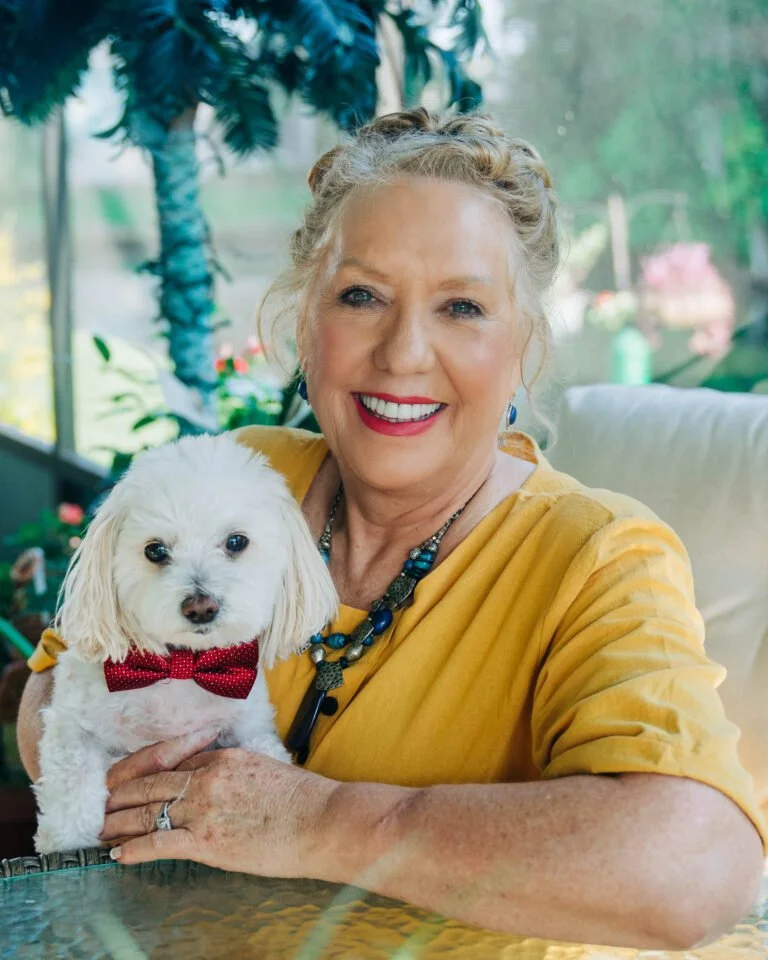
Joanne Williams, LCSW, is a therapist, specializing in anxiety reduction and PTSD recovery, offering 1-1 sessions to empower individuals and families with tools and strategies. She is the author of Super Dog Helps Boy’s Fears helping families start conversations about a child's worries. She is the host of a top 100 Podcast Anxiety Simplified.
She also guides clients step-by-step through the ADA process to use their own dog as a Psychiatric Service Dog—restoring freedom to be able to fly without panic, in housing with no fees or restriction and be able to go into restaurants or stores with confidence and support.