Building Resilience At Home: A Conversation With Danielle Ireland

If parents do not know how to properly control their emotions, they will have a hard time understanding and relating to the challenges and perspectives of their children. Dr. Kate Lund explores how to manage your emotional response with therapist and author Danielle Ireland. Reflecting on her experiences as a mother to two boys, Danielle talks about the importance of responding instead of reacting, the right way to empower your children, and how to help bolster their self-confidence. She also explores how mothers should never set aside their own well-being and why they should know how to set healthy boundaries to avoid getting overwhelmed.
---
Listen to the podcast here
Building Resilience At Home: A Conversation With Danielle Ireland
Welcome, Danielle. Thanks so much for joining us. I truly appreciate it.
Dr. Kate, it's so great to see you again and it's a pleasure to be here.
I really appreciate it. I loved being on your show and when I have been thinking about how to best launch this new show, I was thinking about some of the key interviews that I had and your name came right to the top like, “I'm going to invite Danielle for one of my first interviews,” so that makes it even more special, so thank you.
Such an honor. I'm thrilled.
Danielle’s Life And Experiences As A Mother
We're going to be really diving into this idea of resilient parenting. First, just curious if you can give our readers a little bit of an overview of your path, what you're up to these days, your life as a mom, all of these cool things.
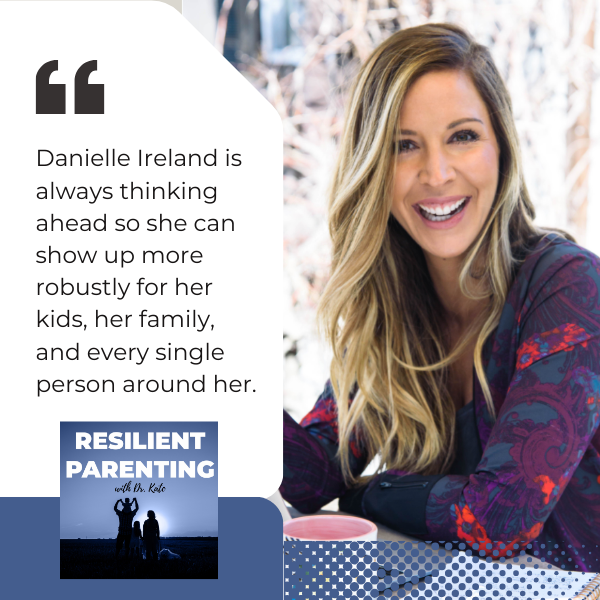
My journey, if I hit the highlights, I started commercial acting when I was thirteen. I loved being a part of a group and on a team, but I also learned that sports and athletics, I enjoyed using my body and seeing what it could do, but sports just never clicked for me. Once I found theater and I found commercial acting, I took off. I was off and running and I was earning a small living as a working commercial actor from 13 until about 27-ish.
Along that path, I went to theater school for undergrad, got an Art degree. I thought I was going to move to LA, had massive culture shock and had my first real big experience with anxiety and self-doubt and shame. I came home with my tail tucked between my legs and found my way into a ballroom dance studio and became an instructor.
That was essentially living as a cruise ship entertainer for about seven years, it was really fun, I had a built-in community, I had a job where I was essentially using a bit of my performance experience. It really ticked a lot of boxes for me, then fell in love. I met my husband and realized I wanted to build a life that was beyond just living for the moment.
That process of introspection and reflection made me start to ask myself more deep questions, profound questions. How did I want to feel when I do my work and what impact did I want to leave in my work, how did I want to spend my day? I just I found myself being more introspective and reflective than I had previously.
That led me to decide I wanted to get a graduate degree in Therapy. I'm a licensed Clinical Social Worker by degree, I work in private practice therapy. As it is for anybody who looks back, looking back, those jumps, I know how I connected those dots, but in the moment of jumping from one position to another position or one stage of life to another was constantly racked with this feeling of, “I think I want to do this but I don't know if I can do this. I think I can but I don't know if I can.” It’s this constant contending with that internal self-doubt and then self-discovery and ultimately finding that my confidence came from doing the thing. It never came before the thing, it was always after the fact, “I did it.”
That led me to, again, the work I do as a therapist. What led me to podcasting and what I find myself doing now was I was working in a very serious program on a very serious degree and I wanted to do big important serious adult things in the world. What I found was, even trying to be that way in the world and in the professional space I was wanting to occupy, I felt stifled. Bringing back the theater kid and the dancer and I find myself in the stage of life I'm in now, wanting to allow all those parts of me to exist in as an authentic an expression as I can.
At one point, that led me to podcasting and my podcast is called Don't Cut Your Own Bangs. I like to think of it as a cozier corner of the internet where our tender selves and our unsure feelings and doubts can exist and just be allowed to exist and be expressed and explored. I love inviting experts like you on the show. I spend a lot of time on the podcast talking about all of the things I glossed over in this intro. That's what I find myself doing now. I'm a mother of two. I have a dog next to me right now and a husband that I adore.
I have a private therapy practice that I run from my home virtually that was because of the COVID of life and I had to get real quick at adapting to technology and then my podcast became my creative outlet. It became where all the other parts of me that I didn't know where they would have a home in my professional life, I found a place for them to exist and so those are all the things put together.
I love everything you just said. It's just amazing. One thing that really sticks out at me is within the context of your journey, so many lessons for your kids, for our kids. Taking risks, exploring different options and avenues, understanding yourself and what is going to work best for you in a given moment, in a given time or more globally.
Also, this idea of not being afraid to fail and making it a thing that happens for all of us. I know your kids are quite young, but I'm imagining all of these conversations that are going to unfold over time this is amazing. At some point I want to hear about the commercials you've been in too because I got to check those out.
The most notable one right before I stopped to go to grad school because I couldn't leave for auditions last minute and miss class was The Walking Dead sponsored scratch off ticket. That spot wasn't a national commercial, but it was purchased in I think thirty-seven states for their lotteries. It was just footage of me ripping off a zombie's finger and using it to scratch off a lottery ticket. I kept waiting for The Walking Dead to call. I thought, “This is going to be my moment,” and it turned out to be a moment, but not the moment.
What It Means To Be A Resilient Parent Of Two Boys
That is amazing. That is very cool. Such a robust practice and I'm sure you're really helping your clients, other parents build these skills as well but tell me a little bit about your thoughts on what it means to be a resilient parent and how that looks for you in your current stage. Trust me, I remember the 2- and 4-year-old stage. My boys are grown up now so it's a little bit I'm in a different place but it all evolves so I'm just very curious.
Thank you for that. You're a mother of twins, so you had two 2-year-olds and then two 4-year-olds at the same time. I honestly don't know if there's a position to envy or think because 4 and 2 is hard, but if I had two of the same age at the same time, so I tip my hat to you and any parent of multiples, have twins, triplets, however your kids are staggered in age. Your question was about resilient parenting and how I navigate it, was that right?
Yeah, how you show up each day as your best self. I know that that's not what happens each and every day. We're not always at our best. We're not always at our best self and trust me, I get that. It happens here daily. I’m just really curious what the parenting landscape looks like for you with these little guys at home.
For me, what that has looked like, my answer is most likely a Venn diagram that overlaps between my personality, my profession, my training, my preferences, so I’ll preface with all of that. What I have found is the hardest work for me is to recognize and regulate and manage my own experience when confronted with their feelings and their challenges. Keeping myself regulated, and that's not even always possible, but the more I can name the experience I'm having, the greater capacity I have to take breaks when I need it, ask for help when I need it, step away or repair when I didn't do those other things.
When I raised my voice or wasn't as patient, when I didn't get down on their level and I have all of my feelings and emotional reactions in response to their challenges, tantrums, their distractibility, all of the things that are so appropriate for the stage of life they're in that are so easy for me to talk about when I'm talking to you, an intelligent fully formed adult.
However, when it's 6:30 in the morning and there's pancake on the floor and the dog is eating one of the kids’ breakfast and toys are getting shoved between cushions and all I want to do is drink my coffee before it gets cold. It's so easy to talk about these things here and I just want to say for any parent reading that all of these things, none of this is in a vacuum. Context always matters.
You talked about that quite often on our interview on my show Don't Cut Your Own Bangs, that context, and I find that the more in tune I am with what's happening inside me, the better equipped I am to be resilient when the truths of life and the challenges of life present themselves. I’ll also be very transparent too. When I find some a way to be of service, it helps me solve some of my own challenges, so a lot of the things that I make or talk about are a mirror being held up of what I'm actually working through.
The more in tune you are with what’s happening inside you, the better equipped you are to be resilient when the challenges of life present themselves.
I wrote a children's book called Wrestling A Walrus for little people with big feelings, specifically because I wrote it when I was pregnant and my daughter was two and she was fully in her twos and having a lot of tantrums and I was like, “She's just screaming so much. How am I going to survive?” The children's book was a way for me to try to self-soothe and make sense of a time of life that felt very challenging.
So many amazing messages in this idea of stepping back, stepping away in the heat of the moment sometimes to gain perspective, reset so that you can respond to those moments that are heightened and stressful as opposed to reacting, but we all are going to have those moments of reacting. I hear you. It happened to me in that phase and has happened to me many times since.
Recognizing Your Inner Response To Your Kids’ Emotional State
The other thing that really struck me is what you're saying at the beginning of really recognizing our own inner response to what's happening for our kids, to their feelings, their emotional state or something that they've experienced or something that's happened which happens as they get older. For example, I’ve been bogged down by something pretty significant.
I recognized that in myself so I have to double down on my modulating of my own stress response practice in the moments when one of my boys has just had a couple of challenges come up. He'll come home really struggling or upset and it's just really hard to see them in that space. Of course, we want to jump in and try to help or fix, but that's not always the thing to do and it's like sitting back and just being, just listening. Not my greatest strength even though I talk about it all the time.
That's probably why I created a podcast because so much of my therapy practice is listening and repeating back what people say just in a slightly different way. With my kids, though, managing transference or countertransference with my clients like what is happening within me when my client touches on something that is close to my own work.
What I have found with most of the clients that are coming to work with me, granted, I'm an out-of-network provider, I'm working with a particular type of person in a particular stage of their life so this isn't like across the board but just how I work. What I find is that most of the people that I work with have the ability to be able to find the solution to their own challenge. What they need is either space or time or safety a whole host of factors consistently to where they can almost hear their own words back to them and unlearn maybe the things that were in the way of them hearing or knowing or acknowledging the truth that they're wrestling with.
If I jump in and problem solve, which is so different than offering, like a tool like you offer great tools to help regulate, to modulate the nervous system so that you can feel safe enough to tap into those things. Tools definitely have a place and I think there's also a place for a solution-focused model. What I have found is my desire to rescue a client, my desire to jump in and problem solve for my husband when he's venting about a hard day and my desire to jump in and help my daughter problem solve when she's feeling frustrated and saying she can't do it. What I'm constantly having to monitor within me is, is this really the help they need or am I managing my own discomfort at watching them suffer? Am I rescuing myself by trying to manage their problem, which is not helping?
What I also even can acknowledge within myself is that confidence is earned through the practice and discomfort of trying to figure something out. What I'm learning with my daughter in particular she has a very strong reaction when she's trying to do something and it doesn't work out the first time. I'm noticing my son, for example, he's learning how to catch a ball and throw a ball. He just loves that endlessly. He could do it all day. When Mitch misses the catch, he laughs and then he just picks it up and goes again and again. My daughter, if she can't get something the first or second time, she gets so frustrated and she stomps away and she's like, “I can't do it.”
I get it wrong a lot, but what I have found is if I give her just a little space and I don't react right away, she comes back to it, but she needs to express that frustration. There's also been many times where she'll have a hard time, she'll get frustrated she'll say she can't do it and I jump right in and I try to make her feel better. I’ve realized over time, that's not actually helping her feel more secure in her own capacity to problem solve. It's such a balance.
Why Our Kids Are Often So Different
It's a really delicate balance and let's face it, it's just really hard to find that balance and it's an ongoing process because the balance might look different across different contexts or times or what have you. The other thing that that you were touching on there that I that I love and I think is so important, the fact that our kids often are so different. Same parents, same family, same environment, the whole thing, but yet, so different reacting to things in just very different ways and so that calls for a whole another set of skills or resilience from us as parents.
I’ll tell you, our boys, twins, so different and as they've gotten older, they've gotten closer and closer. One of them is actually off at boarding school in Connecticut. Life changing experience for him. He's living his best life it's amazing it's been so good for him on all fronts. The other one has stayed here for high school and has had an amazing experience in his own right because they needed different things.
As they've been apart, they've gotten even closer because they both row and they talk about that all the time they talk about social stuff and they talk about all sorts of stuff that I'm sure I don't know what they're talking about. It's just really nice that they're developing that much closer bond as they've found paths to flourish within their own unique context. When they were little, I’ll tell you what, one of them, would laugh if he missed the ball. No big deal. It's all good.
The other one, the one who's much more cerebral and academically focused, not having it. Had to understand like what went wrong, why did this happen, why do people say these things. Very interesting, very different approaches because I promise you, they were with me for the first three years. My husband was traveling six days a week and we spent much of our time. I really cut back my work.
We spent much of our time hanging out at home or out walking, going on massive walks with a dog and listening to the news. I always had the radio on because I needed that for my own self because we were in this brand-new town, didn't really know many people. I remember my mom and my aunt were like, “You can't have the news on like that. That's bad for them. You've got to be reading to them every second.” I'm like, “I really don't. It's fine.” Language skills, beautiful because I was talking a lot to them. We were listening to the radio and we were out in the world, but so interesting. I noticed right away how they reacted so differently to the same situations that were happening.
My daughter approaches things with I'd say a lot of focus and intentionality. She can entertain herself really well she can sit with a task and stick with it until it's completed to whatever level, whatever that means. Half a puzzle could be like, “Good, okay, that's all I wanted to do.” She just has in the way that a four-year-old can, great ability to do those things.
My son really wants to be more hands-on, just in the mix with whatever, myself or my husband or even my daughter, doing constantly. He just really wants to be in there. He doesn't want to be with himself so much. I don't know even how much of what is presenting in them is a stage. Is this a development stage? Is this just a personality? Honestly, the incredible thing about kids is there's an essence and a spark of who they were from day one that stays with them the whole way but I'm seeing more and more of them become. When I'm not bogged down stressed out and needing to use all of my resiliency tools, it's really beautiful to see.
Children have an essence and a spark of who they are from day one. It stays with them the whole way.
How Danielle Optimizes Her Own Well-Being
I'm curious. Talking about resiliency tools, how are you optimizing your own sense of well-being within your parenting, you've got a robust career. How does that piece look for you?
I’ll say the snapshot of the most honest answer in this moment in time is I have less to give right now than I have in a while, actually. I twisted my ankle wearing platform clogs on a date and I am sitting here with a boot on my left foot and crutches on the floor to my right. I can't do the stairs we live in a home with stairs, so put down, getting the kids up in the morning, I am far less mobile. In terms of how I juggle that, I’ll say each stage of family planning, having a family, conceiving, the needs and the toll of pregnancy, delivery, postpartum, that whole postpartum journey, I would say if there was a theme I could look back that is as true today as it was from the beginning was learning and trusting that my needs are allowed to take up space in my life.
Whatever it is that I'm experiencing and needing and believing myself like believing the values that I hold first, that needing help needing rest, that thought, the feeling that it activates, while I believe feelings are information to look at, they don't always reflect the most objective truth. What often happens is I’ll have a thought about needing a break, needing to stop needing to ask for help, needing to create space and that there will be a thought that's conditioned in me, an old thought but a thought nonetheless or a feeling of laziness, unworthiness, being a burden.
I espouse and talk about and support women, not just women but any caregiver to do all of the things I'm talking about and yet I find myself requiring more support now than I have in a long time and that is challenging. I’ve also recognized and accepted that I will do more harm than good if I don't take the space I need now. That's as true if I'm talking about an emotional need, even though right now I'm talking more about a physical ailment, but I’ll never forget something I heard Brené Brown say in an interview that really helped me start to understand burnout in a more profound way. This was several years ago.
She was trying to explain to one of her direct reports that she just didn't think she had the capacity to do a speaking event she had said yes to. I think she even said they'd already cashed the check. She never backed out before, but she said, “If my physical body reflected what I was feeling and experiencing emotionally, I would be in a hospital bed.” She just felt so crushed inside. Her staff was like, “That's all you need. We will make all the space on your calendar for you.” To be able to recognize that and articulate that is so much easier said than done sometimes
So much easier said than done. I grapple with that same question often like, “Have I pushed that one engagement or one thing, one project too far,” and rolling back. Actually, a really huge goal of mine for 2026 is to really be more mindful more cognizant of that very thing such that I don't push myself to the edge of or off the cliff of burnout because end of 2025 was definitely very close. I want to work on that but yeah, it's hard to acknowledge when we need to take that step back, we need to rest, particularly when folks around us are used to seeing us go, and then it's like, “Weird.”
Something to add to that, I because I can see the loop that I was living in the last six weeks before I got injured because this has forced me to slow down in a way that I just wasn't doing on my own. I was aware that too much was happening. I had the awareness but I wasn't acting on the knowing. It's not always A plus B equals C. I'm not saying that juggling with burnout or hectic holidays is what caused this. I definitely don't want to assume that blame on myself.
I can see the way I'm reacting to moving slow and the way that I'm responding to needing more help, that resistance within me was present before when I wasn't letting myself do it at a time that maybe would have been a little less critical in and could have been a little bit more restorative. I think that it's like two different stages of boundaries. It's like first I have to identify the need but then I actually have to uphold through action what am I willing to do in support of this need or in support of this boundary and that's, again, easier said than done.
Hugely important point and definitely easier said than done because I find that I have the awareness. I always have the awareness but am I taking the steps to mitigate whatever it is that's going on that's pushing the pushing the envelope too far. Definitely, I feel like the intensity of my own emotional response to what might be happening with my kids or for my kids has increased over time because I feel like the stakes have gotten higher in the sense that they have goals, they have aspirations, they have directions that they want to go.
When things happen, it's really hard to watch but yet, your point about really allowing for that space for problem solving, for understanding what's going on and how to navigate through a situation perhaps from a different angle is really key. I think the energy, for me at least, that it takes to make sure that I leave that space open and I do take that step back adds to the mix a bit but it's been an interesting evolution, for sure.
Hobbies And Passions Beyond Work And Motherhood
I'd love to repeat the conversation when your kids are eighteen to see how the evolution goes there. There is so much there. I think that optimizing our own sense of well-being as parents is so important on so many levels so that we feel well, we can show up. We're also modeling certain things from the get-go for our kids. Shifting gears a little bit, what about hobbies, passions? You've talked a little bit about dance and things like that but hobbies, passions beyond the amazing work, beyond life as a mom that define you at this point in time.
I was really sitting with 4 questions near the end of the year and the 4 questions were when did you last sing or when did you stop singing? When did you stop dancing? When did you stop feeling enchanted by stories? The fourth is when did you stop playing? I realized that most of my life was about optimization, so self-development, education, continuing with my CEs for my license or doing things for the kids or with the kids.
There was an atrophied muscle within me in terms of expression or creative development or service of myself that wasn't in service of something larger beyond my own pleasure. I would say my husband and I would travel a lot. We definitely prioritize date nights, but even saying that, it's almost like on paper, I'm ticking the things you need to have a balanced life list. It was missing a little bit of that sparkle and magic.
I will also give myself some credit that maybe it took my youngest being two for me to even have the capacity to explore and entertain those questions. I think it was Michelle Obama in an interview. I’ve seen it quoted and circulating on social media a lot that the idea that you can have it all has really put such a bind on women in particular and parents especially, because it's not that you can't have it all. You just can't have it all at the same time.
The idea that you can have it all has put such a bind on women and parents. You just cannot have it all at the same time.
I take that to heart in the context of my answer to your question but when my son turned two, it did feel like there was another gear in my energetic engine that I could access that wasn't accessible to me before. It was around that time or maybe some a little before that I had declared and decided that I wanted to write this book.
In the process of writing the book, I’ll tell you first how I was doing it wrong. I turned it into homework. I thought I was writing what I imagined initially was I was going to write a book that was going to cover the same subject matter but it was going to be a 400-to-500-page book that would sit on the shelves, it would tuck in nice next to like Brené Brown and Martha Beck. That was just my dream at the time. In the process of trying to write that very well-informed research, very important adult book for very important adults, it felt like homework. It wasn't lighting up for me but I thought that's what adults that have a serious career do.
I was asked very generously by a coach named Rochelle Wooten, “How do you want to feel when you make this and how do you want the reader to feel when they read it?” I had been working on this book for like three months at that point and had not considered that question. How did I want to feel when I wrote it and how did I want to feel when somebody engaged with it? The answer was joyful.
I want to feel joyful in the process of making this and I want the reader to feel joyful in seeing when they read it. Once I allowed that truth to exist and not try to contort it into something that felt more adult then it became a children's book almost instantly. Wrestling A Walrus was going to be a chapter in my big important adult book that doesn't exist but now, it's like the whole thing. The process of making that was almost like reacquainting and falling in love with creativity again.
That commitment to that project and seeing it over the finish line and it letting it exist and all of those great things led me to, just little by little, nurture basically all the things that our kids do intuitively. Watching them play at recess, that's a crossfit workout or like the way that they'll just explore imaginative play and all of those things like dressing up for the fun of it. My kids, though they have added more challenges, certainly, they also helped new parts, helped me be reacquainted with play and pleasure and joy and adventure and not taking myself so seriously in ways that I needed and didn't know had they not modeled that for me.
Right before I twisted my ankle, I had signed up for tap classes. I had taken one had so much fun so my background was ballroom but tap maybe for you, like if you have an experience with tennis, maybe that'd be like from tennis to pickleball potentially. Going from so ballroom to tap, it was in a wheelhouse that I knew my body was capable of but it was completely foreign. I got to feel the discomfort but enthusiasm of being a novice. I can follow up with you once I heal from this injury what that looks like, but I only got one class in.
That would be amazing. I would love to hear that because how cool because you're right. Joy, play, things that often these days for many parents get lost in the shuffle because we're moving so fast. We're caring for the needs of so many others in different situations and variables that it's easy to overlook those. I definitely talk a bit about that in my book Step Away: The Keys to Resilient Parenting this idea of connecting with joy, play, a hobby that maybe got lost in the shuffle along the way, so I completely resonate with that.
Yes, my husband and I are planning to start playing pickleball coming up here soon. In fact, he keeps asking me, “I haven't been invited to play pickleball yet.” I'm like, “Yeah, too much has been going on,” but we're going to, so thank you. That's a very good reminder that we need to probably pick those rackets up this weekend.
I really hope that you do because it's fun. We need that. We think that play is just like some fluffy thing but there is so much research that you could probably recite better than me. There is so much research. We could talk about like forms of Alzheimer's risk reduction and longevity. When you can engage your mind and your body in an activity and then you can also add play and then you can also add connection to that, you're just adding layers of just tremendous benefits for your body.
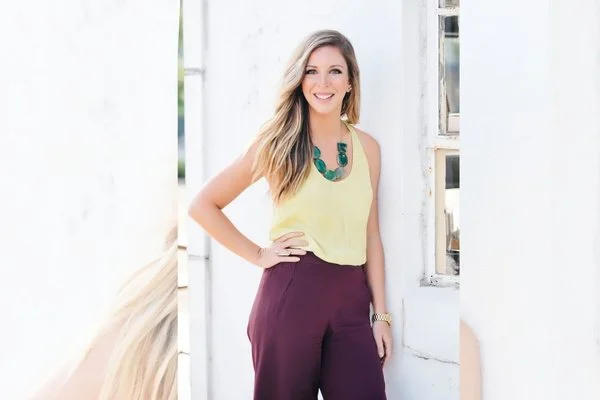
Emotional Response: When you can engage your mind and body in an activity while adding play and connection to it, the more layers of tremendous benefits your body will get.
I almost feel like we shouldn't need the features and benefits of play to believe in it. I’ll say what I say to my clients, “If you catch yourself saying, ‘Yeah, must be nice,’ that is a deeper underlying truth which is, ‘Yeah, that would be really nice.’” if you find that critical voice coming up in any of this, that could be what it's telling you.
Nurture A Spark Of Enthusiasm
So many benefits there for our mind, our body and our spirits and just all of it, modulating the nervous system. What an amazing conversation and I so appreciate you joining us. Any last thoughts? I’ve got to get my hands immediately on Wrestling A Walrus because that just sounds so cool.
Thank you. It's Amazon and Barnes & Noble or you can check my website. Either place.
Any last-minute thoughts or takeaways for us?
Yeah, I’ll say the last takeaway that I’ll share is that I love this time of year because it marks so many things beyond just the start of a new year, which really is a concept we made up. It just means the spinning rock we're on made another lap around the sun. Thinking about not necessarily what a resolution is or how you want to radically transform anything. If you do want to radically transform, great. Please do, by all means but one of the things that has made this year already feel lighter and exciting for me is I want to nurture this spark of enthusiasm as much as possible.
I’ve looked at the year ahead and asked myself not just what do I want to do every day for the year, that's a little too much for me to think about but what would be an adventure. If we can layer again all the truths of my life, the stage of life that I'm in, what I can afford and find that space that feels like just enough of a growth edge that it nudges me and it excites me but also feels possible.
All that context is important to mention but I have committed to a couple of trips already on the calendar and the relationships I want to nurture. I’ve started scheduling things now, knowing that the busyness of life will come steamrolling ahead. I think for parents at any stage of life, that is so true. The needs of life will continue needing you.
What I’ve tried to do is place myself on my calendar first before setting all of the I’ll say business goals or before setting all of the structures and demands and needs of my time are going to show up. That's just what they do, but finding spaces and carving out spaces and committing to those. I now have a Q2 and a Q3 that I am so excited about on multiple levels. I would say I would highly encourage that as much as anyone's capable of doing something like that.
I love that. Thinking ahead planning with your own needs in mind will only allow you to show up more robustly for everyone else around you. Danielle, thank you so much for joining us. This has been amazing.
Thank you, Dr. Kate. This was a pleasure.
Important Links
About Danielle Ireland

Danielle Ireland, MSW, LCSW, is a therapist, writer, and former performer who traded the ballroom dance floor for the therapist’s chair—discovering that emotional footwork is her true specialty. She’s the host of Don’t Cut Your Own Bangs, a podcast created for anyone who’s ever felt like everyone else has life figured out but them (spoiler: they don’t).
Danielle is the author of Treasured: A Journal for Unearthing You and the children’s book Wrestling a Walrus: For Little People with Big Feelings, and her work blends therapeutic insight with warm storytelling, humor, and a deep belief that women deserve more peace and less pressure. Her weekly Substack is your reminder that you don’t have to earn your calm. You just get to arrive, breathe, and be here—exactly as you are.
On stage, Danielle speaks about burnout, self-care, perfectionism, and the quiet exhaustion of trying to hold everything together. In her writing, she explores stress, motherhood, meaning, and the gentle, everyday ways we come back to ourselves when life feels too loud. Her guiding belief is simple: When we see the best in ourselves, we bring out the best in others.