Adoption And Identity With Anna Bernacki

Is your adoption journey feeling more like a challenge than a triumph?
Today, we sit down with Anna Bernacki, Director of Community at Parenting Different, to discuss what it really takes to help adopted children—and their parents—thrive. Anna brings a unique and powerful perspective to the table as both an adult adoptee and an adoptive mother of four. She shares the raw, honest reality of navigating post-adoption life, moving beyond the "honeymoon phase," and creating a home where children feel truly free to be themselves.
In this episode, we dive into:
The Power of Honesty: Why integrating adoption into your family's daily language from day one is essential to preventing shame and building a solid identity.
Leading vs. Controlling: How Anna shifted her own parenting mindset from "control" to "guide," and why that pivot changed the entire atmosphere of her home.
The "DNA Runs Thick" Reality: How to embrace your child’s unique personality, aptitudes, and interests—even when they don’t mirror your own.
Parental Self-Work: Why therapy and self-awareness are not signs of weakness, but the most important tools you have to avoid projecting your own "stuff" onto your children.
Whether you are a new adoptive parent navigating the post-placement reality or an experienced parent looking for new strategies, this conversation is packed with actionable, trauma-informed insights. Join us as we explore how to build resilience, foster authentic connections, and create a family culture where every member can truly thrive. Listen now to discover how to unlock the potential in your unique family context.
---
Listen to the podcast here
Adoption And Identity With Anna Bernacki
I'm very excited to welcome Anna Bernacki to the show and we're going to dive into a conversation on resilient parenting but first, I would love it if you'd introduce yourself to our readers, Anna. Thank you so much for joining us.
Thank you so much for having me. I really appreciate it. My name is Anna Bernacki. I am the director of Community for Parenting Different. At Parenting Different, we are a post-adoption support company for adoptive parents. A lot of times, you go through all the training and you have the child in your home and then what? Now reality hits. We create resources. We send out a newsletter every week with free resources to parents.
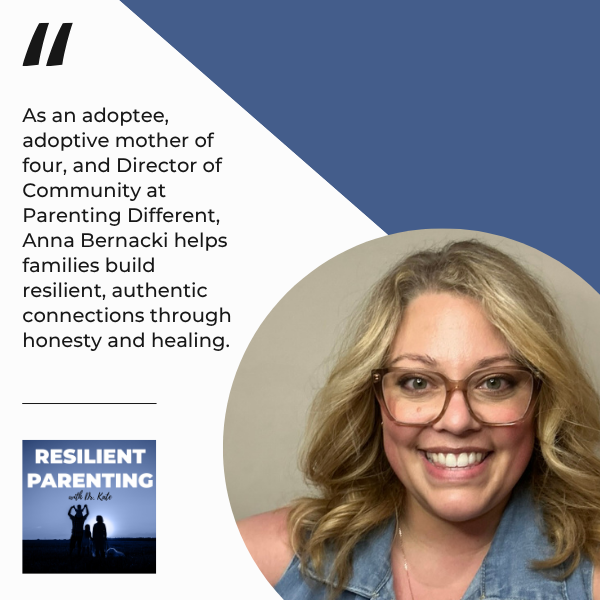
We also have live trainings and courses and really just try and wrap around and support the parents after they have the placement and reality has hit. We bring in all kinds of professionals and it's just very rewarding work because, one, I am an adoptee. I get to do the work of making sure that other kids don't have to heal from their childhoods. And then I also am an adoptive parent. I have four kids that I adopted through the foster care system and all with special needs. We have our house full and we are busy and it's just very rewarding work to get to contribute and give back to the community that is so much a part of our life.
So much power in all of what you just said and such an important space to really be thinking about this idea of building resilience and helping kids and families to thrive within their own unique contexts because nobody's context in general looks the same. I imagine that's a big piece of it. Helping folks to understand themselves and where they're fitting into their context and how to thrive within that context. What is the most important thing that you think is necessary for helping a child to understand themselves their context and then to thrive within that context post-adoption?
The Necessity Of Radical Honesty From A Young Age
I think there are a lot of layers to it. I think picking one thing would be very hard because there's just so many everybody has a unique story and everyone has different layers and different ages. As they grow up, there are different questions that are being asked and different things that come up. I think narrowing it down to one thing might be a challenge.
I always say honesty. From a very young age a child should never remember the day that they were told they were adopted. Like they should never remember that day. It's just so incorporated into the conversation when you're rocking a baby to sleep. No, they cannot understand you, but you can be developing that language and they're familiar with, “Your birth mother loved you so much. Your birth mother gave you life you are here and we love you and you have two mothers.”
You can start to introduce that language to them so they know. I am so thankful that is something that my adoptive parents did so well. Of I just always knew that I was adopted. I actually was very confused why other people didn't have a mysterious birth mother out there because that was so normalized in my home. From a young age, that is very important.
As they start to develop their own unique personalities and their interests and things that might not look like you or they might struggle with things that might not look like you, it's allowing them to be free to be themselves. You may not relate to their special interests you may not relate to their dislike of something but really embracing that and allowing them to be wholly who they are because that DNA runs thick.
If they are not allowed to be who they are they feel like they have to fit into a box, the box that you have created for them, I think it's very damaging to them in building their identity and it's hard for you as a parent because you will always be disappointed if you have certain expectations of your kids, you will always be disappointed. It just creates resilience all the way around to just allow them to be and understand that that DNA is different and so things will look different in your family.
I couldn't agree with you more on that point of the importance, I think adopted or not, to let a child be who they are without imposing your expectations on them as parents but particularly important in this context where as you mentioned, I love that the DNA runs thick because that's very true. I believe yes, that kids are who they are and they're going to have their interests they're going to have their aptitudes their passions.
To really be focused on helping them to develop those things is ultimately what's going to help them thrive within their own unique context and then within their family system. I also love what you say about that foundation building from the earliest point. When you've got baby at home in your arms and starting to develop that language, that initial foundation and understanding when it becomes developmentally possible about the adoption and such. It’s so important that really fosters that authentic human connection between parent and child and I think that's so very important because I love what you say about you don't want a child to remember the moment that they were told they were adopted. That integration feels so important.
Yes, absolutely and I think that's so important in them being able to develop their own identity have confidence in who they are. It's not a secret. I think when there are secrets, there's shame. We don't want our children to feel shame and so we should not have secrets. I think there's always an age-appropriate way to be honest with their story.
Yes, absolutely and it sounds like from what you said that that's really at the core of what you appreciated early on in your experience.
Yes, I'm so thankful that I did not have that sit down and I’ve heard other adoptees where they have that moment and it just shakes their entire world. Everything about who they thought that they were suddenly feels like a lie. Really being able to allow them to embrace their story no matter how unique it is no matter how hard it is. It might be a very hard story. That's easier to get in pieces as they grow older than to sit down, “Here's your story,” and everything that you thought was untrue. That would shake anybody. That would be very hard.
Yeah, that would absolutely shake anyone, that reconstituting reconstruction of one's identity at a random point mid childhood or what have you. It would be so very hard. How do you help parents build their own sense of grounding and resilience in this such that they can then share that with their child that they've adopted?
I think a huge piece of it is self-work. You have to really look at yourself. We all have our stuff. Whether we had a traumatic childhood or not, we all have our stuff. Really working on your own thing. A lot of times, when you're going through infertility and adopting after infertility, that's a piece of my story is adopting after infertility. Healing and working through that and not carrying those expectations over.
It's all about that self-work and being prepared to bring a child into your life without expectations of who you want them to be because they're always going to disappoint you. No child can live up to the perfect expectations and nor should they have to feel like they have to. If we have high expectations they're going to disappoint us and that's going to be very difficult for them to try and live up to that. It makes love conditional. We have to really work through our own stuff so we're not carrying that over into our parenting. That would be the number one place. I would go with that.
Prioritizing Parental Self-Work And Professional Therapy
That's at the core of it, absolutely. Yes, that makes all the sense in the world because if we're fighting our own sense of struggle within ourselves as parents, that's inevitably going to show up in some way in our parenting whether it's how we're responding or reacting to various things or as you mentioned the expectations that we're placing on our kids say something that we didn't accomplish but all of a sudden, our child is going to accomplish.
Very difficult and absolutely something that we want to steer away from because again, I really believe it comes down to helping our kids first of all understand their potential and then maximize that potential within their own unique context. Most likely, adopted or not, it's probably going to look very different than our potential our aptitudes our passions as parents.
It truly doesn't matter whether they're adopted or not. We carry over things into our parenting no matter how we became parents. It's very important. I always say I'm a big proponent of therapy and I'm in therapy every week. I'm not ashamed to say that. I go to therapy every single week and I have for years. That gives me the capacity to be a better parent. I can work through my stuff there. I can come home and that doesn't make things at home easier. It doesn't make it go away but it gives me the capacity to work through my response to those things and then I can come home and be a better parent for them.
Whether your children are adopted or not, it doesn't matter. We all bring our own experiences into parenting.
Yes, that is a very important point. It's really helping ourselves because really understanding ourselves that idea of self-awareness I really believe is one of the core elements of being resilient as a parent because it allows us to show up more fully. It allows us to respond instead of react. It allows us to be okay with at the core level who our kids are and who our kids are going to be. I think that's a really important point because oftentimes, you're right, there's a stigma associated with therapy. That's so not how it really is. Going to therapy is a strength as opposed to anything else that it might be interpreted as.
It even allows me to walk in and say, “I'm really struggling with this issue,” and sometimes it's just my response to things and I'm stressed and I need to sleep more or eat better meals. Sometimes it's that simple. Sometimes it is something that maybe does have to do with my adoption or my story and I'm reacting to it. By processing that, I am now a better mom and a better wife just by going and take care taking care of my own stuff.
I could sit here and I think this was a big shift in my parenting. In the beginning I sat there and I said, “I'm the mom.” I'm the mom so you just need to follow my instructions and then I won't get upset. In reality, I had to shift my whole mindset and really work through it because I am the mom and my job is not to control my job is to lead and guide. Shifting that from control to lead and guide shifted everything. It changed the entire atmosphere of our home.
That's such a great point because leading and guiding is very different than control. That’s a very important shift to make. Maybe you can talk a little bit about this from your personal perspective as a mom. Helping kids who have been adopted to understand themselves from the inside out and integrate their story within their current context.
Providing Identity Through Open Adoption And DNA Connection
I think number one, I am a big proponent of open adoptions if it is safe. There's many reasons why an adoption might not be open. If it is possible, have a way to get information family information. You can answer those questions about who they are. You can answer medical questions like medical history. I to this day I go into a doctor's office and on the family history, I just mark adopted and I don't fill anything out. I don't know.
It's interesting now as a parent, I'm able to bring in that other side of things and be like okay well you have this question let me go find out. I have context to why, I have context to how. I just am able to answer a lot more questions because it's open. That also gives me the ability to allow them because I can see these traits from different family members.
I can say, “You're just like your mom in this one.” We can open that conversation and make it a positive thing like, “You just look like your mom when you smile like that.” They are now feeling connected to their family it's giving them permission to be authentically themselves and different from us. They look different than us. It gives them that permission of even if it's a subconscious, it's giving them that permission to just be authentically themselves.
I think that's such a great point about authenticity because we not only want to be connecting with others particularly our parents in an authentic human way but we also want to be able to connect with ourselves authentically understand ourselves. I bet that really is a powerful message for kids who are adopted to have that aspect of themselves be clear and be understood. Again, not always possible. Helping those for whom it's not possible to have that piece, how do we best do that?
I think it's again just going back and reducing those expectations. For me, it wasn't possible. Part of it was the day and age. Open adoption wasn't really a thing. That's a piece of it. I wasn't able to know my birth parents growing up. I struggled with that because I looked a lot like my adopted family, we looked very similar, but boy was I different. Personality wise, I could not have been any more different.
That created a lot of conflict especially in my teen years. You're a teen anyway you're angst you're coming into who you really are. You're already experiencing a lot of those big feelings. When you can't pinpoint to anything and I have a lot of opinions I'm very loud. A lot of that was viewed as rebellious and there was a lot of shame around it. I remember sitting there going, “I don't want to be bad. I'm not trying to be rebellious. This is just who I am. Why can't I be better?”
I didn't meet my birth dad until I think I was 37. I walked into the room and met him and I was like, “There it is.” For the first time, it gave me permission to be loud and to be opinionated and to just have a weird sense of humor and because I knew where it came from. It wasn't rebellion. It wasn't me it was running through my veins. I think even if we don't have that context just allowing our kids. If they're being straight up rebellious, that's different.
If it's a preference thing or we don't like that behavior but it's not inherently wrong, then maybe we need to be allowing them to become who they are because we don't know where that comes from. That could be just running through their DNA and they can't help it. They can't help who they are. They should be proud of who they are because that is exactly how they were created.
We want our kids to be proud of who they are, ultimately. Going back to that idea that you mentioned up front the DNA runs thick and sounds like that was really illustrated when you walked into the room and met your birth dad.
It was something unexpected. I didn't expect to have that revelation of that's why I am. I don't know why. I just never thought that I would have that reaction from meeting him but it just suddenly gave the last 37 years context. In 5 minutes, 37 years were explained. It's given me so much freedom since then because I can be authentically myself and be proud of it because it's not wrong. It's who I am.
You mentioned that word authentic and it reinforces the authenticity of who you are. I'm just curious, anything else shift for you after that meeting?
Honestly, my entire life exploded after that which sounds crazy. I think because I could live authentically all of a sudden, I could be myself. In the last few years, I'm not that same person at all. I look back and I'm like, “I have changed so drastically because for the first time, I could accept myself.” By being able to accept myself it just gave me the freedom to go and do. There was nothing stopping me from getting out there and just telling my story and fulfilling my dreams.
If you would have told me before that I'm working for a parenting company, I would have been like, “No, for sure not.” Here I am and I love everything I do and the impact that I get to make is so rewarding and healing and therapeutic in and of itself. I think it was that internal permission to just be me. I did not have to be ashamed of any aspect of who I was. It changed everything.
I love that just showing up authentically yourself as the biggest change. You're obviously impacting so many people in such a powerful way. I'm curious how you help your own kids at home to understand themselves understand their stories. Another thing I was wondering was how you help them to understand each other because they're coming from different contexts and different places and such. I imagine that's an important piece of the mix as well.
It is. We have huge age gaps. The answer is different across the board just because I have big age gaps and I have two sibling sets. The 2 oldest and then the 2 youngest are siblings. In our home, we talk about everything openly. Everything is an open book. We talk about birth parents, we talk about reasons why they had to go into foster care and be adopted. We're very open. Again, age appropriately.
I'm not spilling all the nitty-gritty. Now my eighteen-year-old, we talk about it all. My five-year-old, not so much. They can understand hard things. One of them figured out that they have a birth dad out there because they know their birth mom. They realized like wait I have birth dad too. We talked through that and, “Where is he?” I'm like, “He's in jail.”
A five-year-old can understand what jail is and that they made poor choices and why you don't know them is because they're not safe. You can talk about hard things again that's where we ended it. We're not going to go into all of the why and the how and all that. They can understand that that's why there's not a presence in their life. I'm not going to tell them an untrue. I think just being super honest and open, we talk about things all the time.
We have pictures of birth parents around the house, some birth siblings that don't live with us are pictured around the house. I think it's just so normal and integrated in our home and we've normalized that our family is so not normal. We've just normalized it in our home. The conversations are always open and we don't shy away from anything. I think that has been the biggest thing. That's very different from how I was raised too. That's a huge impact that I have been able to then bring into our home and we talk about the hard stuff.
Keep every conversation open and never shy away from the hard topics. That makes the biggest difference.
I think that's so important to talk about the challenge, talk about the hard things in an authentic way because hiding those, shielding our kids from the challenge from the hard things doesn't help them in the long term to grapple with and manage the hard things that are inevitably going to come up. You also make a great point. It has to be developmentally appropriate. You can't talk about the hard things in the same way with a 5-year-old as we do with an 18-year-old and you know all of that.
I love the authenticity there because you're really helping the kids and all the kids that you're working with to understand themselves from the inside out and to become solid within themselves from the inside out which is the thing that they'll need to move through life, maximize their potential within their own unique context. Such important pieces. Talk a little bit more about the agency that you're working for and the services that you provide and all of that.
Leveraging Trauma-Informed Community Resources For Post-Adoption Support
It's called Parenting Different. It was founded by Isaac Etter who is an adoptee and he has worked in the adoption space for quite a while, talking specifically about transracial adoption. He's a transracial adoptee and so he has a very powerful story with his him and his family and their healing journey. He really in his work he saw a huge gap for services for post-adoption.
There's all this pre-adoption and then here's the kid and goodbye. Adoptees have unique needs and we can't just compare it. I have friends who talk about the fear of going home from the hospital with their biological child that they've carried. That fear of, “They just let me leave? They let me take this baby home?” That's something you've been preparing for you have carried that child you know that child.
In adoption, it's complex. If it's infant adoption, you have a baby who is now going where is all the familiarity that I had? Who are you? Older kids, if you're adopting older through foster care, often, there is a tremendous amount of trauma. We really have taken the approach of let's get ahead of it. Let's not wait until you're in crisis to get these services.
We have all kinds of professionals. We have TBRI coaches. I'm not sure if you're familiar with TBRI. It's a trust-based relational intervention. It's all like trauma-informed parenting and caregiving. That is the general theme of that. We have monthly webinars with specialists from that field. We have therapists that come on and share. We have a podcast that I host and I just have a blast with.
We talk about all different adoption stories. We have a community platform. That community platform is like, I hate to compare it to this because it's not this but just for context similar to a Facebook group but no drama. That's the caveat no drama. You can ask each other questions you can be in there you know like, “I'm really struggling with this today has anybody else faced this?”
You're bouncing ideas off of each other. That's also where we host our webinars, we have Q&As, we do community groups with different topics so like adoption after infertility parenting teens all different things where you just go in and chat about your struggles and understand each other. You're not alone because sometimes somebody in your community may not be facing those same things but you can find a community virtually. We have that and then we also have our newsletter where we send out free resources every week. We have a lot going on.
A lot going on for sure and I love what you're saying because there's so much power in sharing our stories and hearing from others. Maybe something is similar in someone's story that helps someone else and how that then can have a compounding snowball effect. That's amazing coupled with all of the psychoeducation and the other resources. What a powerful approach I love that. Building resilience from the inside out across this domain, I absolutely love that. Anna, how can folks learn more about you and the organization, get in touch, all that good stuff?
You can go to ParentingDifferent.com and see all of our resources there. Also, Parenting Different on Instagram, Facebook and then I also have my Instagram and Facebook. It is Anna Bernacki. You can find me online and I'm on Instagram probably more than anything else. Both online and then on ParentingDifferent.com.
Wonderful. Thank you so much for joining us. I really appreciate it.
Thank you so much for having me.
Important Links
About Anna Bernacki
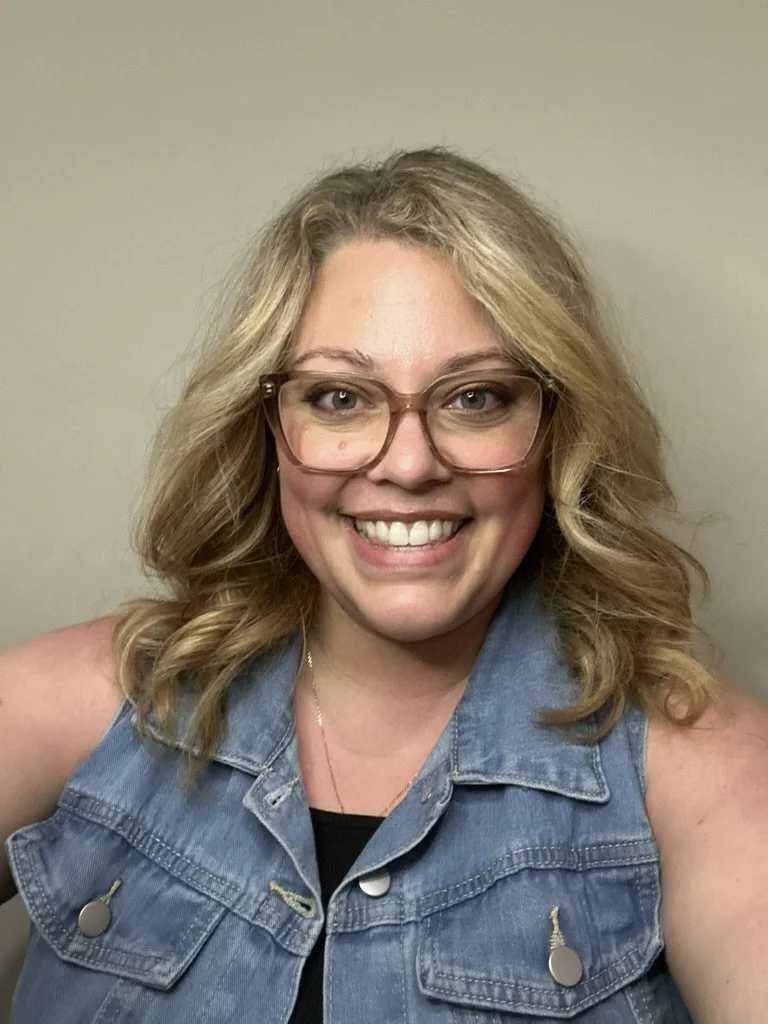
Anna Bernacki is an adoptee, adoptive mom of four, and the Director of Community at Parenting Different. With experience on two sides of adoption, she brings honest, trauma-informed insight to the unique challenges foster and adoptive families face.
Anna brings a blend of lived experience, gentle truth, and a fierce passion in helping parents understand their children’s behaviors, build connection, and navigate adoption with empathy and wisdom, all while reminding families that healing is possible, even when the road is messy.