Small Steps, Strong Families With Samantha Ariza

Dr. Kate Lund welcomes licensed professional counselor and founder of Ariza Inspire Co, Samantha Ariza, to discuss practical ways of building family resilience when dealing with daily stress and trauma. High-achieving parents often find themselves caught in an endless cycle of performance and productivity, ignoring their own need to slow down. Samantha shares how her specialized work in EMDR therapy inspired her to create tools that help parents modulate their stress response and step back when capacity is exceeded. They discuss the powerful impact of modeling imperfection for our children, showing them that it's normal to feel scared or struggle sometimes. Through small, everyday actions, we can create a compounding effect that fosters long-term emotional strength within our households. This conversation offers a refreshing reminder that your worth isn't measured by your productivity, and that true coregulating connection begins with your own self-trust.
Purchase Dr. Kate Lund's best-selling books, Step Away: The Keys to Resilient Parenting and Bounce: Help Your Child Build Resilience and Thrive in School, Sports and Life, or book a private consultation at katelundspeaks.com.
---
Listen to the podcast here
Small Steps, Strong Families With Samantha Ariza
Introducing Samantha Ariza And Ariza Inspire Co
We’re fortunate to have Samantha Ariza with us. Without further ado, I’ll welcome you to the show, Samantha, and ask you to introduce yourself and give our audience a bit of an overview of who you are and the work that you do.
Thank you for having me on your show. I’ve been very excited about this. I’m a licensed professional counselor in the state of New Jersey. That’s one of the many hats that I wear. I do have my own private practice where I specialize in EMDR therapy. That’s primarily what I do with my practice. I also have my own company called Ariza Inspire Co, which came about because I feel like there is an extra need for therapy and mental health resources that aren’t necessarily available as much as we would like them to be out there.
I do some speaking as well with a company called Minding Your Mind, where we do more preventative mental health education in different schools. I’ve been able to travel to different places to be able to do that. There’s my life here with my kids and my church, spreading as much mental health knowledge as I can. That’s pretty much me in a nutshell. I’m doing my best, trying to be a good human being overall.
I love that. That’s amazing stuff. It sounds like you’re helping folks to build resilience in many different ways across domains as a mom, as a clinician, and as a speaker in general. I love hearing that. I particularly love what you’re saying about being a good human being as a central goal. That’s so important out there, particularly in these times, which are not easy, so I love hearing that. Talk a little bit more about your practice, who you’re working with, and who’s coming in. We’ll dive in from there.
Why EMDR Therapy Outperforms Traditional Talk Therapy For Trauma
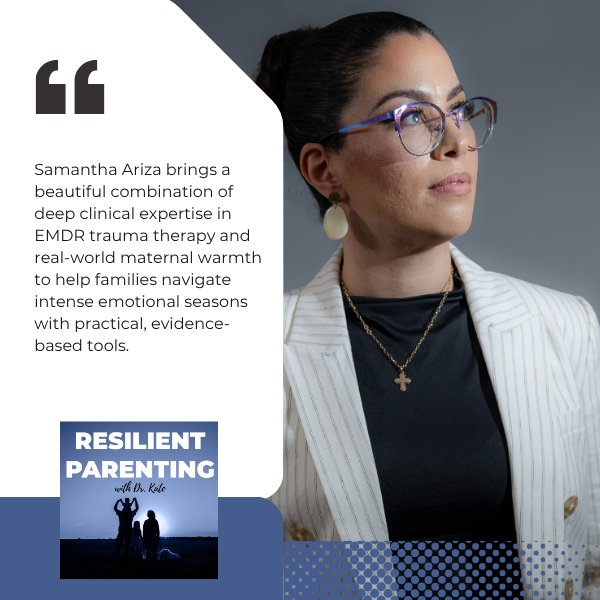
With my practice, I primarily do young adults and older adults. I focus more on EMDR therapy, which is Eye Movement Desensitization and Reprocessing. It is an evidence-based therapy modality. I got into it because I worked in Newark, which is a very urban area. There is a lot of trauma there. Let’s be real. It’s hard to work with trauma.
One of the things was I felt like talking about it a lot. I felt like I was re-traumatizing clients based on these conversations. I would have clients talk to me about being shot. I’m talking to them about it. How do you help resolve something so traumatic like that? In a conversation, you can see the client being re-triggered and going through the experience again, which led me to EMDR.
EMDR is very powerful, even as someone who had to go through the process while learning about it. I’ve seen changes even in clients within one session. Prior to doing EMDR, I could say it almost would never happen. In one session, you get work done, but not in the way EMDR works. I primarily have clients come to me for EMDR therapy. I do have clients where we do traditional talk therapy. However, those who find me usually find me because of EMDR.
I got it. That is intense work and intense stuff. As I was hearing you talk about it, I’m wondering how you care for yourself within that context and build your own sense of resilience.
The Power Of Stepping Away And Recognizing Your Capacity
When it comes to me and resilience, at this point, I have to give myself grace. That’s the biggest thing with me. It's realizing that I am just a person, and there’s only so much I can do. A big thing with resilience, for me, is recognizing my capacity. I do a lot. Sometimes, I do have people who say, “How do you do it all?” It’s because I have to take breaks. That’s one of the biggest things I’m trying to teach myself in this whole process of trauma therapy, my business, and my family. I need to take a step back. That is something that is as powerful as doing, which I don’t think we realize.
I feel like you’ve read my new book, Step Away: The Keys to Resilient Parenting. One of the biggest messages in the book is, as parents, within the context of our work, our lives, and in your case, very intense work. How do we take that step back? How do we create space and perspective so that we can show up fully across the domains of our lives? In the case of the book, it’s for kids, our family, and that sort of thing. It’s easier said than done.
Taking a step back is just as powerful as taking action. We need rest to keep performing.
A thousand times. I feel like in this world, we are praised for doing. When we’re not doing, that question of our worth comes up. I even have a sticker that says, “Your worth is not measured by your productivity.” That is something that I need to remind myself because the world says, “Unless you’re doing, you’re not worth it.” We need that rest. I did a whole episode about how our bodies crave that rest. It loves to perform, but it needs to know there’s a break coming in order for it to keep doing. I don’t think society gives us that emphasis on rest that we need.
That is such an important point. It’s modulating our stress response, giving our nervous system a chance to recover so that we can bounce back when we’re particularly stressed, on the verge of burnout, or whatever. Let’s face it. In the kind of work that we’re doing as therapists, psychologists, and everything else, things are going to come up, and there’s going to be chaos to balance and work through.
Unless our nervous systems are prepared for that, it’s not going to work out so well. I could not agree with that point. I believe that as we work to create that space and perspective for ourselves as parents, we’re modeling important things for our kids in terms of helping them to establish and build their own foundation in resilience. Challenges will come up for them as well. What’s your thought there?
Why Modeling Imperfection Is Your Greatest Parenting Tool
Modeling is probably one of the hardest things. It is realizing what we need to do as a parent. As much as we push ourselves to model what we want our kids to do, we also have to model the not-so-perfect. I feel like that gets lost. I always think of the story of my kid and me. We were driving to the supermarket. It was during a rainstorm. I couldn’t see ten feet in front of me. I remember my daughter said to me, “Mommy, are you scared?” I said, “Mommy is scared, but we’re going to get there. We’re going to be okay.”
When things are not going well, we need to model how we process through the not-going-well. We forget that. We’re so stuck on the idea of doing the perfect thing that we forget that it’s not going to happen that way. Modeling the imperfect is, I feel, the biggest power for us sometimes, so that they know it’s okay. It’s okay not to get it right and okay to struggle a little bit, but knowing that we’ll be okay at the end of it. It’s fine.
Your worth isn't measured by your productivity. Give yourself grace and recognize your limits.
There are so many important points there. I feel like you’ve read my mind in all of this. That’s exactly what I believe in terms of that authentic human connection that we can form with our kids through sharing the things that are hard, the points when we’re scared, or when we can’t see ten feet in front of us in a crazy rainstorm as we’re trying to get to the grocery store. That’s scary. That’d be scary for any of us.
Yeah. It’s okay to be scared. They need to know it’s okay to be scared and not to have this perfect happy-go-lucky thing. That gets lost in the sauce of life.
It is so important for them to know that that is reality. That’s powerful that your daughter asked you that question. She was perceptive to the point where she was like, “This is a little scary. This isn’t usually how it looks or feels when we’re driving to the store.” I love that she asked you that question. That’s so incredibly powerful.
It’s a joke for me that I wonder what therapy I’m going to be paying for with my kids in the future because I know that I’m not perfect, and I know perception and how they process is going to be different. Being open to having those conversations is a whole thing that I’m aware of because of the work that I do. I know not everybody has that perspective.
Reading And Tailoring Your Response To Unique Child Personalities
That’s my oldest, whom I had that conversation with, versus my youngest. I have to be a little more preemptive with her because she is a huge ball of emotion. Sometimes, the emotion hits, and she doesn’t know how to verbalize it. Versus my oldest, who’s a little more cerebral in that fact, who’s aware of the things and can verbalize it, my youngest is a bull in a china shop and goes forward. I have to preempt her a little bit more. Knowing those differences is important.
Reading how our kids are going to process and respond to things in different ways because our kids are going to be different. I have eighteen-year-old twin boys. They are very different kids. They needed different things growing up, different responses, and all of that to allow them to process things in a healthy way to thrive within their own unique context. That’s a great point.
The other great point that you made is this idea that there's no such thing as perfection. As parents, a couple of things. There’s no one way to parent. That’s an important piece to think about and keep in mind. Also, there’s no perfection in parenting. We’re going to make mistakes. We’re going to do things that we think, “I wish I had done that differently. I wish I had said that differently.”
Modeling our struggles and fears teaches children how to process difficult emotions in a healthy way.
Those are also moments that are important, in a developmentally appropriate way, to share that with our kids. It’s like, “I responded this way, but I feel like maybe I would have preferred to say, ‘Mommy was stressed’ or whatever. However it comes out or makes the most sense.” That’s an important idea because oftentimes, we get stuck in this idea that it has to be a certain way. A plus B has to equal C. That’s rarely, and I’ll argue, never the case. That piece about perfection is important to consider.
Nobody is perfect. Sometimes, we forget that. It’s almost taboo to say that nobody is perfect because we’re all trying to strive for this level. That is such an important thing to remind ourselves that we’re all human, trying our best to make it through and do our best every day, whatever that may mean.
I agree with that so much. You have some powerful messages. Are these the types of things that you’re out there speaking about as well in addition to working with these ideas in your practice?
I do speak about this in my practice. I do have a couple of workshops that I’m trying to get rolling where we talk about worry. As a parent, we worry all the time. I’m going to be talking about how we handle our worries and how we get these new perspectives into it. These are part of the messages of certain things that I talk about when I do talk about resilience or even worry as ways to manage and change the perspective. All of this is perspective-taking. Our perspectives shape a lot of what we’re doing.
Perspective and space to gain perspective is so important. There are moments where, as parents, we worry. We worry about the impact of certain experiences on our kids. There are so many things we could worry about. How do you help folks who are worried about the impact of a certain outcome on their child, for example? For example, we’re going through the college admissions process. It’s a jungle out there. The kids are a little bit younger.
I’m not there yet. I don’t even know what that landscape is going to look like when we get there because I know it’s going to be 100% different, probably.
It’s been changing for years. All of a sudden, we’re here. It’s a lot. There are so many different elements of worry within that context. Ultimately, we want our kids to be happy. We want our kids to land in a place where they’re going to thrive and feel good about it. It is knowing that as parents, there are many different options for that to happen, but it is difficult to deal with their disappointment and worry at the same time. It's a parallel worry. What’s your thought there?
Reframing Parental Worry As A Signal Of Value
When it comes to worry, one of the ways that I’ve framed worry is that worry is a signal. It’s a signal to something that’s valuable to us. In the case of our kids and our family, we are worried about them because we care about them. They’re important to us. We love our kids, and that’s the value that our worry is tied to.
It is shifting that perspective into worry as a signal instead of worry as a bad thing. There is a very heavy connotation that worry is a bad thing. If I shift my perspective that this is a signal of something that’s valuable to me, it makes it okay to worry a little bit, but then also pushing it to what is something that I can do, like a micro action, to address this thing that is important to me? What is something I can do that I can put my hands to and accomplish?
I’m shooting in the dark with college admissions. It’s like, “I worry about my kids because I want them to be successful. What is something that I can do to help them on that path now? Maybe I will help read their essay. Maybe I will find a scholarship. This is something that I can do to address that thing that is eating at me. I can put my hand to, get it done, and feel accomplished in that.
That’s such a great point. I love it because you can generalize that idea to so many things. It’s those small, micro actions that we can do in the here and now that can help mitigate stress and worry or can help with that forward process. Oftentimes, we lose sight of that. We want to go from point A to point Z all at once.
Worry is just a signal of what we value. Shift your perspective and find a small micro-action to take.
That is rarely a good idea when we’re trying to make a change, trying to help someone with something, or what have you. The power is in those micro steps, the things we can do in the here and now to help with that forward motion. Oftentimes, I feel like people lose sight of those small wins, those micro movements, or those micro things that we can do. It’s such an important point to reinforce the power in that.
Harnessing The Compounding Effect Of Micro-Habits
I always say I’m not good at math. I know that 1% of my day, if I add that up over the year, that’s 365%. At the end of the day, those little actions are going to add up to a lot more than if I try to do a big thing and then don’t do it again. It is focusing on that compounding principle, versus I am going to do a huge thing, get discouraged, and then don’t continue it.
I like that. The compounding value of the small movements. That’s a great one. I might even write that down and put it on my desk. I love that. Sometimes, the power of compounding, we lose sight of that, too, because we’re moving so fast, looking at that longer-term goal. We almost lose sight of how it’s possible to get there. Staying focused and helping our kids stay focused on the possibility on the other side of all those challenges out there is very important as well.
It’s a skill that we need to develop. A lot of it gets lost. The ability to slow down has gotten lost. Our bodies are not built to work as fast as we do. The technology we’ve built can move that fast, but our bodies do not move at that pace.
Our bodies and our minds. Our minds need that rest as much as our bodies, I believe. That’s an important point. This leads me to shifting gears a little bit. I always ask my guests what fuels them beyond the amazing work that they’re doing. What are your hobbies and your passions? How do you slow down, take that breath, and create that space for yourself?
It’s still an area I struggle with, but I do enjoy the arts. I love music. I sing at my church. That’s something that I’m heavily involved in. Whenever there is some place where I can get some of this dramatic energy out, I love to do that as well. I would love to get more into writing again. These are the things I love to do. I love to sing. My husband even says that sometimes, when a good song comes on, I’m embarrassed because I serenade him in the middle of Target. I love to sing, and I love music. That’s my outlet, for the most part.
That’s amazing. You love to have fun with something that you’re passionate about. I love that.
My kids are into it, too. We do karaoke all the time. The music is always loud. We are all singing our hearts out. We are vibing all day.
A small one percent daily improvement compounds into massive changes over a year. Slow down and focus.
That’s awesome. I love that. That’s cool. Samantha, these are such important insights. They will be valuable to our audience. Any final points or thoughts that you have as we’re thinking about needing to wrap it up?
The only thing that I would leave people who are tuning in is the idea that you’re doing great. The only person who is saying that you’re not is yourself, usually.
That is a powerful point. We’re the first ones to beat ourselves down. Shifting perspective on that is such an important thing.
We all need to hear it. I’ll be the one to say it.
I love it. How can my audience get in touch, learn more about your work, and all that good stuff?
I do have a website. It’s called ArizaInspire.com. You can find me on Instagram @ArizaInspireCo, as well as on TikTok and Facebook. Those are the ways you can connect with me on a day-to-day basis, as well as see what’s coming out next and my workshops.
Thank you so much again for joining us. This has been great.
Thank you for having me. I loved it.
Important Links
About Samantha Ariza
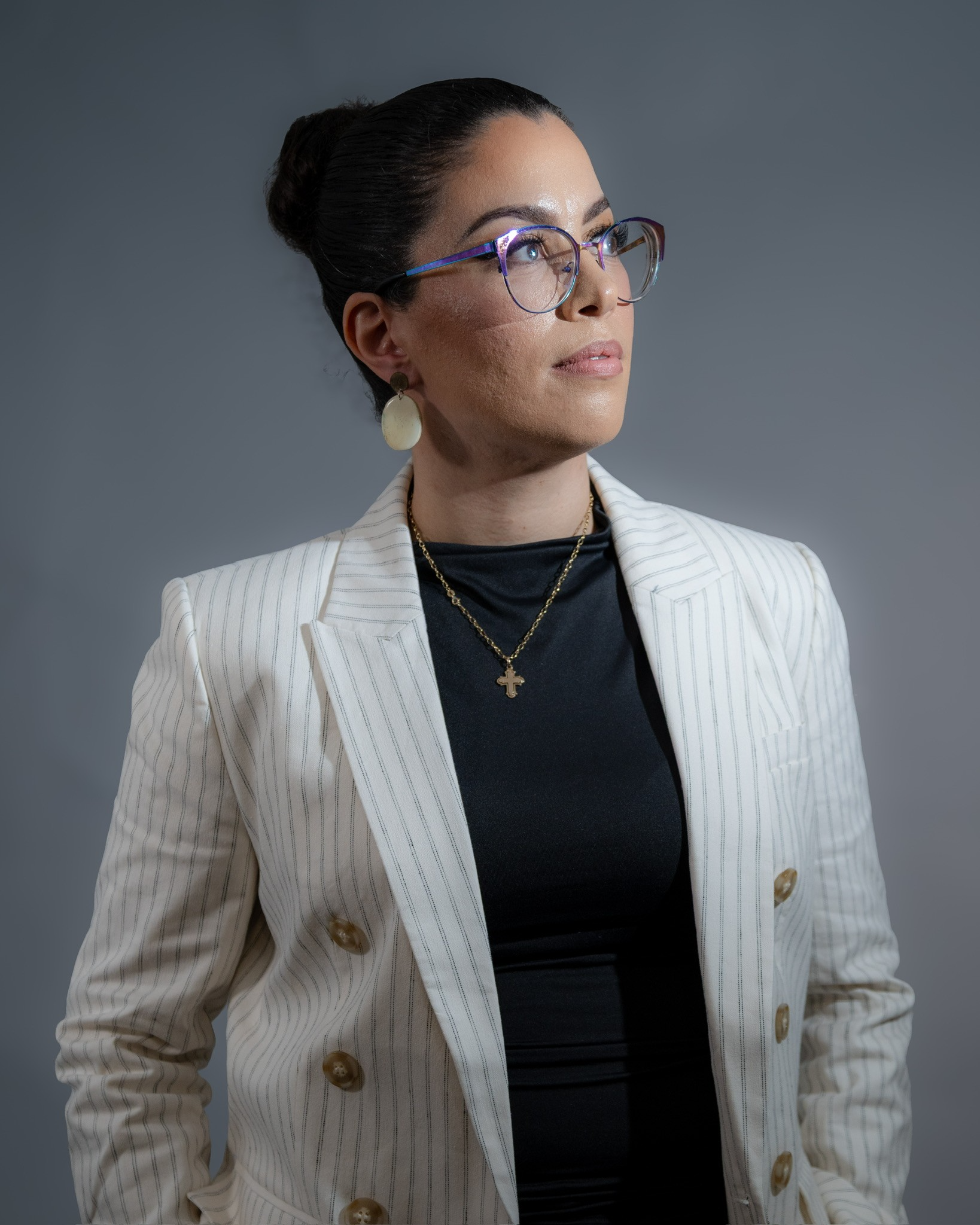
Samantha Ariza is a licensed professional counselor, mental health educator, and founder of Ariza Inspire Co. In her private practice, she specializes in Eye Movement Desensitization and Reprocessing (EMDR), an evidence-based trauma therapy.
With Ariza Inspire Co, she translates complex psychological and neuroscience concepts into accessible, real-world tools that help people better understand themselves and navigate everyday emotional challenges.
Through her podcast and workshops, Samantha empowers individuals, schools, and organizations to build resilience, emotional awareness, and practical coping skills in a way that feels both relatable and evidence-based.