Finding Yourself Again In Parenthood With Rachel Russell

Coming back to who you are as a human requires a deep level of nervous system understanding to navigate the sensory overload and high-pressure demands of modern life. Rachel Russell joins the conversation to explain how awareness of our biological communication highways can prevent us from inventing negative stories about our children and ourselves. By choosing micro moments of autonomy—like deciding exactly how you like your eggs or taking sixteen seconds of quiet—parents can shift from reactive survival to intentional homeostasis. This dialogue explores the vital importance of "cleaning the fish pond" of the home environment, allowing families to move beyond limiting beliefs and embrace the best possible version of their lives together.
---
Listen to the podcast here
Finding Yourself Again In Parenthood With Rachel Russell
The Nervous System Highway: Awareness As The First Port Of Call
We are lucky enough to have Rachel Russell here with us. Without further ado, I want to welcome you to the show, Rachel, and would love it if you would introduce yourself a bit.
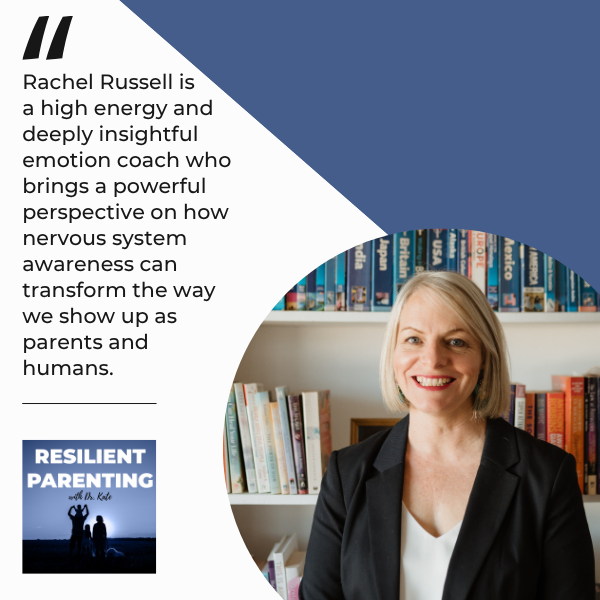
Thanks so much, Kate. I am Rachel. I am from Western Australia in Down Under. I am an educator, author, emotion coach, parent, mountain climber, and a really bad singer. I feel like my role on earth is to just help as many people as I can come back to who they are through nervous system understanding and coming back aligned with who you are so that you can go and express yourself in whatever way you need in your life as a human, as a parent, as a teacher, as a surgeon, as a whatever like whatever you need. I am really passionate about my work and passionate about working with kids and helping people just come back to who they are.
I love that. It’s a powerful stuff and I love what you say on the nervous system front because I really do believe helping folks to find a way to modulate their stress response is really at the core of my work particularly my work with parents because often times we are operating at this heightened place and then when a stressor hits, boom, we escalate to the point of shutdown.
If we can just help folks to modulate and show up as level as possible every day, even though we know there is no easy way to make that happen, and easier said than done, and we are not always going to be completely level, but as best we can. Just curious what your thoughts are on that modulation process.
I think the first port of call for that is awareness. You probably hear it too. I have parents in my room saying, “I cannot believe I am out of control, I got super triggered, I do not know why.” When I say, “That could be a nervous system response,” and they are looking at me like I have three heads. There needs to be more education and more understanding at the very core about what the nervous system is.
What does it actually do? It is the communication highway, especially the autonomic nervous system, because that is where all of our behavior comes from. That awareness is really good. Once you know that, then coming in and really allowing yourself to feel in your body so that you know. I liken it, we call it aluminum foil, I think you guys call it.
I say when I am dysregulated, it feels like I am chewing foil, like that, “It is like scratched on the inside of my head kind of vibe.” What sort of things trigger you, and it could be sensory overload? It could be a perceived threat of some kind. It could be a change in plans. It could be a change in the weather. Finding out what yours is and then finding out how you respond.
Awareness is key, and then applied knowledge to that awareness is absolutely crucial. What that does is it then stops the invention of a story because our brains need to make a decision about what has happened, and so we normally invent a story about how awful our kid is, or how disrespectful our partner is, or whatever, and it is their nervous system response. It is an adaptive behavior of their nervous system.
Again, coming back, awareness is key. If you know what your triggers are, then you know how to respond, okay or not, as maybe you have a blowout and it is for 30 seconds as opposed to seven minutes. You are coming back to homeostasis faster and easier. Awareness is absolutely crucial, and then knowing what is going on, and then knowing what to do.
Cleaning The Fish Pond: A Collective Approach To Family Healing
I could not agree more, but yes, that awareness piece is so key and oftentimes hard to get there when we are moving a million miles an hour, and so that is huge. Listen, do you find yourself or you working mostly with the parents or do you sometimes work with kids? Do you work in tandem? How does that piece look to you?
Normally, what happens is a mom will call me and say, “Fix my eight-year-old.” I meet the eight-year-old, and we hang out, and then when I go back to talk to mom about what we found, I hear the eight-year-old in mom. I say let us go work with Mom as well. I start with the children, very quickly go to the parent or parents, and then go back to the child. It is a collective response. In Australia, we have a phrase that says if I just work with the child, it is like taking the fish out of the fish pond, cleaning the fish, and then putting the fish back into the fish pond. I want to go and clean the fish pond and the fish so that everyone is living a more harmonious life.
There needs to be more understanding of the nervous system at its core — it’s the body’s communication highway.
Working with the things that are in the environment that could be working together to cause certain behaviors in certain ways of being absolutely. I hear you. I am just really curious in terms of this idea of well-being for parents. Helping parents, that is a big piece of what I do, foster, optimize their own sense of well-being so that they can show up fully. Yes, I think awareness is a big piece of it, knowing what they need to be optimized. How does that piece look to you in your practice?
Again, you probably have the same thing. I get a lot of pushback from parents who say I could not possibly give myself well-being because that is selfish, and it takes time, and it takes money, and it takes energy, and I do not want to. Let us be clear, it is not pedicures and spa baths. It can be, but it does not have to be.
The way that I train my parents to think about it is that it is how kind you are, creating the environment in which you live with yourself as often as you can. The great Persian poet Hafez wrote the words you speak become the house you live in. In terms of well-being, how much do you want to be at home with yourself? Let us start there so that your well-being is maybe, you are ingesting better food. Maybe you are speaking kinder to yourself.
Maybe you are cutting yourself some slack when you have made a mistake, or you have put your foot in your mouth like I tend to do. It is a nicer place to reside than where we are now because, as you know, if we start to beat ourselves up, cortisol rises, our reaction time is shorter, and then away we go, and the cycle perpetuates. Well-being is living in a life with yourself in a way that allows you to come back to yourself time and time again, and then honors the potential you have.
Awareness is key, and applying that awareness is what truly matters.
Things like social support being so important, or being part of a community, either in person or virtually, having some sort of shared community or interest. I find that a lot of folks I work with have given up hobbies or sports or things that they had been really engaged in prior to having kids and a family, and that sort of thing.
We have found over time that reconnecting with those things is really powerful in terms of optimizing one's own sense of well-being, carving out that niche for yourself so that you can actually thrive in a direction that maybe has nothing to do with your family or your kids. Yes, sometimes education around the fact that it is not selfish at all. That is in fact the opposite of selfish because you are making by optimizing your own sense of well-being, your own emotional state, you are able to show up more fully across the domains, particularly for your kids and family.
Reclaiming Identity: The "How Do You Like Your Eggs?" Analogy
I find that for moms in particular, the role of mother is all-encompassing. I have never in the history of my life. I am 52, and I have never heard someone say to my husband the cost of childcare, ever. As women, we need to take it all on and do it all. The moms that I work with do not even know what they like.
They would not have a clue because they have been so removed from mom person to mom role that they do not know. I have got an analogy that I say with them, and it is how do you like your eggs? The story behind that is the first time that I had had my house to myself, as a mother, I think I was eight years old. My kids and husband went away for something, but I cannot remember.
I woke up in the morning, and I had no one to prepare for. I was like, “I might have some eggs.” I’m like, “What? How do you even like your eggs?” It sounds like the dumbest question, but I had just for eight years I had never considered it. It was literally just pan-fried because they are the quickest, fastest, and easiest, and let us go.
No, I actually want to know, how do I like my eggs? I conducted an experiment, used a few eggs, then I was like, “It is poached eggs. I love poached eggs. I just never made them because I do not have time, or I decide I do not have time.” Putting yourself back on the map, even if it is how you like your eggs, I think that is the start. Permitting yourself that your kids will it your kids will not care if you make eggs the way you want.
A hundred and ten percent. Yes, that is such a great point because so many years can go by, and then all of a sudden you are in the house on your own, for the first time, without the kids. I remember when our boys were young, and my husband was on the road for work like six days a week in those years. I made it a point when he was home at various points throughout the year to go off to a professional conference in the city or something like that, and I found that was vital.
A lot of my friends were like, “How can you do that? How can you leave the kids? How can you leave your husband with the kids?” I am like, “I got to do it.” Everyone comes back from those little outings more refreshed. I hear you on the eggs front because that is one of those moments where you are like, and then moving forward, because I would venture to guess that if you shifted to poached eggs, your kids probably would not have even noticed that much.
A couple of things, I guess, coming back to that well-being. It is like, “No, actually, I just really like poached, and so I am going to do poached. I am happy to make fried for you, or however you like them, but for me, I am actually putting myself back on the map, and this is how I like it.” It led to “How do you like your cup of tea? Do you even like tea? Would you like to sit out the front or out the back and have that?” Just like these little beautiful micro moments of decisions where you stand in your own autonomy as a human, not a role model, not a person. Claw back to who you are or embrace who you are before this happened.
Reconnect with who you are — or who you were before everything changed.
Setting the example for thriving within your own unique context for your kids is really important too, such that you are really in touch with yourself as a way of helping them get in touch with themselves. Connecting with our kids, I think, in that authentic human way is also so important. By that I mean not being afraid to, in a developmentally appropriate way, share the places where you have had a challenge or share the moments that are hard, or not being afraid to apologize, and all of those things I think are also very important.
As you know, kids, particularly between zero and seven, in that theta brainwave state, they are modeling what is going on around them. If we can stand in our own truth and do as you say, stand in our autonomy, talk about what did not go well, what we learned from that, how we adapted and changed. Standing up and apologizing for when we do muck up and taking responsibility for ourselves. There is a phrase here that says if you have to see it to be it. If our kids are seeing us do that, then invariably they will start modeling that.
When kids see us take responsibility and apologize, they learn to do the same.
I am waiting for that to happen with the vacuum cleaner in my house. My kids have not caught on to that yet, but I am like got to be it to see it, got to see it to be it. Let us go. I am waiting for that, but in terms of mostly harmonious, and if it is not, there is an opportunity for reflecting and respectful conversations around that, and I think that is really important. You need to I think own yourself there too, because if you are not respecting yourself, then how can you expect anyone else to, and how can you respect your kids to have their own level of respect if you do not have it yourself. Well-being is very big. It is an all-encompassing concept, but vital.
The Power Of Micro-Moves: Shifting Biology In Seven Seconds
Vital, exactly. As we build that foundation, we are more easily able to move through and beyond those inevitable challenges that are going to come up day in and day out for all of us kids, including. I am really curious, you mentioned surgeons before. Working with say professionals who are parents who have really high-level demands on their time.
I know that all of us working parents have high-level demands on our time, but some perhaps could be much higher than others, like a surgeon who has to be working 24/7 in the hospital. How do we help them to optimize their own sense of well-being within their own context, within the context of parenting, just all of it? How does that look in your practice?
It is the same answer that I give everyone, and that is micro moments. The hardest part, I feel, of this journey of parental well-being is the decision to do it. We come loaded with a bunch of ideas about oh no, I cannot, and I should not, and whatever. The minute we get to yeah, actually, I do want to put myself back on the map and not as a form of revenge like “No one around here is listening to me, I am going to like not that, but like, “I am actually just as worthy to sit at the table of this well-being goodness than anybody else.”
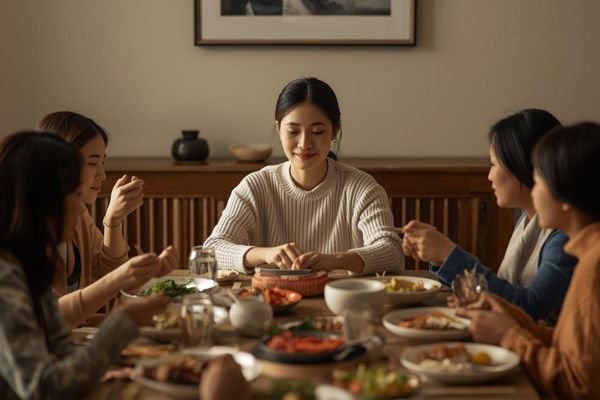
Nervous System Understanding: I am actually just as worthy to sit at the table of this well-being goodness than anybody else.
I say this a lot to parents of neurodivergent children because of the perceived lack of time, as well as I just do not have the effort to go and do the thing. I say, “No worries, but if you did have the time and the effort, if you had seven seconds, what would you do?” They would say, “I would just go out, I would just go out the back, or I would just go stand on the veranda, or I would just go be on the porch.” “Just go do that.”
I love that. I love that because, yes, the micro moments. There is so much power in those, but oftentimes folks think it has to be A to Z all at once, or massive sweeping changes, or what is the point of even trying, because I do not have time. There is so much power in these micro moves.
I cannot remember the study, but it was looking at the flight simulation of a plane, and it was off course by one percent. I cannot remember where it ended up or where it landed. Basically, it was meant to go this way, and it ended up going this way just one percent. I argue the other way if you just did one percent, a micro moment, if you reached for an apple instead of a bag of chips.
If you just went outside to get some daily sunlight, you're getting serotonin, oxytocin, and all of those beautiful endorphins from the morning sun or the evening sun. That is going to change biology. Over time, that is going to help. It is taking a pause instead of reacting. They are all just so micro doable moments that it does not have to be a spa bath. It can just be, “I did not react today. That is awesome.” Or “I only reacted eight times today instead of eighteen.” That is a win, I will take it.
Yes, it is also what I am hearing there, it is noticing the small wins along the way. It is noticing those micro changes after taking those small steps. That is a really important piece as well because oftentimes we get mired in that negative self-talk loop of that I would have, could have, should have, I did not, and helping folks to shift their lens on that, I think, is very important.
As you know, once you start to notice, then the momentum starts. You are like, “I took eight seconds yesterday, and I feel better, so what would happen if I took sixteen?” “I do not know. Let us try. Let us have a trial and error, let us see how that goes.” I know even the busiest person on the planet can have sixteen seconds.
Once you start to notice, then the momentum starts.
I’m really curious, do you have any case examples or stories with confidentiality in mind, of course, that you can share of transformations, shifts that have happened?
One in particular is that she is a mom of three. All three of her kids are neurodivergent in some way, shape, or form. I met her again, the classic story basically pushed her son in front of me and said, "Fix him.” I could just hear language patterns between the same language pattern with the boy versus the mom. I just said to the mom, “I am coming for you, actually.” She is like “God.” I did not quite say it like that, but you get the drift.
I spent some time with her, and we unpacked the limiting beliefs that she had around worthiness, love, and belonging. As you know, the root cause of your work would also be I am not worthy or I am not enough or I am too much. Basically, I am wrong. If I am wrong, I am not going to give myself any time, because why would you? We started carving out what is possible for her.
A future that she had not considered, which was not yachts in the Caribbean and beautiful Monaco things. It was not that. I just want to be living in more peace than I currently am. Unreal. What does that look like for you? What does it smell like, sound like? How can we do that? We worked together, and then I did not see her.
I do not have a great business model. I do just work with people, and then I do not see them again, and it is amazing, and then I run into them at the shops in a year's time, and they are like, "Wow.” This person, you know, when someone has a transformation and their entire physiology and their face changes? Have you seen that?
Yes. Absolutely.
It was like I had to take a double-take. I was like, “What in the Barbara Streisand is happening here?” She just said, “You changed my life.” I am like, “No, you changed your life. I was the conduit. You changed your life. You made the things.” She is like, “I just did not know what I did not know.” That is just super powerful. She is like, “I just now like I have not changed much, but I am now just back on the map.” That is amazing.
That is so powerful.
I think about her a lot. I am so happy for her, proud of her, and grateful that she was in my life.
Energy And Possibility: Living Beyond The Diagnosis
That is excellent. Really powerful stuff. I love stories like that because it really shows what is possible. It feels like at the core of a lot of this, and a lot of what I do as well, is helping folks to see what is possible, particularly what is possible on the other side of the challenges, so that is awesome stuff. Rachel, I am curious. I always ask my guests what defines them outside of the amazing work that they are doing. What would define you outside of your amazing work?
I would say my energy would define me outside of my work. I was late diagnosed with ADHD, and my entire life, I have felt like either I am really drunk and everyone around me sober, or I am sober and everyone around me is drunk. I just could see what was going on, but I was not really. I was like, “This is not what I don't know.”
My whole life, a lot of people would just say, “Why can't you slow down? Why do you always have to be going like why are you so busy?” What that has allowed me to do is live overseas for eight years, go and climb a lot of mountains in the world, go and live in India, Nepal, and go and live in Canada. In my free time, I go and climb to the base camp of Everest and Aconcagua and places like that.
Just energy to say yes to mainly everything. Everything legal. Just this ball of good energy, I would say, and I am here for it. Some days my energy levels are lower than other days, but to do a podcast and write a book and teach at uni and coach my clients and then still show up as a mom and train and all of the stuff, I would say yeah. What is the best that could happen is basically what underpins my energy.
I love that question. What is the best that could happen? It’s because that is not the angle that we often take. That is great. I will write that down and put it on my desk. I love that. What is the best that could happen? That is awesome. Rachel, this has been amazing. I so appreciate you joining us here. How can folks connect with you, learn more about your work, your book, all of it?
The beautiful thing about Zoom and online platforms now is that my work is global, so that is great. It does not matter if you are in Seattle, Bunbury, or Timbuktu. My business is called Quite Frankly Coaching, where I do emotion coaching. I was a teacher for 25 years, so in terms of education consultancy, working alongside educators in all of this space as well, I do that.
My book is called Raising RAD Kids: Parenting with the brain in mind, and that is found on Amazon and on my website, which is QuiteFrankly.com.au. I have also got my podcast, which is The Parent Pod, and that can be found on Spotify and Apple. I’m busy, but I am around, and I would love to hear from anyone who would just love to check in, have a chat, and see where they go.
Thank you so much again for joining us. This has been great.
Thanks, Kate.
Important Links
About Rachel Russell
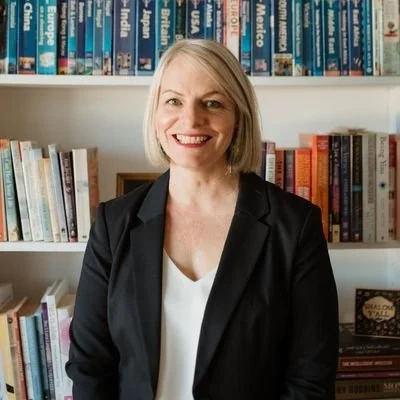
Rachel Russell is a coach, educator, speaker, author and mum specialising in practical neuroscience and neurodivergent wellbeing.
With more than 27 years of experience supporting children and families across Australia and internationally, Rachel translates brain science into clear, real-world strategies that help parents and educators better understand behaviour, regulation and connection.
She is the founder of Quite Frankly Coaching, host of The Parent Pod, and author of Raising RAD Kids: Parenting with the Brain in Mind. Rachel’s work equips families and schools with practical tools that create calmer homes, stronger relationships and emotionally resilient young people.