A Single Dad’s Tips On Resilience With Joe Sanok

What will you do if your spouse suddenly leaves you to look after your children all by yourself? This is exactly what happened to author and private practice consultant Joe Sanok when he went through an unexpected divorce and became a single dad in an instant. He joins Dr. Kate Lund as the show’s very first guest to share his raw and personal journey as an only parent raising two beautiful daughters. He talks about the importance of open communication and a relatable connection as a parent to maintain a close and genuine relationship with your kids. Learn how to find strength in your toughest moments and pass that resilient foundation on to the next generation.
---
Listen to the podcast here
A Single Dad’s Tips On Resilience With Joe Sanok
Welcome, Joe. Thanks so much for joining us here on the show. I want to put in that I truly appreciate this because you’re our very first guest on this brand-new show. This is meaningful. I’m grateful. Thank you.
I’m honored to be here and honored to be the first guest. That’s exciting.
Joe’s Insights And Experiences As A Father
We’ll be diving into this big idea of resilient parenting. It means a lot of things. It can mean different things for all of us because we’re all coming from different contexts, different places, and all of that good stuff. I was hoping that you could start us off with a little bit of an overview of yourself as a parent, a human being, a professional, and all that good stuff.
I have always known I wanted to be a parent. I’m the oldest of three kids. Through my bachelor’s degree in Psychology and then doing my Master’s degree in counseling, I worked with kids of all different ages and always enjoyed the way kids view the world. In being a parent, I don’t think it was one of those things that was assumed because of that typical relationship ladder. It was something that I always felt like I wanted to do.
I was teaching parenting classes before I had a kid. I was reading books on parenting, like Last Child in the Woods, when I was in my twenties. I’ve always had an interest in what it means to raise the next generation and to do that well. For probably a decade, I was doing therapy with people who had kids or were dealing with all sorts of parenting-type issues and relationship issues before I ever had children. I had a stronger baseline than maybe I realized going into parenting.
Also, both my parents are healthy adults. My dad is a clinical psychologist. My mom is a nurse practitioner who taught sex ed. They have their stuff as well, like any couple, but overall, I came from a solid foundation. I’m still close with both my parents. My sister lives in my neighborhood, so she and my nieces are in the backyard.
As a general posture towards life, I’m a classic Midwestern guy who loves being around family, loves being outdoors, paddleboarding, and spending time in the water. I have two daughters. They are 14 and 11. Early on, they went through a number of different things. Both of them had major heart issues and had to have surgeries before their first birthday.
I became an unexpected single dad during COVID when their mom left for California while we were on a major road trip. We were on the road for what was going to be a year or two, living in a camper, but in the midst of that, she left and stayed in California, and then I came home with the girls. I’ll pause right there. I could take up the whole episode telling you my whole story.
Becoming A Single Father A Little Bit Too Sudden
That’s a lot, but a wonderful intro. Thank you. I hear you. That foundation in parenting, I feel like I have that as well, in terms of how I grew up with supportive parents and working through some early childhood hospitalizations and medical stuff with me. I hear you on that front, for sure. That’s all very powerful and important foundation-building stuff. I love it. Fast forward, your girls are 11 and 14. It sounds like a difficult situation that arose during COVID. Talk a little bit more about that. It feels like it was very sudden. Your lens on what it meant to parent and how you were going to parent had to shift quite dramatically in those moments.
It’s interesting. At the time, it felt very sudden. As I look back over the years before, I can see how it was headed that way. We were, as a couple, in and out of therapy. As a general rule, I only talk about the aspects that are already public, specifically what my ex said publicly. I don’t ever want my girls to listen to a podcast or have a friend listen to a podcast, and they’re like, “Did you hear what your dad said?” Anything I say, even if it feels shocking, is stuff my kids know and is public knowledge already. I want to clarify that.
My ex, while in California, decided to leave with her surf instructor. In the middle of that, after seventeen years of marriage, I was working with a therapist and a coach through that process of like, “Are we separating? Are we divorcing? Is this a midlife crisis?” A good decision that I made in the midst of that was when we were in California and I decided, “I’m going to take these two girls on a two-week road trip away from the camper. It’s just going to be the three of us,” to give their mom space, to help her decide, and maybe even be like, “I don’t want to leave the family or maybe I do.”
We went to all these national parks. We went to Kings Canyon. We went to Yosemite. We went on this awesome whale tour off the coast and saw otters in the middle of the ocean. We had this amazing two-week trip where I tried to use mostly credit card points. We ended up in some shady motels and these kinds of situations. It was the foundation of the three of us becoming something new, becoming a new unit.
We even did this little thing where I had bought these sunglasses that were shaped like donuts. I’m like, “I got to have some new rituals here.” Every night, on that mini vacation, one of us would put on the donut glasses for a minute, and everyone else had to do whatever they did. They would turn on music, march around the room, and dance silly. For another minute, the next person did it. It was all three of us for three minutes.
For me, it was one of those moments of, “I’m not prepared for doing this alone. I don’t even know if their mom’s going to be in their life or not, but I need to be strong. I also need to not be that strong person who gets through the trauma but doesn’t address my own issues.” I was actively in therapy. I was actively working with a coach who came from a Daoist perspective. That was something I valued. I was finding my own routines. Every morning, I was meditating, journaling, planking for a minute, for a two-mile walk, like listening to Rage Against the Machine when I was mad, and having all of it. That then transitioned when we left California and had to drive back across the country.
Parents must show their children that they are strong enough to get through their own trauma and issues in life.
For the people we had stayed with on the way out, it was confusing that we were a family of four going out, and we were a family of three coming back. I wasn’t ready to say, “We’re getting divorced.” I was saying, “Christina decided she’s going to stay in California and surf for a while. We’re going to figure out what that looks like.” That was the story we told for a while. It was, “She’s staying and wants some more time there. I’m ready to go home.” A few months later, it was clear I was headed towards divorce. I filed for divorce, and some things came out that I’m like, “I can’t be married to this person.” She chose to live in California permanently.
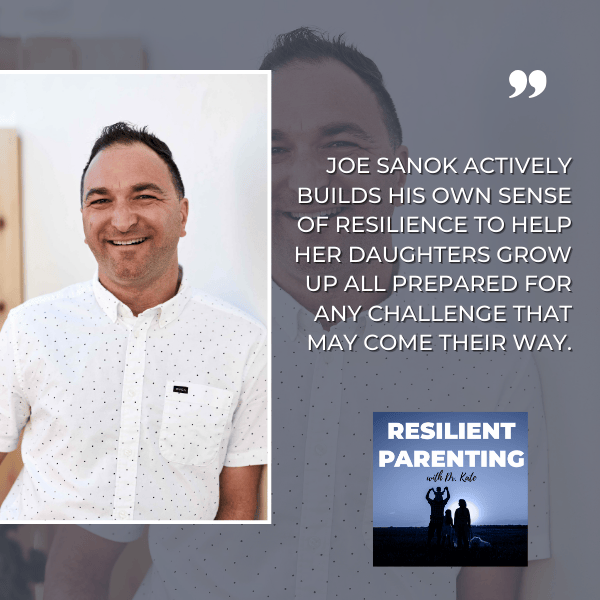
That is a powerful story. What stands out to me is the way in which you were and are actively building your own sense of resilience while helping your girls to do the same. That’s such a powerful thing. I truly believe that the more solid we can be in ourselves as parents, the more we’re passing those same foundational elements along to our kids to help them move through and beyond the inevitable challenges that’ll come up for them as they move forward. How challenging, how difficult, and how heart-wrenching to be thrust into that situation, but it seems like you did it so incredibly well.
The Not-So-Great Moments Of A Single Parent
There were a lot of times when it wasn’t incredibly well, but thank you. There were so many times I remember where my own sadness, anger, and trauma came out in frustration because they wouldn’t eat their dinner. It was then like, “These little girls don’t need to have a dad yelling at them for not eating their dinner.” It wasn’t all rose-colored, but I at least was trying my best to be mindful and to recognize that this is a messed-up situation that is far different from a typical separation of two people who no longer want to be married.
You make a good point there. It’s that idea of responding as opposed to reacting. Even though you were doing all of these things to build your own sense of resilience to modulate your central nervous system, the stressors still were such that, regardless of how hard you were trying to modulate all that stuff, there were going to be points where you had to react. I sense that most likely, you acknowledged that to the girls.
My younger child was being picky during dinner. It was one of those days when everyone was on the move. She’s eating in one room. We’re in the other. It wasn’t a family sit-down kind of thing. Everyone was eating at different times. I got frustrated. I was like, “You are going to eat this, or you’re not having any dinner.” She starts crying and is like, “I’m going to go to bed hungry.” I was like, “If that’s your choice,” and then I went to the other room.
That’s my parents’ narrative of the clean plate club. You always eat what’s made, even if you don’t like it. You don’t have any power or control over it. I had to take some time to cool down, step back, and say, “What am I scared of in this situation?” Maybe scared is not even the right word, but I was thinking about, “Is she getting enough fruits and vegetables? Is she getting enough protein? Is she feeling like she can always have food that’s not what’s prepared for her?”
When I stepped back from that, I went back over to her and said, “Honey, I hate this dynamic. I hate feeling like you’re a picky eater. I don’t think you like it either. My concern is that you’re not going to get the nutrition that you need. Claire made this wonderful dinner, and it has all the nutrition you need. What do you think should happen?” She welled up with tears and said, “I don’t want this either. What if I had a red pepper? What if I had a banana?”
There are these little healthy chocolate grain things that Costco has called Chocolate Hunks or something like that. She said, “Can I have one of those? What if I had some edamame?” It was like, “You’re getting the things that I want.” It’s not the way that I was taught as a kid. I’m having to give up control as a parent to say, “You have to eat what I told you to eat right now. If you don’t, you’re going to be an entitled kid when you’re 25 living in my basement.” There’s a lot between an entitled kid who’s 25 and an 11-year-old that’s being picky.
I love all that you said there. It’s this idea of stepping away from the intensity of a moment to gain perspective on what’s happening, why you are reacting that way, and how we can maybe shift gears on that. Acknowledging it with our kids and engaging them in that problem-solving process is so important. It’s like, “This situation isn’t working for either of us. What are some steps we can take to bridge that gap?” It sounds like it’s exactly what happened. She got some healthy stuff in her dinner and maybe figured out or learned some points where she could integrate those types of strategies on her own moving forward.
I don’t know about you, but the generation of parents that raised me, at least from what I’ve heard from my friends, weren’t usually the first to apologize or accept, “What I said wasn’t cool.” It was, “I’m the parent. You need to respect the authority.” I had loving parents who hugged me and did all the stuff, but also, there was probably more fear that I had towards them than my daughters have towards me. I don’t want that for my kids. I’m intentionally not wanting to have them be compliant out of fear. There’s some undoing for me as well.
Kids should not be compliant with their parents just out of fear.
I agree with that 100%. My parents are in the same generation. They were in charge, and what they said went. I remember my mom was quite time-sensitive. If she said to meet at 11:30, you meet at 11:30. The problem was, maybe we were in town, and I was there with a couple of friends. I was at the meeting place at 11:30 because I knew that I needed to be, but my friends were AWOL. It didn’t always go very well. That was always stressful.
I hear you. I feel like it’s important to acknowledge to our kids when we’ve reacted in a way that we’re not proud of, and we wish we had done it differently. Being transparent about that is an important message that we can give them in helping them to build that resilient foundation moving forward. That is important.
How Children Can Be More Open With Their Parents
Also, not being afraid as parents to share our own challenges and our own failures, in a sense, with our kids in a developmentally appropriate way, and helping them to recognize that the challenge is real. It’s going to happen. It’s possible to circumnavigate it, get up again when we’ve been knocked down, and move forward from a new direction. It feels like you’re demonstrating that with your girls through this situation and beyond. I’m sure that there are other challenges that are arising in general.
That’s where realizing that there could be big things around what their relationship is with their mom. At this point, with their therapist and with them, if they want to bring it up with me, great. Also, if every time they come home from having time with her, I’m like, “Did anything go wrong? Are you feeling trauma from her being gone?” That’s going to perpetuate.
They’re going to think, “Dad wants to hear that.” I don’t. I want them to feel like their life is very different from a lot of their peers who also have divorced parents. This is their challenge. They’re going to have to deal with this. To me, it’s more important to focus on those types of things that build the character that I think kids need.
One of my daughters was dealing with what she thought was bullying. As we talked about it, it sounded like it could be that the other kid didn’t fully know how she was reacting. Maybe it is bullying, and we’re going to keep our eyes on it. I shared this story about how, when I was a kid, there was this kid at the bus stop who was a nerdy kid who was socially awkward. He was probably on the autism spectrum, now that I’m an adult.
I’d say little snappy comments to him if he was cutting in line or a jerk to me, but all the kids did that to each other. It didn’t feel like a big deal until his mom called my mom and asked if we could have a sit-down with the four of us. He and his mom shared how they thought that I was being a bully to this kid. I’m like, “Me? I’m the one who usually gets bullied.”
Even sharing that with my daughter, saying sometimes people do things or say things and don’t even realize it. Afterwards, I was like, “I didn’t know that this was affecting Ed in that way. Maybe it could be helpful for us to sit down, or maybe not. Maybe we give them the benefit of their doubt.” Your point about finding our own failures from life to share with our kids can be such a great way to teach them, but also to join them in it.
How Joe Takes Care Of Himself
I love that. It’s that point also about how our perceptions can sometimes be different. We have no idea how we’re coming across and vice versa. Sometimes, they’re great learning/teachable moments in that kind of scenario, at the core of building emotional intelligence, alongside our kids, helping them to do that. I love that. Talk a little bit more about how you’re caring for yourself and building your own sense of resilience that then is being transferred over to your girls. What about you at the core?
At the core, I’m an inquisitive person. I’m pretty curious. I’m often listening to podcasts or reading and finding different types of ways people think about the world, especially non-Western ways. I’ve personally been drawn towards Taoism, the I Ching, and different types of meditation. I’ve been listening to The Telepathy Tapes, which is a fascinating podcast series about autistic individuals.
In it, they were talking about some different types of meditation. There’s this one where you blindfold yourself, and then you listen to white noise. The CIA used it in the ‘60s and ‘70s to try to test non-location-dependent teleportation-type stuff. To me, it is doing interesting things like that and saying, “I’m going to meditate that way every day or every other day for a month.”
I’m reading a book on lucid dreaming. I have yet to have a lucid dream. I have in the past when I wasn’t trying. I explore things. I’ve been exploring watercolors for the last few years. I used to like acrylics because you could be so precise with them in painting. With watercolors, you paint something, and then when it dries, it looks completely different. It’s like a partnership between you, the water, and the air to create something that none of you could have created on your own. I go into things for a bit, where I’m into watercolors for a few days, and then I might go into reading and meditation more.
There’s also self-care around friendships. I’ve got probably five or six good guy friends. We’ll get together either as couples or go for walks together, play board games, and talk about deeper things. It’s that mixed with finding healthy things. We’re doing this lemon water first thing when you wake up, and then the celery juice thing. I’m trying to see if it’ll help my body feel a little bit less old. To me, it’s about experimenting and finding that menu for myself of things that I know work but aren’t always going to be the meal I want to have every day.
I love that. You make so many good points there. This whole idea of flexibility doesn’t have to be just one thing. We can explore many different interests and come back to them after moving on to something else. The power in having a hobby or an interest outside of our professional lives and our family lives that’s for us is so incredibly powerful in building our overall sense of well-being, our sense of self, and our foundation. I love that. I love the watercolor description. I’ve been toying with the idea of doing some painting myself. I don’t think of myself as an artist in any way, shape, or form, and yet the idea of experimenting and trying it is exciting to me. We’ll see. That might happen in 2026. I'll let you know.
Give it a whirl. One thing I started doing that, to me, is fun is taking a couple of colors you like. Watch them blend with each other in the water, let it dry, and do that again. Wherever the lines seem to emerge, take a marker and mindfully trace over those lines. It turns out cool, no matter what your art skills are.
Improv is a good place to work out things you are going through.
That’s an amazing idea. I’m going to do that. I’ll keep you posted on that, for sure.
One hobby I didn’t mention that I’m surprised I missed is that I’m involved in our local improv troupe. I do training every week. On top of that, we have shows usually every other week. I’m in a few different types of troops that do things that make me laugh. I’m around other people where we get to play and have fun. Of all these micro types of hobbies I dabble in, that’s my biggest thing that I’m involved in.
I love that. You bring up this idea of laughing and having fun. That idea of incorporating joy into our lives every day as often as possible is so important and powerful, but it easily gets lost in the mix of day-to-day. We’re moving so fast through life that we forget to laugh. We forget to notice those things that make us happy and bring us joy. The improv sounds so cool.
It’s a good place to work out different things you’re going through. You can play a character that’s dealing with something similar to what you’re going through. If you’re noticing something in the world politically, you can have commentary on that in a funny way. It’s a way to play with society and ideas. You pretend.
How Children’s Resilience Are Shaped By Their Parents
It makes all the sense in the world. We’re thinking about these hobbies and these things that we’re doing to build our own sense of well-being that’s specific to us. There’s no one-size-fits-all. No one-size-fits-all in terms of how we’re going to build resilience in ourselves or help our kids to do that. I’m curious. Do you see differences between your daughters in terms of their own baseline resilience and what they respond to in terms of parenting and such? I know that has been the case for us. We have twin boys. They are very different kids, so a different lens is needed for each to help them thrive in their own context.
One of them almost needs to be told to simmer down a little bit and think through things. The other one thinks through things so much that it’s like, “Come on. Take a risk. Jump in there.” The way I think about supporting my daughters is if you and I thought about what we took away from our childhood, what lessons could there be? There might be two or maybe three big core lessons that stick with us.
My dad was a clinical psychologist, so I had lots of star charts and behavioral reinforcement programs for grades, homework, and chores. All those things were either monetized or rewarded, which was a big step at the time for psychology, but it wasn’t necessarily great long-term to have everything that you do be based on external reinforcements. One of my lessons from childhood was that you are what you create or you are what you do. I don’t think my parents intended that, but that’s one of the lessons I took.
When I think about my daughters and say, “What are things that I want them to be able to do and feel when they leave the house, whenever that is?” One of the big ones is being able to talk to anybody. When you think about AI, technology, and all of the world, the things that are going to make people stand out are whether they can talk to a brand-new person and connect with them pretty quickly on an emotional level or a connection level, not worrying about age or any other demographics.
If I can define that as one of the things, then that also defines how I pre-teach them before certain situations. If we’re going over to my partner Claire’s parents’ house, and they’re in their 70s, and maybe they’re going to have another couple of people around their age there also, I’m not going to have them bring their iPad and go sit in the corner.
By being resilient in other areas of your life, parents can become more resilient for the long haul.
We’re going to talk ahead of time before we leave the house about “There are going to be four people who are in their 70s. I want you to think through how you can engage with them before we go there. What questions could you ask them? What could you learn about them?” If they’re stuck, let’s do that at home, not in the moment.
That happened, where my oldest daughter got a joke book for Christmas, and she brought that with her as a way to get the conversation going. My younger one said, “The couple that’s coming, where are they from?” I said, “They’re from Lansing, Michigan.” She said, “I could ask them, ‘What’s Lansing like? Is there water there? Is it big? I could ask them about that.’”
We brainstormed those things so that when they were in the situation, they weren’t these quiet kids sitting on the couch. They sat down next to these strangers and said, “I’m so-and-so. What’s Lansing like? What did you guys do over the holidays? Do you want to hear a joke?” By the end, these adults were like, “Who are these kids? They’re amazing.” That’s one of our family priorities. You can talk to anybody.
Even for any parent to say, "If your kids took one or two things when they grow up in the world, are you teaching that? Are you demonstrating that?” For me, if I don’t have conversations with new people in front of my daughters, they’re going to be like, “We have to do this, but you don’t ever do it, Dad.” That means I have to host gatherings and have the opportunity for myself to meet new people, also.
How To Become A Resilient Parent
I love it. It’s demonstrating the power of modeling and the power of building these skills of connection from the inside out. It’s a whole other conversation on screen time and social media. We’ll save that for our next talk. Such amazing insights. They’re so powerful. I’m so grateful that you came to be with us and share all of these amazing insights. Any final thoughts on your idea of what it means to be resilient parents, as we’re thinking about wrapping it up here?
Yeah. Sometimes, we think resilience is for other people. For me, even the word trauma was for other people. I haven’t been traumatized by what happened to me. I even called it a small T trauma to my therapist. He’s like, “Are you kidding me? If this isn’t trauma, what is?” I said, “Assaults or witnessing these types of things is real trauma.”
When we think about resilience, it is for you. We’ve all been through hard things. We all have grieved through tough things. We’ve all had things not work out in our lives in the way that we wanted to, but you’ve gotten to this point. You’ve been resilient in other areas of your life. If we can link those areas to how we parent, it’s going to help us be resilient parents and be in it for the long haul.
Thank you so much for joining us.
Important Links
About Joe Sanok
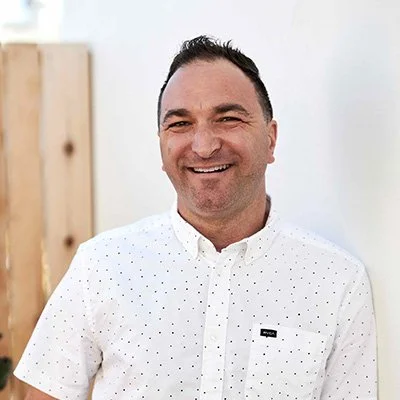
As a highly trained clinician with two master’s degrees and the founder of Mental Wellness Counseling, Joe Sanok MA, LLP, LPC, NCC has also established himself as a leading figure in private practice consulting through his role as Founder and Lead Consultant at Practice of the Practice. Through this organization, Joe helps fellow practitioners achieve their dreams of building successful practices that bring them true joy.
Joe’s extensive experience and knowledge have earned him a global reputation as an authority in his field. He is the acclaimed author of Thursday is the New Friday: How to Work Fewer Hours, Make More Money, and Spend Time Doing What You Want. In addition to being featured in top-tier publications like Harvard Business Review and Forbes, Joe is a frequent guest on podcasts, including the highly popular Smart Passive Income Podcast, which boasts an audience of over 100,000 monthly listeners worldwide.
Over the last decade, Joe has conducted over 1,000 interviews with some of the world’s leading business leaders, scholars, and innovators, establishing himself as a highly sought-after interviewer and media personality.